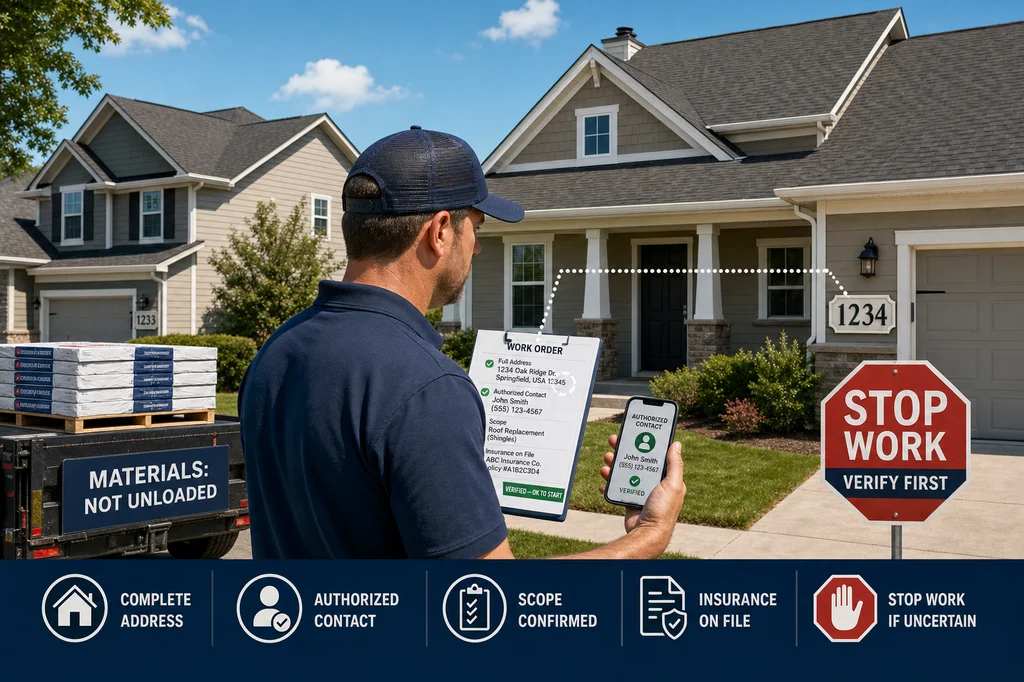
Wrong-address roof tear-offs can turn a simple work-order error into an exposed home, an urgent repair, and a dispute over who will pay. Before any shingles come off, require the crew to confirm your street address, your authorization, and the company’s insurance information in writing.
Why a house number is not enough to start roofing work
A crew can arrive with the right type of job but at the wrong property. That is especially dangerous because a tear-off removes the weather barrier before the mistake is recognized.
In Louisville, a crew booked for a home at 1596 reportedly tore shingles from a rental at 1598. The property owner, Danny Hayes, found the back half of the roof stripped and said a separate contractor arranged materials before an expected rainstorm. He reported a repair bill of $9,991. The roofing company reportedly called it an honest mistake and said subcontractors went to the wrong house.
A similar error in Oklahoma City went much further. Deborah and Scott Center were away when a roofing crew reportedly removed most of their shingles despite the couple not ordering a roof. Greco Roofing and Construction acknowledged the mix-up and installed a replacement roof. The lesson is not that every mistake will end with a favorable outcome. It is that an address error may not be caught until the roof is already open.
Confirm these items before the first bundle is moved
Make the authorization check a condition of starting work, not a courtesy after trucks arrive. A clear handoff gives the crew a way to stop when the property details do not match.
- Street number and street name: Have the project contact read the complete address aloud and compare it with the signed agreement. Similar numbers, neighboring homes, and rushed routing can create a costly mix-up.
- Homeowner or authorized contact: Give the company the name and phone number of the person who can authorize the start. If you will be away, state who may approve access and changes.
- Scope of work: Confirm whether the job is a repair, a partial tear-off, or a full replacement. This prevents a crew from treating visible storm damage as permission to begin a larger project.
- Start-day contact procedure: Require a knock, call, or text before materials are unloaded and again before shingles are removed. Hayes said a quick introduction at the door could have avoided the Louisville error.
- Company and insurance details: Get the legal business name and insurance information before work begins. If a subcontracted crew arrives, know which company is responsible for the project and who to contact if something goes wrong.
- Written stop-work instruction: Put in writing that the crew must pause if the address, owner name, or scope does not match the work order. A pause is far less disruptive than replacing a roof started by mistake.
What to do if roofers begin removing the wrong roof
Tell the crew to stop immediately and preserve the condition of the property. The first priority is preventing further removal and protecting the home from weather; the second is creating a clear record of what occurred.
- State plainly that you did not authorize work on your home and direct the crew to stop.
- Call the company’s office or owner using the contact information you have, not only the crew’s word about who sent them.
- Photograph the roof from the ground, removed materials, vehicles, visible company names, and the condition around the house. Save calls, texts, estimates, and any work-order information you receive.
- Request a written plan for temporary weather protection and for correcting the damage. Do not rely on an informal promise made at the driveway.
- Contact your insurer to report the situation and ask what documentation it needs. Coverage and claim handling depend on your policy, so avoid assuming a contractor’s account settles the insurance question.
- If the company disputes responsibility or the damage is extensive, consider getting independent legal advice about your options under the contract and your state’s laws.
Do not let a dispute delay weather protection. In the Louisville case, the owner described an approaching rainstorm as a reason to arrange prompt work. A roofing professional should assess the exposed roof and determine the appropriate temporary and permanent repairs.
Insurance and subcontractors need a direct answer
“They are subcontractors” does not answer the homeowner’s practical question: who will coordinate repairs and provide the applicable insurance information? The Louisville roofing company reportedly said the workers were subcontractors, while the owner said he had sent them to the correct address.
For you, responsibility should be clear before the project starts. Ask the company that sold or scheduled the work to identify the business responsible for the crew, damage response, cleanup, and communications. Request its insurance information and keep it with your signed scope. Insurance availability and responsibility can depend on the policy and contracts involved, so confirm details directly with the insurer or qualified counsel if a loss occurs.
Choosing a company with a traceable identity and a clear project contact makes an address error easier to escalate quickly. Directorii lists verified contractors.
Put the arrival protocol in your roofing agreement
The best time to resolve an address mix-up is before a crew is dispatched. Add a short start-day protocol to the agreement or email confirmation so the office, crew leader, and homeowner have the same instructions.
Your written note can require the crew lead to verify the full address and scope with the designated contact before tear-off. It can also name the contact for an absent owner, require notice before work starts, and instruct the crew to stop if any detail conflicts with the work order. This is not complicated contract language; it is a practical control for the point when damage becomes immediate.
Keep the confirmation accessible on the morning of the job. If a neighbor calls about unfamiliar trucks or workers on a roof, you or your authorized contact should be able to quickly determine whether the crew belongs there.
Do not confuse a replacement offer with a complete resolution
A contractor may offer to replace the roof after a mistake, but you still need the scope, timing, materials, and responsibility documented. The Oklahoma City company reportedly responded by providing a new roof, while Hayes disputed whether the Louisville company’s reported replacement offer was made.
Get any proposed remedy in writing before deciding how to proceed. It should identify what will be removed or installed, who will address weather protection and cleanup, and the company contact responsible for the work. If the event involves an insurance claim, share the written plan with your insurer and follow the directions tied to your policy.
Source: Top 7 Contractor Disasters Caught on Video
FAQ
What should I do if roofers tore off the wrong roof?
Tell the crew to stop immediately, contact the roofing company’s office, and document the condition from the ground with photos and notes. Request a written plan for weather protection and repairs. Notify your insurer and ask what evidence it needs, since claim handling depends on your policy.
Should a roofing crew confirm the address before tear-off?
Yes, the crew should confirm the complete street address, owner or authorized contact, and work scope before shingles are removed. A wrong number can send a properly scheduled crew to a neighboring property. A call, text, or door contact creates a final checkpoint before the roof is opened.
Can I require a roofing company to contact me before work starts?
Yes, you can request a start-day contact procedure in the agreement or written confirmation. Name the person who may authorize work if you are away and require the crew to pause if the address or scope conflicts with the work order. Keep the instruction available on job day.
What if the crew says subcontractors made the roof mistake?
Ask the company that scheduled or sold the project to identify the business responsible for repairs, communications, cleanup, and insurance information. A subcontractor explanation does not tell you how the damage will be addressed. Save the names of the crew and every company involved in writing.
Should I let the same company repair a roof it started by mistake?
That decision depends on the company’s written remedy, the condition of the roof, and your confidence in its response. Get the proposed scope, materials, timing, and weather-protection plan in writing first. If insurance is involved, report the damage and confirm how your policy handles the situation.