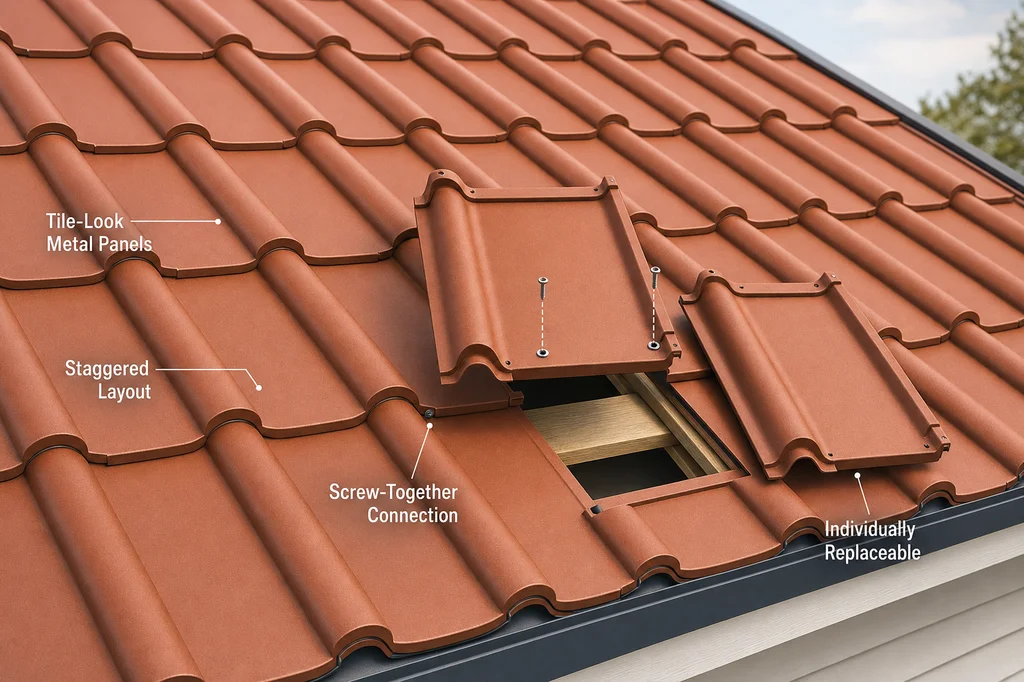
Worthouse Supra is a designer metal roofing product made to mimic tile. Its distinctive pitch is not simply the rounded tile-like profile: Worthouse says the panels are installed in a staggered arrangement, screw together, and can allow a damaged panel to be unscrewed and replaced.
Supra is metal made to resemble tile
Supra is Worthouse’s tile version and, according to the company, its biggest seller. It is a metal product designed to mimic actual tile, not a stone-coated metal roof.
That makes Supra a choice for a homeowner who wants a tile-inspired appearance without choosing clay as the roofing material itself. Worthouse also offers Ulta, a slate-style product, but Supra is the tile-look option discussed here.
The clay comparison is about product cost and handling
Worthouse says clay is less expensive as a product. The company also says Supra is much faster, lighter, and easier for a crew to handle than clay, so it presents the installed comparison as different from the material-only comparison.
For a reroof decision, compare the proposed Supra scope with the clay option as complete installed proposals rather than treating the material price as the whole comparison. The relevant distinction is straightforward: clay is the less expensive product in Worthouse’s account, while Supra is the lighter metal system the company says is faster to handle.
Why the staggered panel arrangement matters
Worthouse says Supra is installed with staggering rather than the stepped layout often associated with other roofing materials. The company attributes the arrangement to the precision of the machines that press the panels and to the way the panels screw together.
The practical feature Worthouse highlights is panel replacement. If one panel is damaged, the company says it can be unscrewed, removed, and replaced with a new panel. That is the product-specific question to focus on when evaluating Supra: whether replacement panels for the selected profile will be available if they are needed later.
Put the wind and warranty claims in writing
Worthouse describes Supra as having a 200-mile-an-hour wind rating and an about 50-year warranty. Review the current Worthouse documentation for the exact product being purchased before relying on either claim.
Also make the product-versus-installed-cost comparison explicit in the proposal, and ask how a replacement Supra panel would be obtained for the selected color and profile. Those points are more useful to this product decision than a generic metal-roof comparison.
Availability in the United States
Worthouse says its products are made in Poland and shipped to America. The company says it has a warehouse in Chicago and was growing in about 10 states; it also said the Chicago warehouse made products accessible to vendors throughout the country.
Worthouse offers a half-round gutter system and says it does not offer gutter covers directly. The gutter system is separate from the decision to use Supra roofing panels.
Directorii lists verified contractors.
Source: Worthouse metal roofing overview
FAQ
Is Worthouse Supra clay tile?
No. Supra is a designer metal roofing product made to mimic actual tile. Worthouse says it is not stone-coated metal.
How does Worthouse Supra compare with clay on cost?
Worthouse says clay is less expensive as a product. The company says Supra is lighter, faster, and easier for a crew to handle, so the installed comparison may differ from the material-only price.
Can a damaged Worthouse Supra panel be replaced?
Worthouse says a damaged panel can be unscrewed, removed, and replaced with a new panel. Before selecting Supra, confirm availability of replacement panels for the chosen profile and color.
What wind rating and warranty does Worthouse claim for Supra?
Worthouse describes Supra as having a 200-mile-an-hour wind rating and an about 50-year warranty. Review current Worthouse product documentation for the exact product before purchase.
Where does Worthouse make its products?
Worthouse says its products are made in Poland and shipped to America. The company says it has a warehouse in Chicago and was growing in about 10 states.