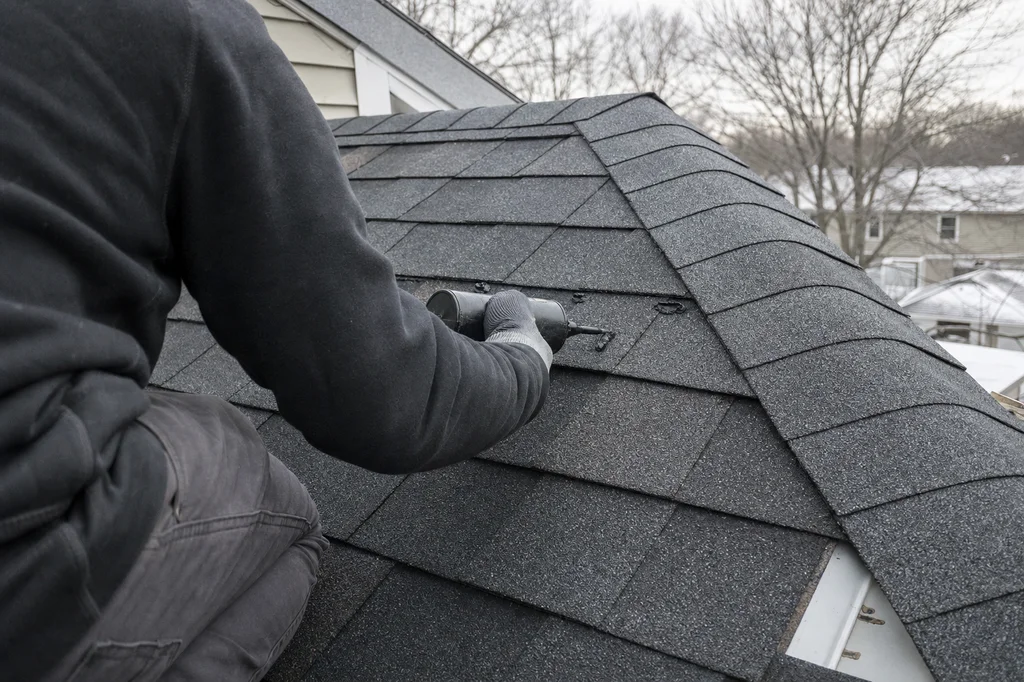
Installing asphalt shingles during winter is not a simple yes-or-no decision. Cold weather can delay activation of the factory sealant strips that help hold shingles down in wind. Before work begins, compare the exact product instructions, confirm whether hand-sealing is needed, and put the plan for unsealed-shingle wind damage in writing.
Why cold weather matters after shingles are nailed
Asphalt shingles shed water down the roof. Their sealant strips also help secure shingle courses against wind-driven weather. When temperatures stay cold, the sealant may not activate promptly. Until it does, shingles can lift or blow off in strong wind.
Cold materials can create another concern: flexibility. A shingle that is too stiff can be more vulnerable to damage when it is nailed or bent, particularly at hips and ridges. Storage and handling can therefore matter as much as the temperature at installation.
The key question is not only whether shingles can be installed that day. It is whether the selected shingle can be installed, remain flexible, and seal according to its manufacturer's instructions.
Cold-weather guidance varies by product
There is no universal temperature rule for asphalt shingles. The exact brand and product line matter:
- GAF Timberline: GAF recommended installation at 45°F or higher where possible. Below that temperature, GAF's recommended option was to hand-seal every shingle.
- Atlas: Atlas described 40°F and rising as its preferred condition. Below that, it treated installation as cold-weather application and recommended hand-sealing.
- BP: BP stated that self-sealing shingles need sufficiently warm conditions for the sealant bands to activate. When conditions are too cold, BP called for manual cementing with dabs of asphalt plastic cement on each exposure. BP's instruction did not specify a temperature threshold.
- PABCO: PABCO hip-and-ridge instructions called for storage in a warm area for 24 hours before installation at 40°F and below.
- Malarkey: Malarkey said properly stored modified-asphalt shingles can remain flexible in cold weather and did not require hand-sealing in the conditions described. That position is specific to its products.
A sunny day, dark shingle color, or short warm spell does not replace the applicable instructions. Some products address ambient temperature, while others also address warm storage, flexibility, sunlight, or a sustained period of warmer weather.
When hand-sealing becomes part of the installation plan
Hand-sealing is a cold-weather measure when the selected manufacturer calls for it or when conditions are unlikely to activate the factory sealant soon after installation. It is labor-intensive because shingles are sealed individually, so it should be included in the scope before work starts.
If the roof is still serviceable, waiting for warmer conditions may avoid a period when shingles remain unsealed. If replacement cannot wait, such as after roof damage or when a home sale makes replacement necessary, the installation plan should follow the manufacturer's specified hand-sealing method and materials.
Hand-sealing is part of the installation scope, not a homeowner roof task.
Put the winter plan in writing
A proposal should identify the cold-weather method rather than merely state that winter installation is possible. Request a written plan covering:
- The exact shingle brand and product line. Cold-weather instructions can differ among products from the same manufacturer.
- The applicable installation instructions. Include the temperature, sealant, storage, sunlight, and hand-sealing conditions that apply to the selected shingles.
- Storage and handling. Address how shingles and hip-and-ridge materials will be kept flexible before installation.
- Hand-sealing scope. State whether hand-sealing is required, recommended, or excluded, and whether it is included in the price.
- The response to wind damage before sealing. State how wind lift, blow-off, or sealant-related repairs will be evaluated and addressed before normal thermal activation.
GAF and Atlas stated that product warranties cover manufacturing defects rather than installation-related errors or damage involving shingles that have not sealed. Read the warranty and installation instructions for the exact product. Written scope terms should be reviewed alongside the product warranty and insurance policy.
Warning signs in a winter roofing proposal
- The contractor cannot identify the exact shingle product before scheduling work.
- The proposal does not name the installation instructions supporting the planned cold-weather installation.
- Hand-sealing is mentioned verbally but omitted from the scope or price.
- Storage and handling of stiff shingles or hip-and-ridge materials are not addressed.
- The proposal promises warranty coverage without explaining the difference between manufacturing-defect coverage and installation work.
Directorii lists verified contractors.
For questions about insurance coverage or contract enforcement, review your policy and agreement and consult a licensed insurance professional or attorney in your state when needed.
Source: Winter Roofing Shingles Installation Guidelines and 5 Tips from Roofers
FAQ
Can asphalt shingles be installed in winter?
They can be installed in some winter conditions, but the right approach depends on the exact shingle product and its installation instructions. Cold weather can delay sealant activation and reduce shingle flexibility.
When is hand-sealing needed for winter shingle installation?
Hand-sealing is needed when the selected manufacturer requires or recommends it for the expected conditions. GAF recommended it below 45°F, while Atlas recommended it for cold-weather application below 40°F and rising. Other products use different guidance.
Why should shingles be stored in a warm area before installation?
Cold shingles can become stiff and harder to bend without damage. PABCO's hip-and-ridge instructions called for warm storage for 24 hours before installation at 40°F and below, and Malarkey emphasized proper storage to maintain flexibility.
What happens if shingles do not seal before a windstorm?
Shingles that have not sealed can lift or blow off in strong wind. The written installation scope should state how wind lift, blow-off, or sealant-related repairs will be evaluated and addressed before normal thermal activation.
Does installing shingles in cold weather automatically void the warranty?
No automatic warranty void was stated for the products discussed. GAF and Atlas said their product warranties cover manufacturing defects rather than installation-related errors or damage involving shingles that have not sealed. Review the warranty and installation instructions for the exact shingle line.