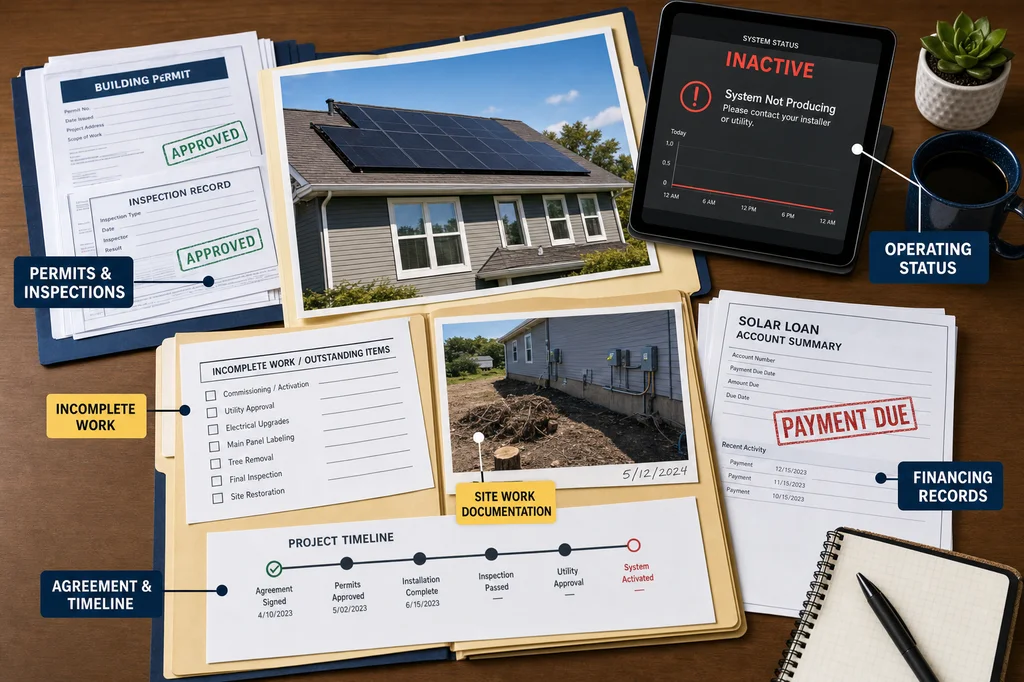
Homeowners affected by the Vision Solar bankruptcy who have incomplete or inactive systems should create a clear record now: whether the panels produce power, which permits remain open, what site work was promised, and what financing payments continue. Those records can help you explain the problem to lenders, regulators, licensed professionals, or counsel.
Start with the system’s operating status
Your first priority is establishing what was installed, what works, and what remains unfinished. A solar array on the roof is not necessarily an operating solar system; activation, electrical work, inspections, utility approval, and permitting may all affect whether it can provide household power.
Vision Solar customers described systems that had been installed but were not turned on. One reported a breaker issue that left the panels without power. Florida allegations against the company included failing to complete permit requirements. For a homeowner, the practical issue is simple: separate visible equipment from a system that has actually been activated and approved for use.
- Record the current status: Note whether the system is producing power, displays an error, has never been activated, or cannot be used because of an electrical or utility-related issue.
- Save activation evidence: Keep emails, app screenshots, utility correspondence, commissioning paperwork, inspection results, and any notice that the system was cleared to operate.
- List incomplete work: Write down unfinished electrical corrections, permitting items, inspections, repairs, cleanup, or equipment that was promised but not installed.
- Preserve dated photos: Photograph accessible equipment and any unfinished exterior work from the ground. Do not climb onto the roof or handle electrical components yourself.
Make copies in more than one place. A lender, replacement installer, attorney, or state agency may need a timeline that shows what you were promised, what was delivered, and when problems were reported.
Document promised tree removal and other site work
Sales promises beyond the panels can matter as much as the panels themselves. If vegetation removal, electrical upgrades, roof-related preparation, or other site work was part of the agreement, preserve the original wording and show what was or was not completed.
A Florida customer complaint described promised tree removal that allegedly did not happen, even though the work was presented as necessary to make the home suitable for solar. Do not rely on a verbal recollection alone. Gather the signed agreement, proposal, sales presentation, text messages, emails, change orders, and photos showing the property’s condition.
Create a simple itemized list with three columns: the promised item, the document that supports it, and the current result. This prevents a broad complaint such as “the job was never finished” from obscuring specific issues, such as an inactive system, a missing permit step, or uncompleted tree work.
Review the loan separately from the installation
A solar financing obligation may continue even if you believe the installation is incomplete. Treat the loan documents and the construction dispute as connected facts, but do not assume that a problem with one automatically resolves the other.
Connecticut and Florida lawsuits alleged that Vision Solar used high-pressure sales tactics and misled consumers into loans they could not afford. Those are allegations in state actions, not a determination about every customer agreement. Still, if financing was part of your purchase, collect the loan agreement, payment schedule, disclosures, lender notices, payment history, and any documents you signed electronically.
Contact the lender using the contact information in your loan documents and describe the installation status accurately. Ask how it records an incomplete-project complaint and what documents it needs. Keep notes of the date, representative, and response. For questions about enforceability, payment duties, or a possible remedy, consult qualified consumer counsel in your state rather than relying on a solar salesperson or installer.
What to do after a Vision Solar sales or completion problem
Use a written timeline before you seek repairs or a remedy. Vision Solar reportedly filed for Chapter 7 bankruptcy protection, which generally indicates liquidation rather than an effort to reorganize. The filing reported debts between $100 million and $500 million, while state attorneys general were seeking consumer restitution.
That situation can make orderly documentation especially valuable. It does not tell you what outcome you will receive, and bankruptcy, financing, consumer-protection, and contractor rules can vary by state and contract.
- Build a dated file. Include the sales date, installation dates, payments, permit activity, activation attempts, service requests, and every response you received.
- Get an independent condition assessment. If the issue involves rooftop equipment, electrical work, leaks, or unfinished connections, hire properly licensed professionals to assess the system without altering evidence unnecessarily.
- Ask for a written scope. A replacement professional should identify what is installed, what is incomplete, what must be corrected, and whether existing equipment can be safely retained.
- Keep original documents intact. Provide copies when requested and avoid signing a new agreement that you do not understand. Review new financing or repair terms carefully.
- Use appropriate channels. You may want to contact your state attorney general’s consumer office, state insurance department if an insurance issue is involved, lender, utility, or consumer counsel depending on the facts.
Do not authorize roof or electrical work based only on a phone promise that someone will “make it right.” The written scope should identify who is responsible for permits, utility coordination, repairs, and any roof penetrations affected by the work.
For roof-related corrections, Directorii lists verified contractors.
Watch for pressure that replaces clear paperwork
High-pressure selling is a warning sign when it pushes you to sign before you can verify the system design, financing terms, site requirements, and completion process. A legitimate project can still involve a complex contract, but you should have documents that let you understand what is being purchased.
Before signing any replacement agreement, make sure it addresses the actual failure mechanism. An inactive system may involve more than panel installation. It can involve electrical corrections, permit completion, inspection, utility coordination, or site conditions that were not addressed. If the work affects your roof, have a licensed roofing professional evaluate roof-related repairs and penetrations rather than treating them as a minor afterthought.
Source: Roofing News: $100M Bankruptcy, California Solar Layoffs, Steve Badger vs. Insurance Claim Guy
FAQ
What should I document if my Vision Solar system was installed but never activated?
Document the system’s current operating status, activation attempts, error messages, utility correspondence, permit records, inspections, and service requests. Keep dated photos taken from the ground and save every signed agreement and email. This record helps distinguish installed equipment from a system that was actually completed and cleared to operate.
Can I stop making loan payments if Vision Solar did not finish the work?
Do not assume an incomplete installation automatically ends a solar loan obligation. Review your financing agreement, preserve your payment history, and contact the lender to report the project status and ask for its complaint process. For advice about your specific contract or potential remedies, consult qualified consumer counsel in your state.
What if Vision Solar promised tree removal or other site work?
Gather the proposal, signed contract, sales messages, change orders, and dated property photos that show the promised work and its current condition. Make an itemized list of each uncompleted item. A clear record is more useful than a general statement that the solar project was not finished.
Should I hire someone to inspect an unfinished solar installation?
Yes, an independent assessment can help identify what is installed, what remains incomplete, and whether roof or electrical corrections are needed. Use properly licensed professionals for the relevant work. Do not climb on the roof or attempt to operate electrical components yourself while documenting the issue.
What does Vision Solar’s Chapter 7 bankruptcy filing mean for homeowners?
Chapter 7 generally indicates that a company is shutting down rather than seeking to reorganize. It does not determine your individual rights, loan duties, or possible recovery. Preserve your records and seek guidance from the appropriate lender, state consumer office, utility, licensed professional, or counsel based on your situation.