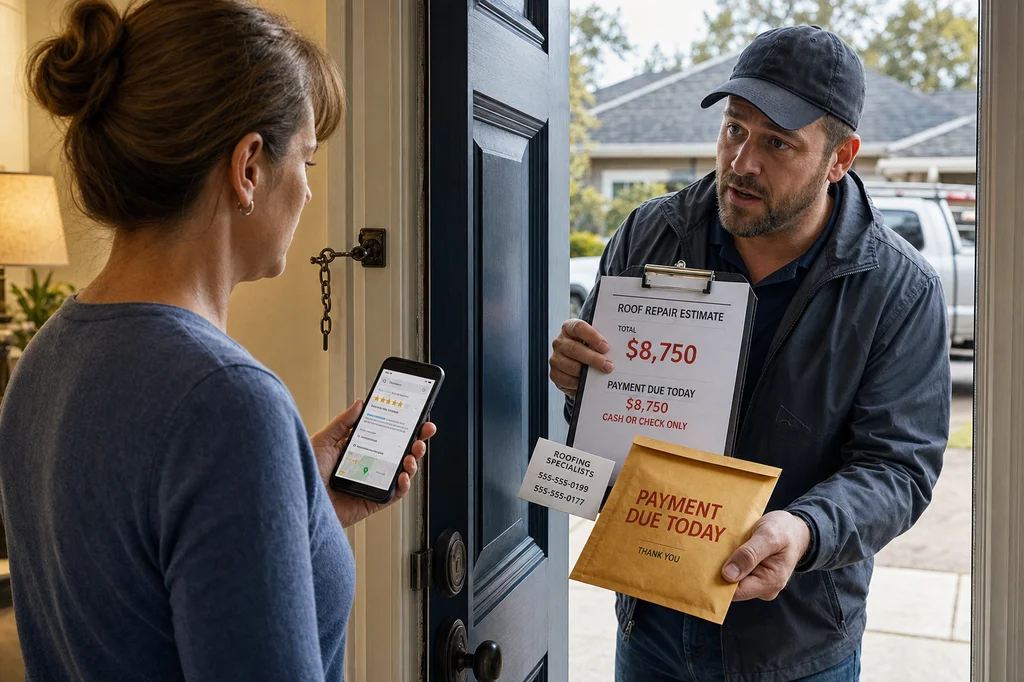
Traveling roofer scams often begin with a door knock, an alarming claim about your roof or chimney, and pressure to act immediately. The biggest warning signs are an identity that does not check out, damage you cannot independently verify, and a demand for payment before the promised work is complete.
How traveling crews make an ordinary door knock feel urgent
Urgency is the tool that keeps you from checking the company, the damage, and the proposed price. A visitor may say they noticed a dangerous roof or chimney problem while working nearby, then insist that waiting will make the damage worse.
Some crews reportedly do a small amount of real work first and then claim they found a much larger problem. In more serious allegations described by federal prosecutors, workers have been accused of causing damage and presenting it as preexisting. That means a visible issue alone is not proof that the recommended project is necessary.
Do not let a stranger's timetable become your repair timetable. If there is a genuine emergency, a legitimate roofing company should be able to document the condition and explain what temporary protection, if any, is needed while you decide.
- Unexpected visit: You did not request an inspection, yet the visitor has already diagnosed major work.
- Immediate catastrophe language: The problem is described as dangerous or urgent, but the visitor cannot provide clear documentation.
- Pressure to decide alone: You are discouraged from calling family, your insurer, a second company, or the business whose name is being used.
- Payment before completion: The crew pushes for cash, a large upfront payment, or another fast form of payment before the agreed work is finished.
Stolen business names are a central traveling roofer scam warning sign
A business card, website, vehicle marking, or familiar company name is not enough to establish who is at your door. Traveling crews have been accused of using stolen company names while changing the contact information so calls and payments go to the scammers instead of the real business.
One roofing company reported receiving business cards from neighbors that used its address and license number but listed the alleged scammer's contact details. That tactic can make a false identity appear convincing because some information is real.
Verify the company independently. Find the business through a search result, an established listing, or contact information you already trust; do not use the phone number, QR code, website, or email handed to you at the door. Then ask whether the named company sent that person and whether it uses the quoted contact details.
What to say when a door-knock crew claims your roof is damaged
You do not need to debate the diagnosis or allow a same-day sale. A short, calm response gives you control: “I do not authorize work today. Please leave your written estimate and company information.”
If the visitor claims to have found damage, request photographs and a written description of the exact location and recommended repair. You can then arrange an inspection from a roofing professional you select. Do not climb onto the roof or try to investigate the claimed damage yourself.
Keep the materials the visitor leaves behind, including business cards, estimates, texts, and photos. If you believe someone misrepresented a company or performed unauthorized work, report the concern to local law enforcement and contact the real company whose identity may have been used. Consumer-protection and licensing reporting options can vary by state.
Payment pressure is where the financial loss grows
Large advance payments can leave you exposed if the crew leaves, delays indefinitely, or lacks funds to finish the job. The warning is not simply that a contractor requests a deposit; it is that the person uses fear and speed to get money before you can verify the business and scope.
A UK fraud case involving Mark Killick showed how changing names, websites, and fake reviews can support a deposit-based scheme. Prosecutors said homeowners were given excuses including supply problems, COVID delays, and a car crash after paying substantial deposits. That case is a reminder to judge a roofing company by verifiable records and a defined agreement, not by a polished online presence alone.
Before authorizing a project, get a written scope that identifies the work, materials, payment stages, and the business responsible for the job. Read it away from the doorstep. If insurance is part of the conversation, review your own policy and speak with your insurer about coverage rather than relying on a solicitor's interpretation.
Choosing the wrong company gets expensive when a crew has your money but no clear obligation to complete the roof. Directorii lists verified contractors.
When a second roofing inspection is worth the delay
A second inspection is especially valuable when a visitor found major damage during an unsolicited visit or says a full replacement must start immediately. The purpose is not to delay a needed repair; it is to separate a documented roofing condition from a high-pressure sales claim.
Choose an inspector or roofing company that has no connection to the door-knock crew. Give the second professional the first estimate only after they have assessed the roof independently. Compare the reported condition, proposed work, photos, and written scope rather than comparing a single total alone.
For a suspected active leak or other immediate threat, tell the company you need the condition documented and the proposed temporary measure explained in writing. A roofing professional can assess the situation without requiring you to accept an unverified full project at the door.
Keep your household from becoming an easy repeat target
Older homeowners were identified as targets in reported traveling-contractor cases, but any household can be caught off guard by a confident visitor. Make a simple household rule: no one approves exterior work or makes a payment during an unplanned doorstep visit.
Share that rule with relatives, neighbors, and anyone who helps manage the property. If a crew is going door to door after a storm, legitimate local companies may also be offering inspections. The difference is whether they respect your need to verify their identity, review evidence, and decide without pressure.
Source: USA vs UK Roofing Showdown: Who Does Roofs Better?
FAQ
What are the clearest signs of a traveling roofer scam?
The clearest signs are an unsolicited door knock, claims of urgent roof or chimney damage, weak or mismatched company contact information, and pressure to pay quickly. Treat a business card or branded vehicle as a starting point, not proof. Verify the company through contact details you find independently before authorizing any work.
How can I tell whether a roofer is using a stolen business name?
Compare the visitor's phone number, website, email address, and business card with information you locate independently for the company. A reported scam used a real roofing company's address and license number but substituted the scammer's own contact details. Call the established company directly and ask whether it sent the visitor.
Should I let a door-knock roofer inspect my roof?
You can decline an unsolicited inspection and arrange one with a roofing professional you choose. If you allow an inspection, do not authorize work based only on a verbal diagnosis. Request photos and a written description, then seek an independent assessment if the visitor claims major or urgent damage.
What should I do if a roofer says my roof needs immediate replacement?
Do not agree to a replacement during the doorstep conversation. Ask for written documentation of the condition and proposed work, then obtain an independent roofing inspection. If there is an active leak or another immediate concern, a roofing professional can document the issue and explain an appropriate temporary measure without forcing a same-day full-roof decision.
Can a roofing company ask for payment before work is finished?
A proposed payment schedule should be clearly stated in your written agreement, but pressure for fast payment before you can verify the company is a serious warning sign. Avoid making a decision under urgency. Review the scope, identity of the business, and payment stages before authorizing work or releasing money.
What should I save if I think a traveling crew tried to scam me?
Save business cards, written estimates, text messages, emails, photos, and any contact information the crew provided. If you believe a company name was misused, contact the real business through independently verified details. You can also report suspected fraud or unauthorized work to local law enforcement and applicable state consumer or licensing offices.