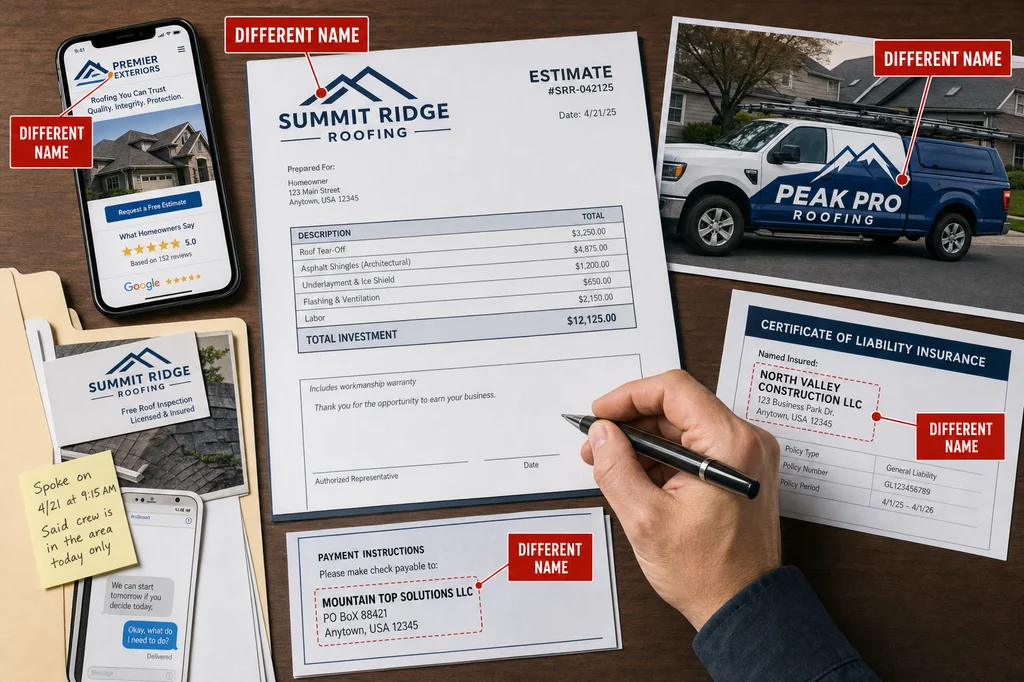
Traveling conmen can make a roof scam look credible with company-branded vehicles, polished websites, and fake online reviews. Reports have linked some crews to the UK and Ireland, but the practical warning is broader: verify the business behind the sales pitch before authorizing any roofing or home repair work.
A polished company identity is a starting point, not proof
The tactic works because the people selling the work may appear organized, established, and locally active. A company name on a truck or a professional-looking website is not proof that the business has a stable history or will stand behind its work.
Police reports described crews that use websites, company branding on vehicles, and online reviews to build trust. When complaints begin appearing online, the operators may switch to a new company name and continue taking work under that new identity. That creates a serious homeowner problem: the name you search today may not be the name attached to prior complaints, unfinished work, or damage.
Reports tied the scheme to a range of home repairs, not just roofing. One accused operator, Terry McDonna, faced fraud charges in California and New York and was accused of damaging roofs before persuading elderly homeowners to hire him. Other reported victims described major damage after work on foundations and roofing.
Do not treat branding as verification. The point is not that every newer company or contractor with a wrapped truck is suspect. It is that appearance alone cannot tell you whether the company is established, properly identified, and accountable for the work it proposes.
- Company name consistency: Compare the name on the vehicle, website, estimate, insurance paperwork, and payment instructions. Different names can signal that you need a clearer explanation before moving forward.
- Review patterns: Read beyond the star rating. Reviews that are generic, unusually repetitive, or attached to a business with little traceable history deserve extra scrutiny.
- Business history: Search the company name along with the names of the people selling the work. If the business appears to have repeatedly changed names, pause the project until you can verify who will be responsible.
- Scope of alleged damage: Be cautious if someone claims to have found serious roof damage and immediately pushes a large repair agreement. A claim should be documented clearly enough for you to understand what is damaged and why the proposed work addresses it.
- Payment destination: Make sure the entity named in the agreement is the same entity receiving payment. If the paperwork is unclear, do not rely on verbal assurances.
These checks will not prove that a contractor is trustworthy, but they can expose a mismatch between a convincing sales presentation and a business that is difficult to trace.
Slow the sale down before you authorize roof work
A rushed decision is where an impressive-looking operation can gain the advantage. You do not need to diagnose the roof yourself or let a salesperson define the urgency for you at the door.
Instead, keep control of the decision. Ask for a written description of the proposed repair or replacement, including the areas involved and the reason the work is recommended. Take time to compare the company identity across its estimate, website, vehicle, and payment information. If the seller cannot give you a clear, consistent answer about the business name or the work, that is enough reason not to sign.
For a substantial repair, have an independent roofing professional assess the condition and provide a written scope. This is especially useful if the first salesperson says the roof was damaged, yet the proposed work is broad or expensive. You are not deciding whether the salesperson seems friendly; you are deciding whether the documented work and responsible business can be verified.
What to say when a doorstep roofer pressures you
You can end a high-pressure interaction without debating the salesperson’s diagnosis. Keep the response short, and do not make decisions while someone is waiting at the door.
- “Please leave the written scope and the full legal business name. I will review it before making a decision.”
- “I do not authorize work or payments during an unsolicited visit.”
- “I will arrange my own roofing assessment if I need one.”
- “Put the company name, contact information, and proposed work in writing.”
A legitimate business should be able to identify itself consistently and explain its recommendation in writing. Pressure to sign immediately, confusion about the company name, or resistance to putting terms on paper changes the risk of the transaction.
What to do if you suspect deceptive roof work
Documenting the situation quickly can help you protect your options and help investigators connect similar complaints. Keep the estimate, contract, business card, payment records, photographs, text messages, and any vehicle or company information you have.
Reports about traveling conmen emphasize the value of notifying law enforcement. Cases may cross community and state lines, and separate homeowner reports can help investigators identify a pattern. If insurance, a contract dispute, or possible fraud is involved, your options can depend on the policy, contract, and state. Confirm next steps with the appropriate insurer, law enforcement agency, consumer-protection office, or qualified legal professional rather than relying on the salesperson’s explanation.
Choosing a traceable roofing company matters most before money changes hands. Directorii lists verified contractors.
Source: Roofing News: Traveling Conmen Scam, Insurance Rate Cut, AI Roof Scans
FAQ
What is the traveling conmen roof scam?
It is a reported pattern in which home-repair crews use credible-looking business branding, websites, and online reviews to win work, then may change company names when complaints surface. Reports have linked some crews to the UK and Ireland, but homeowners should focus on verifying the specific business offering the work.
How can I tell whether a roofing company has changed names?
Compare the business name on the truck, website, estimate, contract, payment instructions, and other paperwork. Search both the company name and the names of people selling the work. If the identities do not match or the company cannot explain its history clearly, pause before signing or paying.
Should I trust online reviews for a roofer who came to my door?
Online reviews can be useful, but they should not be your only check. Traveling conmen have reportedly used fake reviews as part of a polished presentation. Read the reviews closely, look for a traceable business history, and make sure the company name matches the name on its written proposal and payment details.
What should I do if a roofer says they found major damage?
Ask for a written explanation of the claimed damage and the proposed work, then take time to review it. For a substantial recommendation, arrange an independent roofing assessment. Do not let an unsolicited salesperson’s urgency replace a clear, documented evaluation of your roof.
Can I report suspected traveling conmen after they leave?
Yes, report suspected deceptive activity to law enforcement and retain all available records, including paperwork, messages, payment information, photographs, and company or vehicle details. Reports from different communities can help investigators identify connected cases. For contract or insurance questions, confirm your options with the appropriate qualified professional.