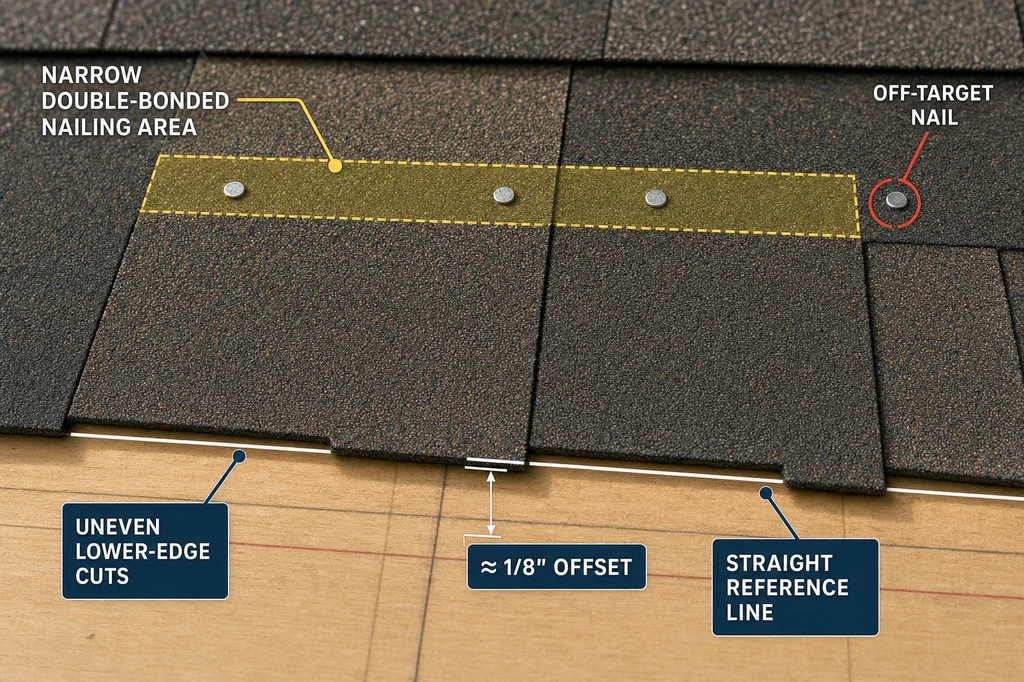
Tamko Heritage shingles can become the option when a homeowner wants a color that is unavailable in another shingle line. Before approving that tradeoff, look beyond the shade. Reported concerns with Heritage include a small nailing area and cut variation within the same bundle that may make finished courses look wavy.
Why small cut differences can show on the roof
Opened Tamko Heritage bundles showed uneven edge details described as “tiger tooth” cuts. In one example, one shingle extended while another was shorter by about one-eighth of an inch.
That amount is small, but it can matter across a roof course. Even when shingles follow a straight line, an edge that sits slightly higher or lower than the next one can create a wavy-looking horizontal line. The concern is especially relevant when a roof slope is highly visible.
These are reported observations from individual bundles, not manufacturer specifications or proof that every Tamko Heritage bundle will have the same variation. They are still a reason to examine more than color and the general architectural-shingle pattern when comparing options.
The narrow nailing area is an installation concern
The nailing area is described as small, with nails intended to go into a double-bonded area. A roof installation can involve about 2,000 nails, so a small target leaves less room for an off-position fastener.
Roofing nail guns can get gunky during installation. With a tighter nailing target, keeping every fastener in the intended area becomes more demanding. The practical issue is not whether Heritage can be installed, but whether the crew can maintain consistent fastening and alignment throughout the job.
If the preferred color is available only in Heritage
In the Florida example, Tamko Heritage was used because the homeowner wanted a color that was unavailable in the contractor's usual shingle line at that time. The roof was expected to meet code, but Heritage was not the contractor's first, second, or third choice.
Use that situation to make a deliberate product decision before materials are ordered:
- Confirm the exact color and shingle line. Put both in the written scope rather than listing only the brand.
- Compare the alternatives available now. If color is the reason for choosing Heritage, ask which other colors or shingle lines are available and whether they better fit your appearance priorities.
- Ask about the cut consistency seen in current materials. The relevant detail is whether uneven edges could affect the visible course lines on your roof.
- Ask how fastening will be kept in the intended area. This is particularly important when the nailing target is small and the installation involves thousands of nails.
- Decide whether the color is worth the compromise. If Heritage is proposed solely because another desired color cannot be obtained, consider a different color or available alternative before delivery.
Tamko Heritage can look similar to other architectural shingles from the ground. The concerns raised here are in the less-visible details: cut consistency, the narrow nailing area, and the effort required to keep courses looking straight.
Directorii lists verified contractors.
Source: YouTube
FAQ
What Tamko Heritage shingle problems were reported?
Reported concerns include a small nailing area and uneven cut or edge details within opened bundles. One example showed a difference of about one-eighth of an inch between shingle edges, described as a “tiger tooth” effect.
Can Tamko Heritage cut variation make roof courses look wavy?
It may. If individual shingle edges sit slightly higher or lower than adjacent shingles, the course can appear uneven even when the installer follows a straight line. The reported one-eighth-inch variation was presented as enough to affect the visible appearance.
Why does the Tamko Heritage nailing area matter?
The intended nailing area is described as small and located in a double-bonded area. Because a roof can require about 2,000 nails, a smaller target can make consistent fastener placement more demanding, particularly if a nail gun gets gunky during the work.
Should color be the only reason to choose Tamko Heritage?
No. In the example, Heritage was selected because the homeowner wanted a color unavailable in the contractor's usual shingle line. Compare the color benefit with the reported cut-consistency and nailing-area concerns before approving materials.
What should be written into a Tamko Heritage roofing scope?
The written scope should identify the exact Tamko Heritage shingle line and color. Before materials are ordered, also discuss available alternatives, how the crew will maintain course alignment, and how it will keep nails in the intended fastening area.