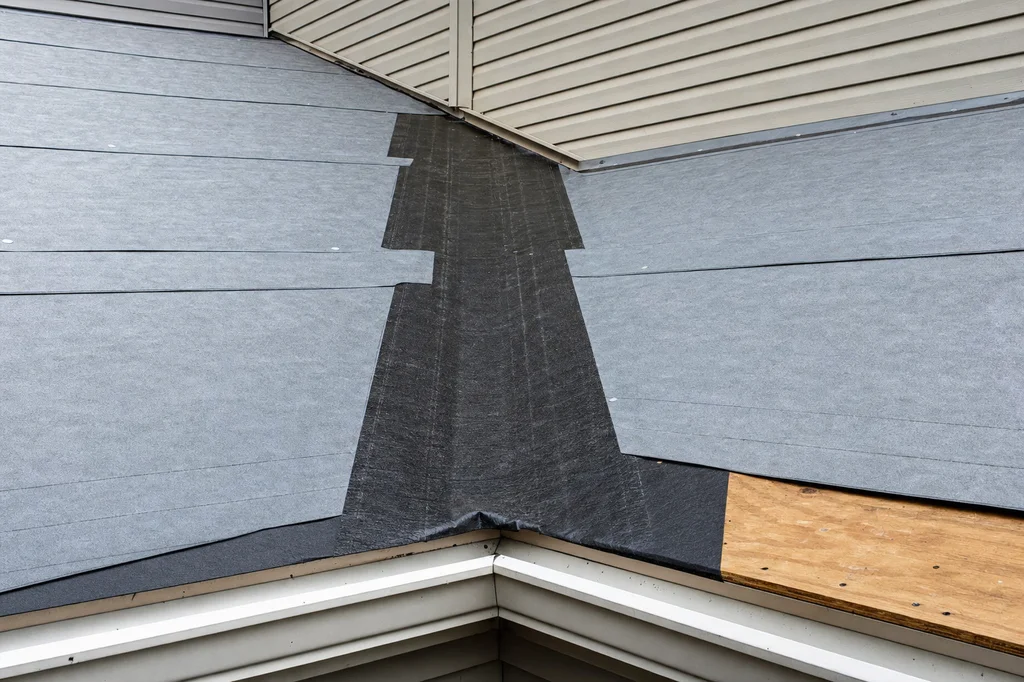
Choosing between synthetic and felt underlayment is a different decision from deciding where to use ice-and-water shield. Felt and synthetic sheets cover the main roof field beneath the finished covering. Self-adhering ice-and-water shield is used at details especially prone to leaks, including valleys, chimneys, and roof-to-wall intersections.
The layer between the roof covering and deck
Underlayment goes between the finished roof covering and the roof deck, such as plywood. It provides a second layer of protection if something happens to the roof covering.
Traditional asphalt felt, also called tar paper, is made from wood pulp and other organic materials with an asphalt coating. The coating helps water shed from the material rather than be absorbed.
Synthetic underlayment is a polypropylene membrane that serves the same general purpose. Asphalt felt still appears on some roofs, but synthetic underlayment has largely replaced it.
The practical difference: tearing
The notable difference between these field underlayments is tear resistance. Both 15-pound and 30-pound felt tear much like paper. A thinner layer of synthetic underlayment takes much more effort to tear.
That makes synthetic underlayment the more tear-resistant option in this material comparison. It does not turn field underlayment into the protection used for every roof detail.
Where the sticky membrane changes the job
Ice-and-water shield has a protective plastic backing over an extremely sticky underside. Once warmed, it adheres tightly to the roof deck. Fasteners driven through it can also seal around the penetration when the material warms.
This self-adhering membrane is intended for areas more prone to leaks:
- Roof valleys
- Areas around chimneys
- Roof-to-wall intersections
In other words, synthetic or felt underlayment covers broad roof areas, while ice-and-water shield addresses these vulnerable transitions.
High-temperature ice-and-water shield
High-temperature ice-and-water shield is a self-adhering product for areas exposed to greater heat, such as beneath metal, copper, and standing-seam roofs. Its label also identifies use with certain synthetic, clay, and concrete roof coverings.
It has a synthetic-felt-like, non-slip surface along with its adhesive backing. This is a more specific material than standard field underlayment, not simply a stronger version of felt.
A separate underlayment for very low-slope rolled roofs
Rolled roofing is commonly used on very low-slope roof areas and has a granular finished surface. Its system can use a base sheet installed directly over the deck before the granular cap sheet. Many rolled-roof base-sheet products have adhesive backing, though the exact system varies by product. The base sheet is thicker than ice-and-water shield and serves as part of the rolled-roofing system.
The takeaway
For the main roof field, synthetic underlayment is harder to tear than 15-pound or 30-pound asphalt felt. For valleys, chimney areas, and roof-to-wall intersections, the relevant product is self-adhering ice-and-water shield. High-temperature versions are intended for heat-exposed roof coverings such as metal, copper, and standing-seam roofs.
Source: Roof underlayment material comparison
FAQ
What is the difference between synthetic and felt roof underlayment?
Asphalt felt is made from wood pulp and other organic materials coated with asphalt. Synthetic underlayment is a polypropylene membrane. Both go beneath the finished roof covering, but synthetic underlayment is much harder to tear than 15-pound and 30-pound felt.
Why is synthetic underlayment more tear-resistant than felt?
In the material demonstration, 15-pound and 30-pound felt tore similarly to paper. A thinner synthetic sample required much more effort to tear.
Where should ice-and-water shield be used?
Ice-and-water shield is intended for roof areas especially prone to leaks: valleys, around chimneys, and where the roof meets a wall.
What makes ice-and-water shield different from field underlayment?
Ice-and-water shield has a sticky underside protected by a removable backing. When warmed, it adheres tightly to the roof deck and can seal around fasteners. Felt and synthetic underlayment are broader field layers beneath the roof covering.
When is high-temperature ice-and-water shield used?
High-temperature ice-and-water shield is intended for hotter applications, including beneath metal, copper, and standing-seam roofs. The product label discussed also identified certain synthetic, clay, and concrete roof coverings.