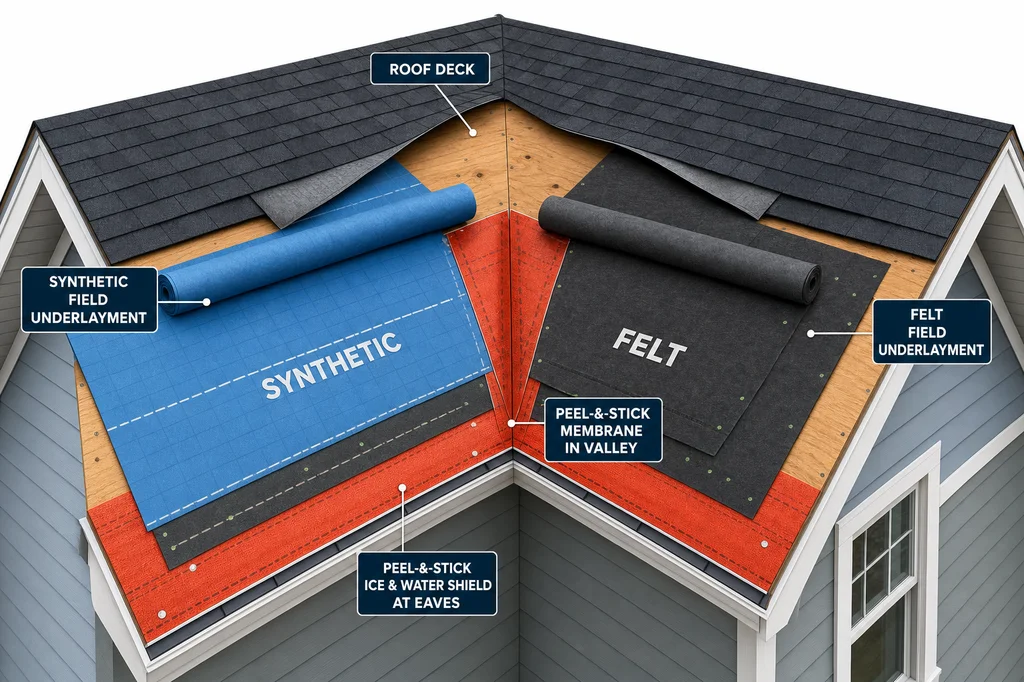
Choosing between synthetic and felt roof underlayment affects the backup protection beneath your shingles, tile, or metal. Synthetic products generally offer stronger tear and UV resistance, while felt remains a familiar asphalt-based option. Your reroof bid should identify the underlayment type, where it goes, and whether peel-and-stick protection is included.
Why the layer below the roof covering matters
Underlayment is the protective layer installed between the roof deck and the visible roof covering. It is not a substitute for properly installed shingles, tile, or metal, but it provides an additional barrier beneath the finished roof.
Older roofs often relied on asphalt-saturated felt, sometimes called tar paper. Early felt used organic fibers such as wood pulp saturated with asphalt or tar. The material was lightweight and affordable, but it could tear during installation, absorb moisture, become brittle in cold conditions, and break down after UV exposure if left uncovered too long.
For a homeowner, the key point is simple: a reroof is not only a shingle purchase. The estimate should make clear what is being installed over the deck before the finished roof goes on. A bid that merely says “underlayment” leaves too much unanswered.
Synthetic underlayment versus felt: the practical tradeoff
Synthetic underlayment is generally selected for durability and installation flexibility; felt may suit a project when the specified system calls for it and its exposure limits fit the work plan. The right choice depends on the roof covering, roof design, climate conditions, and the specific product being proposed.
- Tear resistance: The reported weakness of felt is tearing during installation. Synthetic underlayments made with materials such as polypropylene or polyethylene are marketed for stronger tear resistance, which can matter while a roof is being covered.
- Moisture behavior: Felt can absorb water over time. Synthetic products are described as waterproof, but the homeowner should still distinguish between a product’s water resistance and the complete roof system’s ability to prevent leaks.
- UV exposure: Felt can deteriorate under sunlight and may need to be covered quickly. Synthetic products are marketed as UV resistant, giving the roofing crew more flexibility if the roof covering cannot be installed immediately.
- Weight and handling: Synthetic underlayment is lightweight. That can make it easier for a roofing crew to handle, but it does not eliminate the need for sound fastening and careful installation.
- Cold-weather performance: Felt was reported to become brittle in cold temperatures. If your work is scheduled during cold weather, ask how the specified material is intended to perform under those conditions.
Heavier felt products and fiberglass reinforcement were introduced to improve durability and tear resistance. That history matters because “felt” is not one uniform product. Do not assume that every felt product behaves the same way, and do not assume every synthetic product has identical exposure, traction, or moisture-management features.
Where peel-and-stick protection changes the roof assembly
Peel-and-stick underlayment is a separate category that provides a more adhesive waterproofing layer in selected areas. It is also called ice and water shield and is made from rubberized asphalt or modified bitumen.
Rather than treating it as a whole-roof replacement for every other underlayment, review where the proposal places it. It has been used at vulnerable areas such as roof edges and valleys. It is also used on some high-end and metal-roof projects and in areas with extreme heat or cold. Its purpose is to help limit leaks if the outer roof covering is damaged.
A complete proposal should show the relationship among the roof deck, peel-and-stick areas, field underlayment, and the finished roof covering. This is especially useful on roofs with valleys, transitions, or other details where water concentrates. A roofing professional can confirm the appropriate assembly for the roof material and local conditions.
What your reroof estimate should identify
A useful bid names the protective layers instead of burying them in a single line item. You should be able to compare two estimates without guessing whether one contractor included a more durable field underlayment or added protection at critical roof areas.
- Name and type of field underlayment. The proposal should state whether it is synthetic or felt, rather than simply listing “underlayment.”
- Placement of peel-and-stick material. Look for the roof areas included, such as edges and valleys, if applicable to your design.
- Compatibility with the roof covering. Confirm that the proposed underlayment is intended for your asphalt shingles, tile, or metal roof system.
- Exposure plan. If the roof may be temporarily uncovered during installation, have the roofer explain the specified product’s UV-exposure limitations and how the deck will be protected.
- Moisture management features. Some underlayments are designed with breathable layers to allow moisture vapor to escape. Ask whether that feature is part of the specified product and why it is appropriate for your roof assembly.
- Written scope for transitions. Valleys, edges, and roof changes deserve clear written details because these are the locations where the protective layers can differ from the main roof field.
Features such as anti-slip surfaces, solar-roofing support, and fire-related ratings may be available on certain underlayment products. Treat those as product-specific claims, not automatic benefits of every synthetic roll. Ask for the exact product name before using those features to compare bids.
Compare the installed system, not just the shingle line
The lowest visible-material price may not reflect the same protective layers beneath the roof. Compare estimates line by line before signing, particularly if one proposal specifies synthetic underlayment and another uses felt or does not identify the material at all.
Installation still determines whether a quality material performs as intended. A product can be tear resistant or UV resistant, but poor fastening, incomplete coverage, or unclear detailing around roof features can undermine the assembly. Select a roofer who will put the material choices and placement in writing. Directorii lists verified contractors.
Keep the final proposal and product names with your roof records. Those details make it easier to understand what is beneath the finished roof if repairs or future replacement decisions arise.
Source: The History of Roofing Underlayment
FAQ
Is synthetic underlayment better than felt for every reroof?
Synthetic underlayment is not automatically better for every reroof, but it is generally valued for tear resistance, low weight, and UV resistance. Felt has different moisture and exposure behavior and may still be specified for certain systems. Compare the exact products, roof covering compatibility, installation plan, and protective coverage in each written bid.
What should a reroof estimate say about underlayment?
A reroof estimate should identify whether the field underlayment is synthetic or felt and name the proposed product when possible. It should also show where peel-and-stick material will be installed and how vulnerable areas such as edges and valleys are addressed. A vague underlayment line makes bid comparisons difficult.
Is peel-and-stick underlayment the same as ice and water shield?
Peel-and-stick underlayment is also called ice and water shield in the material discussed. It is made from rubberized asphalt or modified bitumen and provides an added waterproofing layer. It is commonly used in key roof areas, including edges and valleys, rather than necessarily across every part of a roof.
Can felt underlayment be left exposed during a reroof?
Felt can break down under UV exposure and was described as needing prompt coverage after installation. Exposure tolerance depends on the specific product and site conditions, so the roofing professional should explain the installation schedule and protection plan. Do not assume a felt product can remain exposed as long as a synthetic product.
Why does tear resistance matter beneath shingles?
Tear resistance matters because underlayment can be stressed during installation and before the final roof covering is complete. Traditional felt was known to tear more easily, while synthetic materials are marketed for stronger tear resistance. The material still needs correct fastening and coverage to serve as a reliable secondary protective layer.