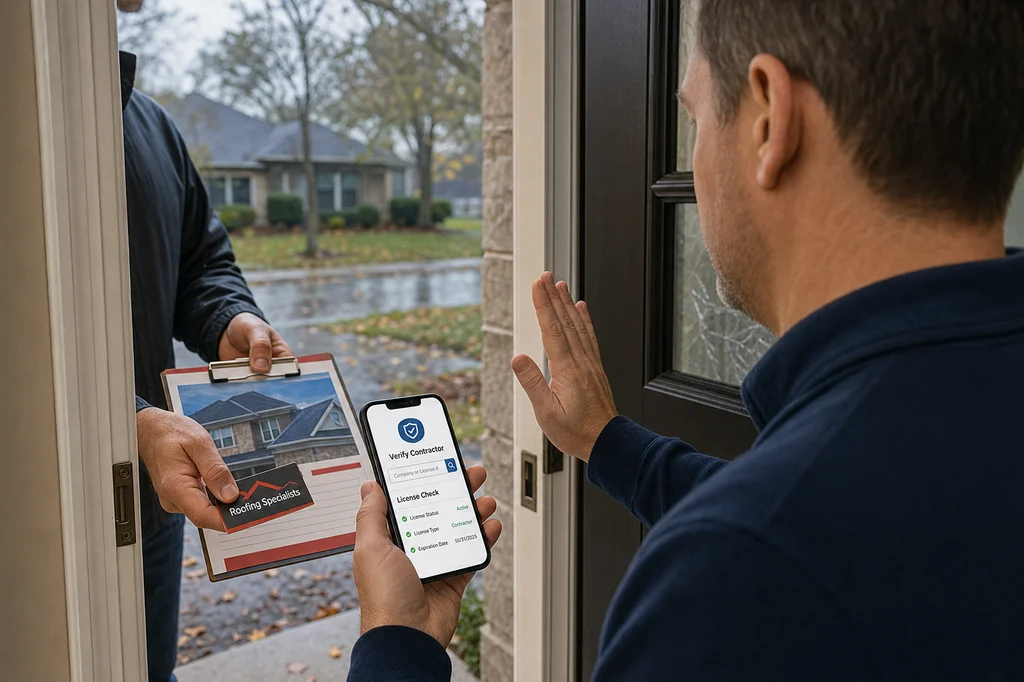
Storm-event door-to-door roofing solicitations often increase after damaging weather, when homeowners need fast answers and scammers see an opening. The safest response is to pause, independently verify the company’s licensing and history, and seek referrals before discussing repairs or money.
Why storm damage creates an opening for fraud
Storms create urgency, uncertainty, and visible damage—conditions that can make a quick sales pitch sound useful. A person who arrives uninvited may be offering legitimate services, but the contact method alone should not be treated as proof that the business is trustworthy.
Consumer fraud reporting has increased in recent years, and weather events can give opportunists a reason to target neighborhoods that may need repairs. A 2023 study by JW Surety Bonds reported that one in 10 homeowners had experienced contractor fraud. In that study, roofers ranked behind general contractors and home-improvement contractors among the types of contractors homeowners reported as most likely to scam them.
The practical meaning is simple: do not let the condition of nearby homes, a branded vehicle, or a confident inspection pitch substitute for your own research. A damaged roof may need prompt professional attention, but choosing a company should still be a separate decision from answering the door.
Storm chasing roofing scam signs that deserve a pause
The clearest warning sign is pressure to act before you can check the company. Fraud can range from poor work and inflated material charges to collecting money for work that is never completed or impersonating a legitimate business.
- An unsolicited approach: A knock, mailer, email, or other unexpected contact is a reason to investigate, not an automatic reason to refuse. Be especially careful if the person frames the offer as urgent.
- Pressure to decide on the spot: You should have time to research the business and make an independent decision. Pressure works by making delay feel risky.
- A request for money without a clear explanation of the work: Reports of contractor fraud include homeowners paying for projects that were not finished. Get the proposed work in writing rather than relying on verbal promises.
- Identity that cannot be independently confirmed: Some bad actors have pretended to represent legitimate companies. Use contact information you find yourself rather than relying only on a card, door hanger, or number supplied at the door.
- No verifiable company history or referrals: A company may travel to storm-hit areas, but you should still be able to confirm who is responsible for the work and find people who can vouch for it.
None of these points alone proves fraud. Together, they are a reason to stop the conversation and verify the business before signing anything or providing payment information.
What to say when a roofer contacts you first
You do not need to decide whether the person is honest while they are standing at your door. Keep the exchange short and move the decision back onto your schedule.
You can say: “I do not make roofing decisions at the door. Leave your company name and license information, and I will contact you if I want an estimate.” Do not use a phone number or website solely because the visitor gave it to you. Find the company independently, then compare the details you locate with what the representative provided.
If you suspect an immediate safety issue after a storm, contact a roofing contractor directly rather than authorizing work through an unexpected visitor. A contractor can assess the condition and explain what work may be needed without requiring you to inspect or walk on the roof yourself.
Verify the company before you engage
Independent checks are most valuable before a contract or payment enters the conversation. Licensing requirements vary by state and locality, so check local and state licensing boards when licensing is required.
Build your decision from information that does not come only from the salesperson:
- Confirm the exact business identity. Check the legal business name, address, phone number, and any license information against public licensing records where applicable.
- Check company history. Look for a consistent business presence and make sure the business you research matches the name on the proposal.
- Seek referrals. A referral from someone you know gives you a source who can vouch for the company beyond online ratings. Online reviews can offer useful clues, but they should not be your only check.
- Review the proposed work before signing. Make sure you understand what the company proposes to do and avoid moving forward on vague promises.
These checks do not guarantee a result, but they reduce the chance that a stranger’s urgency controls a costly home-repair decision.
Choose a roofer after the pressure is gone
The costly failure is not merely hiring a company that charges too much. It is paying a business that cannot be verified, does not perform the promised work, or leaves you with an unfinished project and no clear path to resolution.
Use the storm as a reason to act on needed repairs, not as a reason to skip due diligence. Directorii lists verified contractors.
Report suspected fraud to the appropriate agency in your area. Keep the company information, proposal, payment records, and messages if you need to document what happened.
Source: Why Are Roofing and Contractor Scams On The Rise?
FAQ
What are the most common storm chasing roofing scam signs?
Common warning signs include an unexpected approach after a storm, pressure to make an immediate decision, vague promises about the work, and a company identity you cannot independently confirm. These signs do not prove fraud by themselves, but they are good reasons to pause before signing a contract or discussing payment.
Should I hire a roofer who knocks on my door after a storm?
You can consider the company, but do not hire it solely because it contacted you first. Ask for identifying information, independently research the business, verify any required licensing, and seek referrals. A real roof concern can be addressed after you have had time to make a researched decision.
How can I verify a roofing company after a door-to-door visit?
Start by finding the company through your own search rather than using only the visitor’s contact details. Compare its business name, address, phone number, and license information with local or state licensing records where required. Then look for a consistent company history and ask trusted contacts for referrals.
What should I say to a roofer who pressures me to sign today?
Tell the representative that you do not make roofing decisions at the door and will contact the company after completing your research. You do not need to debate the condition of your roof or commit to an estimate while they are present. Keep any materials they leave for later verification.
What should I do if I paid a roofer and the work was never finished?
Keep the proposal, payment records, messages, and company details, then report the suspected scam to the appropriate agency in your area.