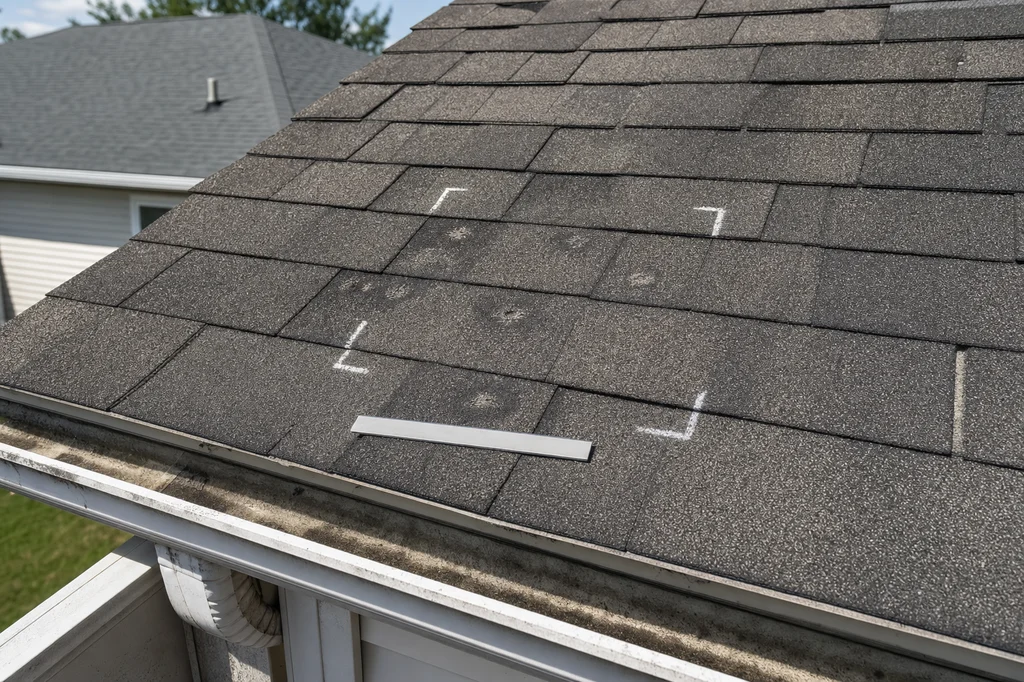
A State Farm denial of a hail claim should send you back to the documents, not into a rushed argument. Allegations surrounding the Hail Focus Initiative make it especially useful to compare the denial letter and any test-square rationale with your actual policy language and obtain the carrier’s damage basis in writing.
Why the Oklahoma case makes policy language central
Oklahoma’s attorney general was allowed to intervene in a private lawsuit involving State Farm, Hirsh v. State Farm. The allegations concern whether internal claim-handling standards were used to deny or reduce roof claims in ways that conflicted with policy terms. Those allegations have not established that every State Farm hail decision is improper.
For your home, the useful point is narrower: your insurance policy is the contract you bought. A denial may be correct under its terms, or it may rely on a damage interpretation that deserves a clearer explanation. Do not assume that an internal process, a brochure, or a verbal statement tells you everything the policy covers.
Pull together the complete policy in effect on the loss date, including endorsements, exclusions, deductibles, declarations page, renewal notices, the adjuster’s estimate, and every carrier letter. Keep copies of emails and notes of phone calls. A clean record helps you see whether the carrier addressed the coverage you actually purchased.
Read the denial letter against the exact hail coverage
Look for the reason the carrier did not find covered damage. Read that reason beside the relevant policy provisions rather than treating a brief conclusion as the end of the analysis.
Start by separating two questions that are often blurred together: whether there is physical damage, and whether the policy covers the claimed repair or replacement. A carrier may characterize marks as wear, blistering, or another non-hail condition. The letter may also state that the observed condition does not support replacement. Those are conclusions you can ask the carrier to explain with reference to the policy and claim evidence.
- Find the stated cause of loss. Note whether the decision says there was no hail damage, the condition was excluded, or the damage did not require the work claimed.
- Locate the matching policy section. Compare the letter’s wording with the policy’s insuring agreement, exclusions, endorsements, and loss-settlement language.
- Check the estimate and photos. Determine what roof areas were documented, what was omitted, and whether the written decision matches the estimate.
- Preserve storm information. Keep notices, photographs, repair invoices, and other records that help establish what happened and when.
This is not about trying to turn every roof condition into a hail claim. It is about making sure the carrier’s stated reason can be traced to the evidence and the contract. Policy interpretation and claim obligations can vary by policy and state, so get legal or insurance guidance when the language or dispute is unclear.
What to request if a test square was used
A test square is a limited roof area used to assess conditions. It can be part of a claim evaluation, but it should not leave you guessing how a small sample was used to reach a whole-roof conclusion.
If a small sampled area was treated as representative of the entire roof, document that point and ask how the carrier applied the sample to its decision. That question is not proof that any one inspection was wrong.
Request a written response that identifies the square’s size and location, the observations recorded there, the photos used, and how those observations affected the claim decision. Also ask for the carrier’s written basis for distinguishing hail damage from conditions it considers non-covered. If the carrier cited a specific damage standard, ask that it be identified rather than accepting a general statement that the adjuster “knows what to look for.”
Keep the request factual. You are seeking the basis for the decision, not asking an adjuster to make a new promise over the phone. A written answer gives you something concrete to compare with the policy and any independent roof assessment.
Get an independent roof assessment before you escalate
A roofing professional can document roof conditions and produce a repair or replacement scope, but a roofer does not decide insurance coverage. Their most useful role is to identify observable conditions, explain needed work, and provide records that can be compared with the carrier’s estimate.
Do not climb onto the roof to hunt for impacts or conduct your own test square. Roof access, damage assessment, and repair planning belong with a roofing professional. Ask for photos tied to specific roof areas and a written scope that distinguishes storm-related observations from ordinary age or wear when the professional can do so.
If the carrier’s explanation and the roof assessment materially differ, submit the documentation through the claim channel and ask for a written reconsideration or explanation. Depending on your policy and state, you may also want to consult a public adjuster or an attorney who represents policyholders. Those professionals can help you understand options, but no one should promise a coverage result.
When a State Farm hail denial needs outside help
Bring in help when the paperwork conflicts, the claimed damage was not addressed, or you cannot get a usable written explanation of the decision. Waiting without preserving records can make any disagreement harder to evaluate.
A contractor’s scope should be clear enough to compare with the insurer’s estimate, but avoid signing a document that leaves you uncertain about work, payment responsibilities, or who will communicate with the carrier. Review the contract carefully and seek counsel if you do not understand its insurance-related terms.
Directorii lists verified contractors.
Source: State Farm Sued for “Hail Damage Initiative”
FAQ
What should I do after a State Farm hail claim denial?
Start by collecting the denial letter, complete policy, endorsements, adjuster estimate, photos, and claim correspondence. Compare the reason for denial with the relevant policy language, then request a written explanation of the damage findings. A roofing professional can document roof conditions, while coverage questions may require a public adjuster or attorney.
What is the alleged State Farm Hail Focus Initiative?
The Hail Focus Initiative is the name used in allegations tied to an Oklahoma lawsuit involving State Farm. The allegations concern whether internal claim standards were used to reduce or deny roof claims contrary to policy terms. The case does not establish that every State Farm hail claim denial resulted from that alleged initiative.
Can I ask State Farm how it used a test square on my roof?
Yes, you can request the written basis for the claim decision, including the test square’s location, size, observations, and supporting photos. Ask how the sample affected the decision about the rest of the roof and how the carrier distinguished hail damage from other conditions. Keep your request focused on the claim record and policy.
Should I hire a roofer after my hail claim is denied?
A roofer can be useful when you need a documented assessment of observable roof conditions and a scope to compare with the insurer’s estimate. The roofer does not determine coverage or interpret your policy. Ask for location-specific photos and a written scope, and avoid attempting to inspect or test the roof yourself.
What if the denial letter does not explain why the roof damage was not covered?
Request a written explanation that identifies the damage findings, photos, estimate items, and policy provisions supporting the decision. If the explanation remains unclear or conflicts with the policy or independent documentation, consider a public adjuster or policyholder attorney. Insurance procedures and available options can vary by policy and state.