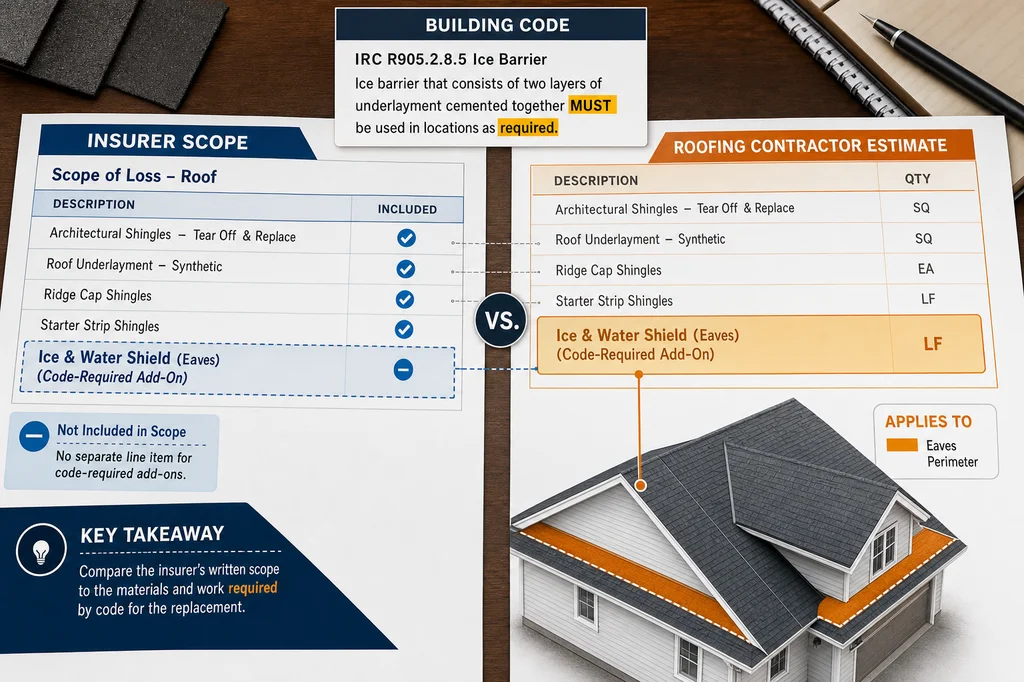
An Oklahoma State Farm roof claim may turn on whether a building-code add-on is actually required for the replacement, not simply a better roofing option. Compare the insurer’s scope with the applicable specifications and policy language before treating a denied item as an out-of-pocket upgrade.
Start with the item missing from the claim scope
The useful comparison is not “full roof versus partial payment.” It is the written scope of loss against the materials and work needed to complete the replacement under applicable requirements. A scope may include basic shingles yet leave out a separate item that affects the total cost of the work.
Jonathan Spires of Tulsa company IT Rooftech reported that State Farm paid for basic roofing materials but denied certain building-code-related add-ons on claims he handled. He showed one roof project where materials alone cost $16,000 and State Farm initially paid $11,000. That is one contractor’s reported example, not a measure of what every State Farm claim will pay.
For a homeowner, the gap matters because it can change the choice between revising the roof scope, paying the difference, or requesting a further coverage review. Do not assume every item described as an “upgrade” is optional, and do not assume every code-related line belongs in every claim.
- Insurer scope: Identify every line item included, excluded, or marked as not covered.
- Roofing estimate: Match each disputed material or labor item to a specific location and purpose.
- Applicable requirement: Find the language that says whether the item is required for this replacement.
- Policy: Review provisions concerning increased costs, ordinance, law, or code-related coverage, if included in your policy.
Why “required” and “must” matter in code specifications
Words in the relevant specification can make a practical difference. Spires’ approach was to distinguish “recommended” from “required” or “must” when documenting roof-related add-ons.
A recommendation may describe a preferred method or product without establishing that it has to be included. Language stating that an item is “required” or “must” may provide stronger support that the work is necessary to complete the replacement as specified. That still does not settle coverage by itself. The policy terms, the actual condition of the home, and the rule that applies locally can all matter.
Read the cited passage, not just a summary in an estimate. A good document trail identifies the exact item, the specific wording, and why it applies to your roof. If the rule is local or technical, seek clarification on whether it applies to the planned work. Do not rely on a sales description of an upgrade as proof of a requirement.
Compare like-for-like scopes before challenging a denial
A denied add-on is easier to evaluate when both documents describe the same roof and the same work. Compare quantities, locations, and installation assumptions instead of comparing only the final totals.
Spires described claims with similar code items receiving different outcomes, including a comparison with another insurer that paid code-related add-ons quickly. He also alleged that neighboring homeowners insured by State Farm could receive different claim outcomes. Those reports may be frustrating, but another homeowner’s payment or another carrier’s decision does not establish what your policy covers.
Use a side-by-side worksheet to make the disagreement specific:
- List the denied item exactly as it appears on the roofing estimate.
- Find whether it appears anywhere in the insurer’s scope, notes, or correspondence.
- Attach the applicable specification and highlight the operative wording, such as “required” or “must.”
- Connect the item to the roof area being replaced rather than leaving it as a general allowance.
- Request a written explanation of the coverage or scope decision for that individual line item.
This process helps separate a documentation problem from a true disagreement about policy coverage. It also reduces the risk of approving a contract that assumes an insurer will pay for work that remains unresolved.
Oklahoma’s notice is not a substitute for your policy review
Oklahoma regulators have publicly addressed code-related claim costs, but a general notice does not determine an individual claim. Your policy and the facts of your loss still need a claim-specific review.
The Oklahoma insurance commissioner issued a special notice to insurers licensed in the state that addressed additional coverage for increased costs related to building-code items. The notice stated that such coverage should be applied. Oklahoma Attorney General Gentner Drummond also said his office had opened an investigation into concerns about insurance companies underpaying roofing claims.
Those developments may be relevant context if you are seeking an explanation, especially when your documents identify a required item. They do not mean an insurer will automatically add every disputed line, nor do they answer whether your policy includes the applicable coverage. If you believe an insurer’s response conflicts with your policy, consider speaking with your state insurance department or qualified counsel about your options.
Keep the roofer’s estimate separate from insurance advice
Your roofer can document roof conditions and the work needed, while insurance coverage questions may require other help. Keeping those roles clear can prevent a scope dispute from turning into an unsupported promise about claim payment.
State Farm said it seeks to identify damage and applicable coverage and provide benefits within the terms of the policy. That policy language is central: an estimate can show why work is being proposed, but it does not by itself decide what the insurer owes.
Before signing a roofing agreement, make sure you understand which items are approved, which are disputed, and whether the contract makes you responsible for amounts not paid by insurance. If the dispute concerns policy interpretation rather than roofing work, a qualified insurance professional, public adjuster, or attorney may be more appropriate than asking the roofer to resolve coverage.
When the cost difference depends on a precise scope and competent installation, Directorii lists verified contractors.
What to say when you request a code-item review
A short, itemized request is more useful than a general complaint that the claim was underpaid. Ask for the basis of the decision and provide the documents that connect the item to your roof replacement.
You can state that you are requesting review of a specific omitted or denied item, attach the roofing estimate and relevant specification, and ask whether the decision is based on the scope, policy coverage, or a finding that the requirement does not apply. Keep copies of the scope, estimate, photos, correspondence, and any revised payment documents.
Do not authorize roof work based solely on an expectation that a disputed code-related item will later be paid. Confirm the financial terms in your contract and obtain professional guidance for local code or coverage questions that remain unclear.
Source: State Farm Accused of Denying Roof Claims Nationwide | Roofer Speaks Out
FAQ
How can I tell whether a roof code add-on is required or only recommended?
Read the applicable specification for the exact wording tied to the proposed work. Language such as “required” or “must” may support that an item is necessary, while “recommended” may describe a preferred option. Seek clarification on whether the requirement applies to your particular replacement.
What should I compare in a State Farm roof code upgrade claim?
Compare the insurer’s scope line by line with the roofing estimate, the cited requirement, and your policy. Focus on the specific omitted item, where it applies on the roof, and whether the insurer denied it because of scope, coverage, or applicability. A difference in totals alone does not explain the decision.
Will a building-code requirement make State Farm pay for the item?
Not necessarily. A requirement may support that the item is needed for the roof work, but payment can depend on your policy terms and the facts of the claim. Review any ordinance, law, or increased-cost coverage language in your policy and request a written explanation for the disputed line item.
Should I sign a roofing contract while code-related items are still denied?
You should understand who is responsible for disputed amounts before signing. Review the contract for payment terms and any amount you may owe if insurance does not pay. The roofer can document the proposed work, but policy interpretation and claim coverage may require help from an insurance professional, public adjuster, or attorney.
What if my neighbor’s State Farm claim included items that mine does not?
Another homeowner’s payment does not establish coverage under your policy. Keep the focus on your own scope, the requirement that applies to your roof, and the insurer’s written reason for denial.