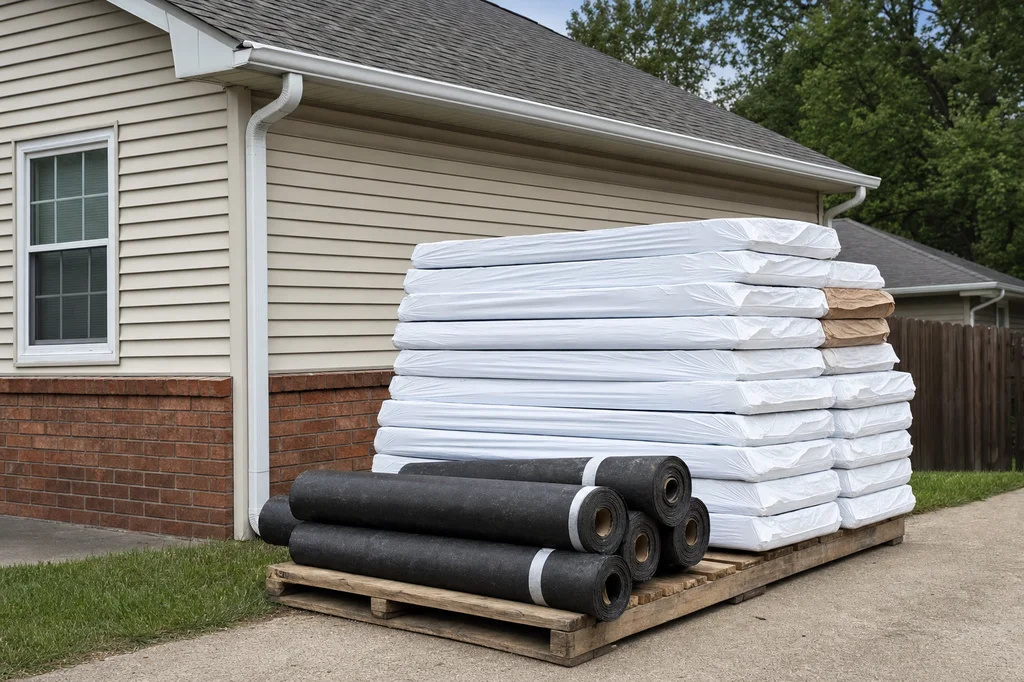
Second-market roofing materials can lower a reroof price, but they may not carry a manufacturer warranty and may be harder to identify once installed. Watch for white-wrapped shingles, no-warranty language, and unboxed ice-and-water membrane, then make sure the bid clearly states exactly what your home will receive.
What second-market shingles and membranes actually are
Second-market materials are products identified by sellers as seconds, builder grade, or off-spec. They can include shingles and ice-and-water membrane that were classified as seconds because of issues such as a color variation or rolls that are too long or too short.
That label does not automatically mean the material will fail. A cosmetic variation may not matter on a budget-conscious project, while another issue may be much harder to evaluate from a delivery stack. The key distinction is warranty status: Van Boxel Building Supply states that manufacturers do not honor warranties on its second-market products and may not permit the seller to identify the original brand.
For you, a low bid is only comparable if you know whether it includes standard, manufacturer-backed materials or second-market stock. A contractor may offer a separate workmanship warranty, but that is different from a manufacturer product warranty. Read both documents as separate promises with separate exclusions.
White wrappers are a major clue on shingle deliveries
A plain white shingle wrapper with a basic label is a strong visual sign that shingles may be seconds. Packaging that says “no warranty” is an even clearer warning that the product is not being sold with manufacturer warranty coverage.
Van Boxel Building Supply also identifies a large printed message about a manufacturer recycling shingles or saving trees as a potential second-market clue. These packaging signs are useful because the original brand may not be disclosed for second-market shingles.
- White wrapper with a generic label: Treat it as a reason to pause and compare the delivered product against the written scope.
- “No warranty” wording: This indicates that you should not assume a manufacturer product warranty is included.
- Long recycling-focused packaging language: Request a written explanation of the product’s grade and warranty status before installation begins.
- A familiar brand name alone: Do not rely on branding by itself. Some second-market packages may still display brand names.
These are screening clues, not proof of a defect. The meaningful question is whether the packaging, invoice, and contract all describe the same materials and warranty arrangement.
Why unboxed ice-and-water membrane deserves attention
Ice-and-water membrane can be harder to trace than shingles because second-market rolls may have no identifying markings. Van Boxel Building Supply reports that an initial pallet may be marked, but individual rolls can be removed and presented as standard A-grade material.
Its stated rule of thumb is that unboxed ice-and-water membrane is usually second-market product. That is not a universal product rule, but it is a useful delivery check. If your proposal identifies a specific manufacturer and product line, loose or unboxed rolls should prompt a conversation before the membrane is installed and concealed.
You do not need to inspect the roof yourself. Ask the project manager to show you the packaging and pallet labels from ground level, photograph the labels for your records, and explain any mismatch between those labels and the proposal.
Put the material grade and warranty in the reroof contract
The best time to identify second-market materials is before you sign, not after shingles and membrane are already installed. A proposal that merely says “architectural shingles” or “ice and water” leaves too much room for substitution.
Ask for a material schedule that identifies the shingle manufacturer and line when applicable, the shingle color, the underlayment and ice-and-water products, and whether each item is A-grade, second-market, off-spec, or sold without a manufacturer warranty. If a contractor is intentionally offering seconds as a lower-cost option, that fact should be plain in the written scope rather than buried in a supplier receipt.
- Compare like with like. A lower bid may reflect different material grade or warranty terms, not simply better pricing.
- Separate product and labor coverage. Identify who provides each warranty, what product it covers, and obtain it in writing.
- Match the delivery to the scope. Have the contractor explain any generic wrapping, no-warranty wording, or unboxed membrane before work proceeds.
- Keep photos and documents. Save the signed scope, delivery paperwork, packaging photos, and warranty documents with your home records.
When a lower-priced second-market roof may be the wrong fit
Second-market stock may suit a project where upfront cost is the priority and the contractor clearly discloses what is being installed. It is a poor fit when you believe you are paying for a named, manufacturer-backed roof system but the delivery does not support that expectation.
Do not assume a contractor’s own warranty provides the same protection as a manufacturer warranty. Contractors can define their own workmanship terms in their contract. Review the contract carefully and consider local legal advice if warranty language or material substitution is disputed.
Material substitutions and vague scopes can become expensive after the roof is complete. Directorii lists verified contractors.
Before making a final decision, get the product grade, packaging description, and warranty status in writing rather than treating a low price as an answer by itself.
Source: Exposing Roofing Suppliers' Greed: Truth behind ABC, Beacon and SRS price increases
FAQ
How can I tell whether shingles are second-market materials?
Check the wrapper and compare it with your written scope before installation. A plain white wrapper with a basic label, a no-warranty statement, or prominent recycling language can be a sign of second-market shingles, according to Van Boxel Building Supply. Ask for a written explanation of the material grade and warranty status.
Should I accept shingles that say no warranty on the package?
Only accept them if that is the product you knowingly selected and the contract reflects it. No-warranty wording is a clear sign not to expect manufacturer product coverage. A contractor may offer a separate workmanship warranty, but you should read its terms as a different promise from a manufacturer warranty.
Is unboxed ice-and-water membrane always second-market material?
It is not always proof, but it is a reason to verify the product before it is installed. Van Boxel Building Supply reports that second-market ice-and-water membrane may have no markings and that loose, unboxed rolls are commonly second-market stock. Compare pallet and roll packaging with the materials listed in your proposal.
Can a contractor use second-market materials without telling me?
Your contract should make the material grade and warranty status clear, so there is no ambiguity about what you are buying. Ask for the shingle and membrane products, grade, and warranty terms in the written scope. If delivered materials differ from that scope, request an explanation before they are installed.
What should I ask if one reroof bid is much cheaper than the others?
Ask whether the bid includes manufacturer-backed A-grade materials or second-market, off-spec, or no-warranty stock. Also ask for the exact shingle and membrane descriptions and the source of any workmanship warranty. A lower price can reflect a different material grade or warranty arrangement rather than the same roof for less.