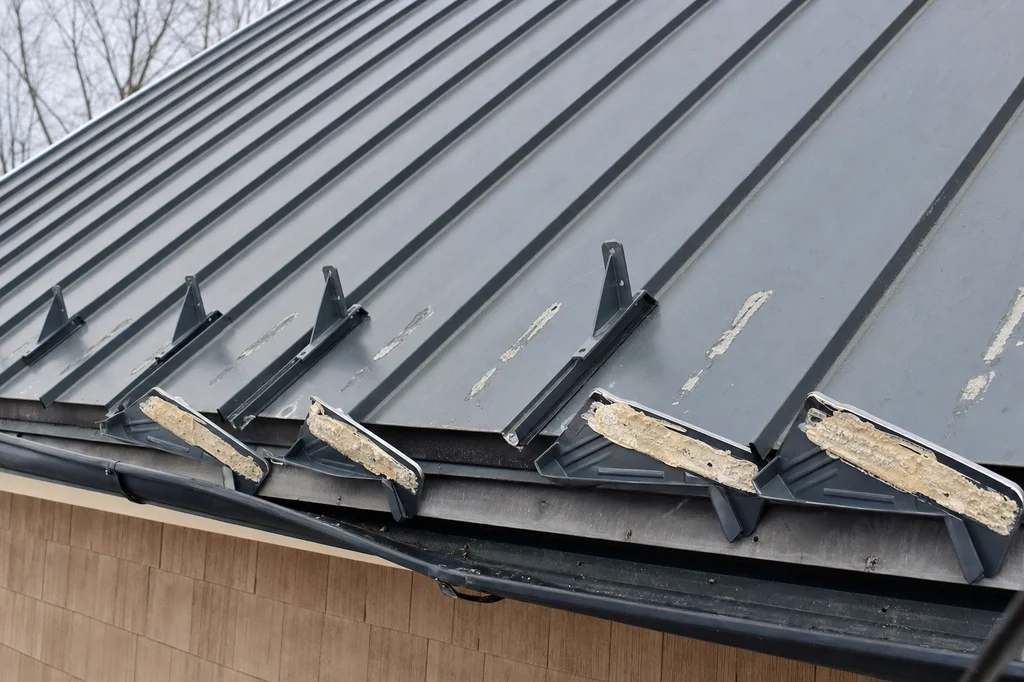
Adhesive snow guards can fall off a metal roof when the adhesive bond, roof coating, installation conditions, or attachment method cannot handle the load. If several guards have detached, treat it as a system failure—not a simple re-gluing job—and have a roofing professional evaluate the remaining guards before more snow arrives.
Several detached snow guards point to more than one loose part
When seven snow guards break away at once, the concern is the installation approach across the roof. A guard that was attached only with adhesive may have lost its bond, but the same conditions may affect every remaining guard.
Snow guards are intended to manage snow movement on a metal roof. They are exposed to snow weight, melting and refreezing, and the force created when snow shifts. An individual failure could be isolated damage. Multiple failures suggest that the installer’s surface preparation, adhesive application, product selection, or attachment layout deserves a closer look.
Do not assume that a detached guard can simply be put back in the same spot with more adhesive. A repair that ignores why the original bond failed can leave you with another round of failures during the next heavy snowfall.
Why adhesive snow guards may not stay attached
Adhesive installation may be allowed for some snow-stop products, but the acceptable method depends on the product instructions and the roof surface. Adhesive alone is not automatically poor work; the problem is using it without confirming that the product, coating, and installation conditions work together.
- Temperature and weather conditions: Adhesive may not perform as intended when it is applied outside its required conditions. The contractor should identify the installation conditions and the adhesive requirements rather than guessing after a failure.
- Metal-roof coating compatibility: The visible metal surface may have a coating that does not bond properly with a particular adhesive. Compatibility between the snow guard, adhesive, and roof coating matters.
- Attachment design: Some snow guards are fastened, while others may use adhesive methods. Fasteners can create their own concerns if they are installed improperly, including overtightening screws and crushing sealing washers. The appropriate method depends on the specific guard and roof assembly.
- Installer execution: Poor preparation or an incomplete installation can undermine either attachment method. A repeated pattern of failures is reason to evaluate workmanship rather than focus only on the broken pieces.
For a homeowner, the practical issue is simple: the repair should be based on the manufacturer’s written installation requirements for the exact snow guard and the actual finish on your metal roof. If the original product cannot be identified, a roofer may need to recommend a compatible replacement system instead of trying to preserve an unknown setup.
What a roofer should verify before repairing the guards
A qualified roofing professional should inspect the attachment system and the roof surface before selecting a repair. This protects you from paying for a cosmetic fix that leaves the remaining guards vulnerable.
Request a written assessment that addresses these points:
- Whether the existing guards were installed with adhesive only, fasteners only, or a combination of both.
- Whether the detached guards show adhesive left on the roof, adhesive left on the guard, or signs that the bond failed at the roof coating.
- Whether the roof coating is compatible with the proposed adhesive or replacement snow-guard system.
- Whether the remaining guards are secure, aligned, and suitable for the snow load conditions at the home.
- Whether a fastened system is appropriate for your roof profile and whether its fastening details can be installed without creating avoidable leak risks.
- Whether snow movement has damaged gutters, gutter apron, flashing, windows, or other edge details below the failed guards.
You do not need to get on the roof to investigate these details. Photos from the roofer, the product documentation, and a written scope should make clear whether the plan is to remove failed parts, replace the entire system, or repair only a defined section.
Do not overlook gutters pulled loose by snow movement
Snow-guard failure and gutter damage can be connected because uncontrolled snow can put force on roof-edge components. A gutter that has pulled away, sagged, or broken in the middle may no longer direct runoff where it was designed to go.
A gutter section detached after a large, wet snowfall can concentrate water near a window rather than carrying it through the gutter run. The gutter apron may also be disconnected, and the spacing of supports can raise concerns. Missing or widely spaced gutter hangers can leave a long run unsupported and more likely to sag under added weight.
If a damaged gutter is directing water into one concentrated location, leaving it in place may create a worse drainage pattern than a controlled temporary removal. That decision depends on the roof shape, expected snowfall, amount of meltwater, foundation drainage, and the condition of the window and roof edge. Have a gutters or roofing professional evaluate the situation promptly rather than pulling down a damaged section yourself.
When replacement is safer than patching the existing system
Replacing the snow-guard layout may be more sensible when multiple guards have failed, the original installation method cannot be verified, or the roof coating is not compatible with the proposed repair. Reusing a failed design without documentation can repeat the same failure mechanism.
Compare repair proposals based on the complete system, not just the number of guards being reattached. The scope should identify the snow-guard product, attachment method, adhesive if used, preparation requirements, treatment of remaining guards, and any gutter or roof-edge repairs. It should also say who is responsible for removing failed components and protecting the metal finish during the work.
Choosing the wrong repair method can mean repeated detachment, damaged gutters, and concentrated runoff at the roof edge. Directorii lists verified contractors.
Source: ALL of Their Snow Guards Fell Off
FAQ
Why are my snow guards falling off a metal roof?
Snow guards can detach because the adhesive bond failed, the adhesive was applied in unsuitable conditions, or the roof coating was not compatible with the attachment system. If several guards came off, the issue may affect the whole installation. Have a roofing professional inspect the remaining guards before reattaching anything.
Can adhesive-only snow guards be installed on a metal roof?
The correct attachment method depends on the snow-guard product, its installation instructions, and the metal roof surface. The adhesive also needs to be compatible with the roof coating and applied under suitable conditions. A contractor should identify the exact system before recommending an adhesive-only repair.
Should I re-glue snow guards that have fallen off?
You should not assume re-gluing is a durable fix until the cause of the failure is identified. More adhesive will not solve a coating-compatibility problem, poor surface preparation, or an unsuitable installation method. A roofer should evaluate the detached and remaining guards, then provide a written repair or replacement scope.
Can failed snow guards damage my gutters?
They can be connected when snow movement places extra force on gutters and roof-edge components. A sagging or detached gutter may send runoff toward one area, including near a window, instead of carrying water through the intended path. A professional should inspect hangers, gutter apron, flashing, and drainage before deciding on repair or removal.
What should a contractor check before replacing snow guards?
The contractor should identify the existing guard type, its attachment method, the metal roof coating, and whether the proposed adhesive or fasteners are compatible. They should also assess the security of the remaining guards and inspect nearby gutters for damage. Get those findings and the proposed system details in writing.