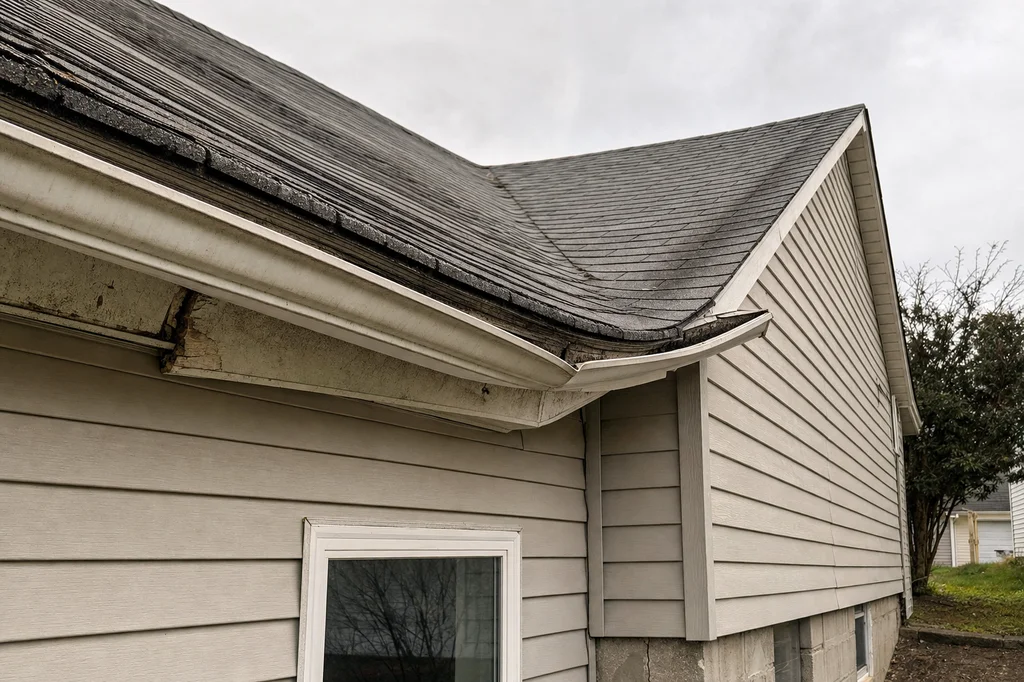
A sag where the roof meets the wall and gutter can make a low-priced house look like either an opportunity or a costly unknown. Water damage may be involved, but the visible dip does not reveal the repair scope by itself.
In the example of a run-down $95,000 home in Des Moines, the key question was not simply whether the south-side roof sag could be fixed. It was whether that eave problem was contained—or one of several conditions hidden by a low price, fresh finishes, or prior work.
Start at the sag, then inspect the whole house
Arrange a home inspection and a roof inspection before treating the sag as a defined repair. The roof area needs attention, but the rest of the property can change the decision just as much.
Look again at the exterior for cracking, anything unusual, or conditions that appear out of place. Consider the age and condition of HVAC equipment and plumbing, and whether there are signs of internal leaks. A roof issue may be manageable while other systems or concealed conditions make the project much larger.
If an inspection identifies a dangerous condition or a concern outside the inspector's evaluation, seek the appropriate additional evaluation before committing to the purchase.
A sagging eave is not automatically a total loss
Some sagging roof areas can be addressed with reframing and reinforcement, including added framing members. That is very different from assuming every sag is minor. A visible water-damaged area may require a larger roof section, and the needed work depends on the house and the findings.
Get repair information for the specific property rather than relying on an impression from the street. The practical distinction is whether inspections show a contained reframing repair, a dangerous condition, or broader defects elsewhere in the home.
Use disclosures and clues from the property together
Review seller disclosures for known property problems and compare them with the inspection findings. Available records of prior repairs can help explain the history of the sag or other work on the house.
- Check the basement. Recently opened paint cans may provide a clue that recent painting was done and warrant closer attention to what was being updated.
- Examine exterior cracking. Revisit the building rather than focusing only on the gutter-line dip.
- Consider what may be behind finishes. Prior work can conceal conditions that are not apparent during a quick showing.
- Be careful with a flipped home. The quality and extent of prior work may matter, particularly if structural conditions or older materials are involved.
Seller disclosures can provide context, but their requirements and significance vary by location and transaction. Consider qualified local advice if the disclosures and inspection findings raise serious concerns.
Do not let the price decide the risk for you
A low purchase price can make a fixer-upper seem easy to justify, especially when the house is livable. But renovation and investment properties can involve more work than expected after walls or finishes are opened. Older homes may also have issues such as asbestos, lead paint, or other conditions that affect the project.
Use the findings as one decision frame: a contained repair supported by inspections is different from a house with exterior cracking, aging systems, leaks, and unanswered questions about prior work. If the property has broad unknowns or a dangerous condition, the apparent bargain may not fit the purchase.
Directorii lists verified contractors.
Keep the roof inspection, home inspection, seller disclosures, and available repair records together while evaluating the property.
Source: Water Damage Created This Sagging Roof | Full Analysis
FAQ
How serious is a sagging roof when buying a house?
A sagging roof may be a contained framing repair or one sign of wider property problems. The visible sag alone does not establish the scope. Use roof and home inspections to determine whether the condition is dangerous, limited, or accompanied by other defects.
Can a sagging roof near the gutter line be repaired?
Some sagging areas can be addressed with reframing and reinforcement rather than being a total loss. Water damage may still require a larger roof section, so repair information for the specific house is important.
What else should I inspect besides the sagging eave?
Recheck the exterior for cracking and unusual conditions. Consider HVAC age, plumbing, possible internal leaks, and signs that work may have been covered before the home was listed.
Why look for paint cans in the basement of a fixer-upper?
Recently opened paint cans may be a clue that recent painting was done. It is one reason to look closely at the property and compare what you see with disclosures, inspection findings, and available repair records.
Should a low price make me more willing to accept a sagging roof?
No. A low price may reflect the land value or the condition of the house, but it does not establish that repairs will be limited. Separate a contained roof repair from broader unknowns involving the structure, systems, leaks, or prior work.