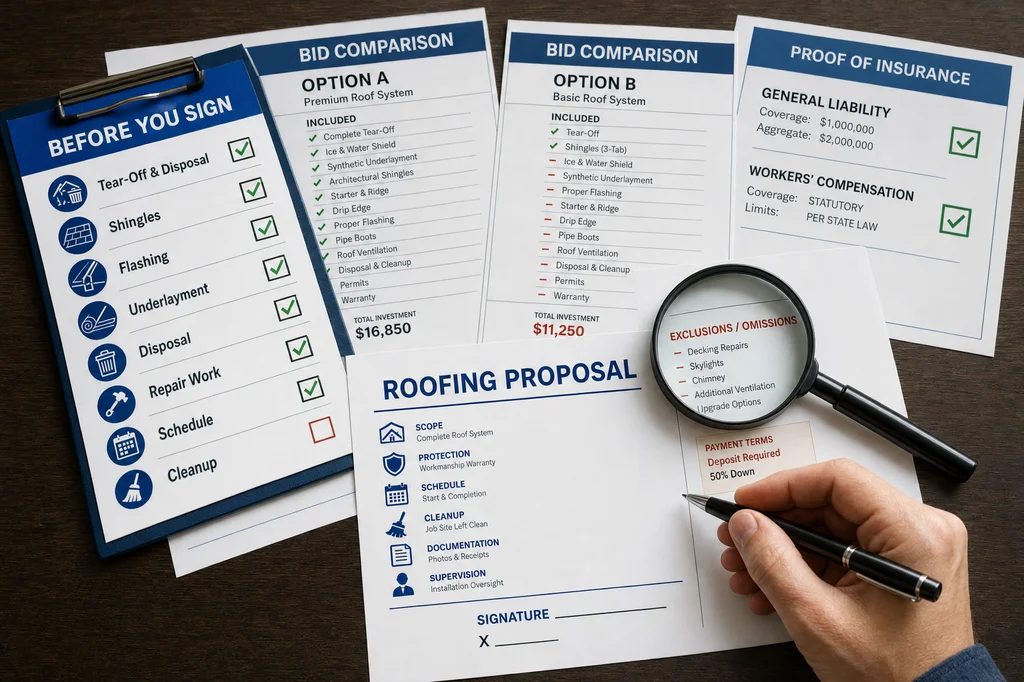
Eight roofing nightmares can start with more than a bad price: a vague scope, unfinished work, cleanup hazards, installation defects, or missing insurance can all turn a replacement into a costly problem. Use this checklist before you sign or pay a deposit.
Start by comparing what each roofing bid actually includes
A dramatically lower bid deserves a closer look, not an automatic rejection. Roofing requires substantial labor and materials, so a company that is far below competing estimates may be leaving out work, using a weaker labor plan, or planning to cut costs elsewhere.
Price alone does not prove poor work. A large, established company may operate efficiently or buy materials in volume. The problem is an estimate that is low without a clear explanation of its scope. One reported case involved a contractor hired to address a sagging commercial roof; concrete was used to fill the gap rather than repairing it with plywood.
- Compare the roof system, not the total. Line up tear-off, shingles, flashing, starter materials, underlayment, disposal, and any repair work listed in each proposal.
- Read exclusions closely. A low number may omit work that another bid already includes.
- Question unusual substitutions. A contractor should be able to explain why a proposed repair method fits the roof.
- Do not treat a deposit as the only decision point. Consider what leverage remains if the company stops responding or does not complete the work.
Verify the company before handing over a deposit
A company that is hard to identify or contact is harder to pursue when there is a problem. A visible business presence, usable contact information, and a record you can review give you a practical way to investigate concerns before work begins.
Be especially cautious with an unsolicited door-knock when you cannot find reliable information about the business afterward. Check whether the contractor holds any licenses required by your state or local authority, and verify the business details rather than relying on a name printed on a proposal. Licensing rules vary by location, so confirm local requirements with the appropriate authority.
Also ask for proof of liability insurance and workers' compensation coverage. Roofing crews work at height, and injuries can happen. Whether a homeowner's policy, contractor coverage, or another arrangement applies after an accident can depend on the policy, contract, and state, so review the documents and consult your insurer or counsel if you have a coverage question.
Make the schedule and supervision part of the agreement
A roof replacement should not drift into an open-ended project without a clear reason. Delays can occur, but a contractor should identify who is managing the work, what happens if unexpected conditions appear, and how changes will be documented.
One homeowner complaint described a project that remained unfinished after six months following problems that included the wrong roof color, gutter damage, leaks, and rework. That is a different risk from a weather delay. It points to poor coordination and weak quality control.
Favor a company that specializes in roofing rather than one that shifts among unrelated trades. Specialization does not guarantee quality, but it makes it easier to evaluate whether the company has a consistent roofing crew and a defined process for managing the job.
Require a cleanup plan that protects people and property
Cleanup is part of a roof replacement, not an optional courtesy after the installation. Tear-off debris can damage flowers and grass, while missed nails can create flat-tire and injury hazards for children, pets, and anyone using the property.
Before work starts, have the contractor explain how the crew will contain debris, protect vulnerable areas, and collect nails at the end of each workday and at final cleanup. Catch-All is one branded debris-containment system used for roofing work; the useful homeowner question is not whether a crew owns that specific system, but whether its cleanup approach is credible and specific.
Walk the accessible ground areas with the project manager after completion. You are checking the yard, driveway, walkways, and planting beds—not climbing onto the roof or performing a roof inspection yourself.
Do not confuse a finished-looking roof with correct installation
Shingles can look neat while important installation details are wrong. Flashing at a chimney, nail placement, starter materials, and ice-and-water protection were all identified as details that can affect how a roof performs after the crew is gone.
Improperly driven nails are a useful example. Nails set too deeply can reduce shingle holding strength. The reported concern was that a roof may appear complete until a shingle can be lifted or fails under wind conditions. That is an installation issue, not necessarily a problem with the shingle itself.
Manufacturer instructions matter because product warranties may depend on installation requirements being followed. Ask the contractor which manufacturer instructions apply to the proposed system, who will supervise installation details, and what documentation you will receive when the work is complete.
A permit closeout is not a substitute for quality control
A closed permit may show that a local process was completed, but it does not automatically prove every roofing detail was installed correctly. Inspection practices and the depth of an inspection can vary significantly by jurisdiction.
Do not assume an inspector will perform the same review as a roofing specialist. Instead, use the permit as one part of the record and make the contractor responsible for its own installation quality. If you have concerns about a completed roof, arrange an evaluation by a qualified, licensed roofing professional rather than attempting to inspect the roof yourself.
What to get answered before you hire a roofing company
The clearest answers should come before materials arrive. Use these questions to distinguish a detailed proposal from a vague promise.
- What work, materials, and disposal are included, and what is specifically excluded?
- Who will be the on-site manager, and how will I be told about changes or added repair work?
- How will the crew protect landscaping, collect nails, and handle daily cleanup?
- What flashing, underlayment, starter, and shingle installation requirements apply to this roof system?
- Can you provide current proof of liability and workers' compensation coverage?
- What is the planned schedule, and how will weather or unexpected conditions affect it?
The expensive mistake is not simply choosing the lowest estimate. It is signing a vague scope with a company whose workmanship, supervision, cleanup, and insurance cannot be verified. Directorii lists verified contractors.
Keep the signed scope, change records, payment documentation, permit records, and final project documents together. Those records make it easier to address a concern while the contractor is still engaged.
Source: 8 Roofing Nightmares: How not to hire a roofer
FAQ
How should I compare a roofing bid that is much lower than the others?
Compare the written scope before comparing the totals. Check whether tear-off, materials, flashing, underlayment, repairs, disposal, and cleanup are included. A low bid can reflect efficiency, but it may also leave out necessary work or rely on cost-cutting that is not clear until the project begins.
What should a roofing company explain about cleanup?
The company should explain how it will contain tear-off debris, protect landscaping, and collect nails from the property. You should also know who will perform the final ground-level cleanup. Missed nails and heavy debris can create hazards for pets, children, vehicles, grass, and planting areas.
Can I rely on a passed roofing permit as proof the installation is good?
Not by itself. Inspection practices can vary by jurisdiction, and an inspection may not evaluate all manufacturer installation requirements. Treat permit closeout as one record and rely on a qualified roofing professional for concerns about workmanship.
What insurance should I verify before hiring roofers?
Ask for current proof of liability insurance and workers' compensation coverage before work starts. Roofing involves elevated work and accidents can happen. The effect of an injury or property-damage claim can depend on the contractor's coverage, your policy, the contract, and state rules, so raise policy questions with your insurer.
What roofing details can cause leaks after replacement?
Flashing details, especially around a chimney, can cause leaks if they are not installed properly. Nail placement, starter materials, and required underlayment can also affect roof performance. A roof may look complete from the ground while these less visible details create problems later.