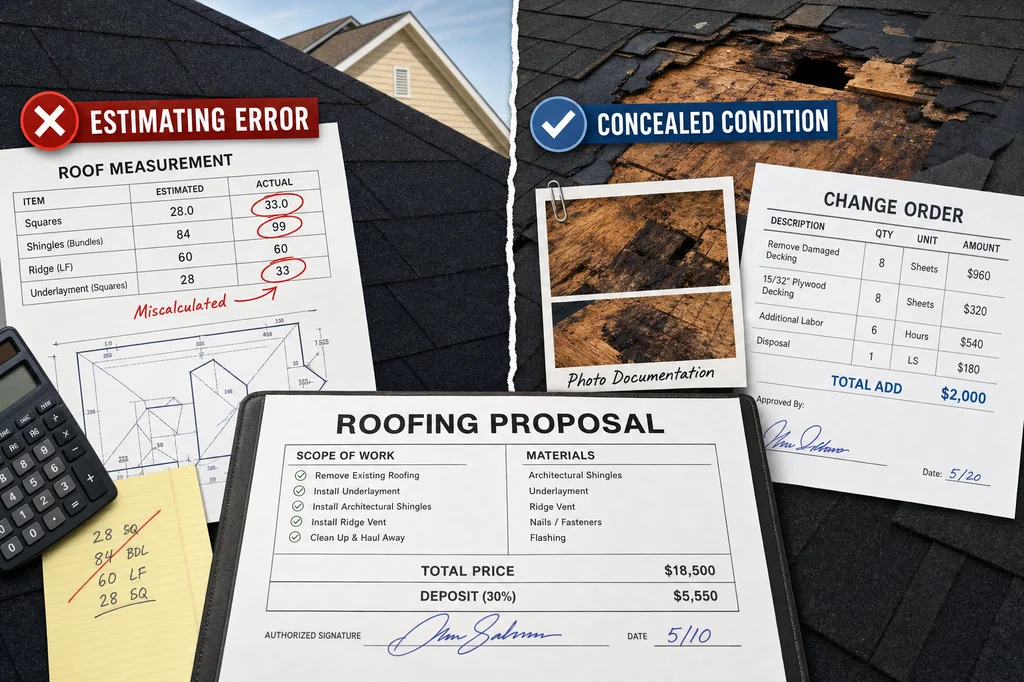
If a roofer asks for $7,000 more after you signed and paid a deposit, pause before agreeing. A genuine added condition can require a written change order, but a wrong roof measurement or missed material cost may be the contractor’s estimating mistake. Your contract language and documentation matter.
Start by separating a pricing error from changed work
A contractor’s request for more money deserves a specific explanation tied to the scope, not a vague statement that the original price was wrong. The key question is whether the roof and agreed work changed after signing, or whether the contractor simply made an error before pricing it.
If a contractor says the roofing squares were figured incorrectly or that estimating software was off, compare that explanation with the signed agreement. If the agreement broadly promises to replace the roof and does not reserve an adjustment for a measurement correction, that is very different from uncovering a condition that could not reasonably be priced from the initial inspection.
For example, a contract may state that one roofing layer will be removed. If tear-off reveals a second layer, that can be an added condition if the agreement identifies the original assumption and explains how additional work will be handled. Hidden damaged decking can be another legitimate extra, particularly when it is documented after shingles are removed. Whether an added charge is enforceable depends on the contract and applicable state law, so have a local attorney review a dispute if the amount is significant.
- Estimating mistake: The contractor mismeasured the roof, selected the wrong material price, or failed to account for a requested color or option that was known before signing.
- Changed scope: You requested additional work, changed materials, or expanded the project after signing.
- Unforeseen site condition: Tear-off exposes an extra layer, deteriorated decking, or another concealed issue addressed by the contract’s allowance or change-order terms.
Plainly put: you should not treat every post-signature price increase as normal. The contractor should be able to show exactly what changed and why it was not included in the original price.
Read the signed scope before releasing more money
Your signed proposal is the starting point. Look for the scope of work, material specifications, deposit terms, allowances, exclusions, and any section addressing concealed conditions or change orders.
Specific wording helps prevent later arguments. A proposal that says only “replace roof” leaves far more room for disagreement than one that identifies the number of layers to be removed, the decking process, the shingle brand and color, underlayment, ice-and-water protection where included, and flashing or valley work.
Review these items before you approve any added amount:
- Original measurement and material list: Ask for the roof measurement used to prepare the initial quote and the material quantities now being claimed.
- Known selections: Confirm whether your chosen shingle color, especially a specialty color, was written into the original estimate. A contractor who failed to price a known selection may be correcting their own research error.
- Scope assumptions: Check whether the contract specifies one layer, includes an allowance for a first sheet of decking, or lists a per-sheet price for additional decking.
- Change-order procedure: See whether the agreement requires written approval before extra work proceeds. Do not rely on a phone call or a verbal assurance for a large increase.
- Deposit status: Confirm what the contract says about refunding or retaining a deposit if work has not begun. Terms and state rules can vary, so seek local legal guidance if the contractor delays returning disputed funds.
Do not let urgency replace paperwork. A request that cannot be tied to the signed scope and a clear, itemized reason is not ready for your approval.
What a legitimate roofing change order should show
A valid-looking change order does more than add a number to the invoice. It identifies the condition or homeowner-requested change, the work needed, and the price before you authorize it.
For decking, documentation can include photos of the exposed damaged area, a photo after the affected section is removed, and a photo of the replacement decking in place. That record helps you understand why the work was needed and what you paid for. It also matters because shingles need solid decking for proper fastening; holes or deteriorated areas can leave nails without a secure base and may contribute to future roof problems.
For a material substitution or upgrade, the change order should name the original product and the replacement product. Generic labels such as “felt paper” or “architectural shingles” make comparison difficult. A written brand and product description make it easier to see whether you are receiving the system you expected or being asked to pay more for an omission in the original bid.
A written change order should include:
- The date and project address.
- The exact condition found or the exact change you requested.
- Photos or other supporting documentation when the issue was concealed.
- The added materials and labor, described clearly.
- The added price and any effect on the project schedule.
- Signatures or written approval from both parties before the extra work moves ahead.
If the contractor cannot distinguish a newly discovered condition from an original estimating error, do not sign a document that casually relabels the price correction as a change order.
Respond to the contractor without escalating the conflict
You can be firm without accusing the contractor of misconduct. Put your response in writing and keep it centered on the contract, the requested documentation, and your next step.
You might write: “Please send the measurement, itemized explanation, and the contract section that supports this additional amount. If this is a concealed condition, please provide photos and a written change order before any extra work is performed. If this was an estimating error, please confirm whether you will complete the signed scope at the contract price or return the deposit under our agreement.”
This approach creates a record and gives the contractor a chance to explain the request. It also prevents a rushed payment from being mistaken for agreement. Keep copies of the proposal, contract, payment receipt, texts, emails, photos, and any revised estimate.
When the price increase is a reason to stop the project
A major unexplained increase before work begins is a serious warning sign. If the contractor made a substantial pricing mistake and insists that you absorb it without a contract-based reason, you may decide not to proceed and instead seek advice about recovering your deposit.
Do not choose a replacement roofer solely because the next price is lowest. Compare the written scopes line by line. Large price gaps can reflect different materials, removal assumptions, accessory work, or installation plans. A lower bid may be legitimate if a company buys materials in bulk or gives a friend a reduced price, but the contractor should still be able to explain the scope and product list clearly.
Before hiring again, prioritize a detailed written proposal over broad promises. Directorii lists verified contractors.
Use the contract to set expectations before tear-off
The best time to address added costs is before the crew arrives. A contractor cannot always see concealed decking damage or extra roofing layers from the ground, but the proposal can explain how those discoveries will be documented and priced.
Ask for a defined process: who will contact you, what photos you will receive, whether there is an included decking allowance, and what written approval is required for additional work. This is not about predicting every surprise. It is about making sure a surprise does not become an unsupported bill.
Source: Homeowner roofing questions
FAQ
Can a roofer charge more after I sign a contract because the roof was measured wrong?
A measurement error may be the contractor’s estimating problem rather than a homeowner-approved extra. Review the signed scope, measurement assumptions, and change-order clause. If the work itself has not changed and the contract does not support an adjustment, request a written explanation before paying more. Contract rights and deposit issues can vary by state and agreement.
What should I do if my roofer wants $7,000 more before starting work?
Pause the project and request an itemized explanation, the original measurement, and the contract language supporting the increase. Ask whether the amount comes from a concealed condition, a change you requested, or an estimating mistake. Do not approve additional payment based only on a verbal request, and preserve all messages and payment records.
What makes a roofing change order legitimate?
A legitimate change order clearly identifies new work, a concealed condition found after tear-off, or a change requested by you. It should describe the added materials and labor, state the added price, and be approved in writing before the extra work proceeds. Photos of exposed decking damage or additional roofing layers can support the request.
Should I pay for rotten roof decking found after shingles are removed?
You may need to pay for newly discovered damaged decking if your contract treats it as an extra and the contractor documents the condition and price. Solid decking is needed to hold roofing fasteners properly. Check whether your agreement includes any decking allowance, a per-sheet charge, or a procedure for approving concealed-condition work.
Can I get my roofing deposit back if the contractor changes the price?
Whether a deposit is refundable depends on the signed contract, work already performed, materials ordered, and applicable state rules. Ask for a written accounting of any claimed costs and a written response to your refund request. If the contractor will not explain the increase or return disputed funds, consider local legal advice.