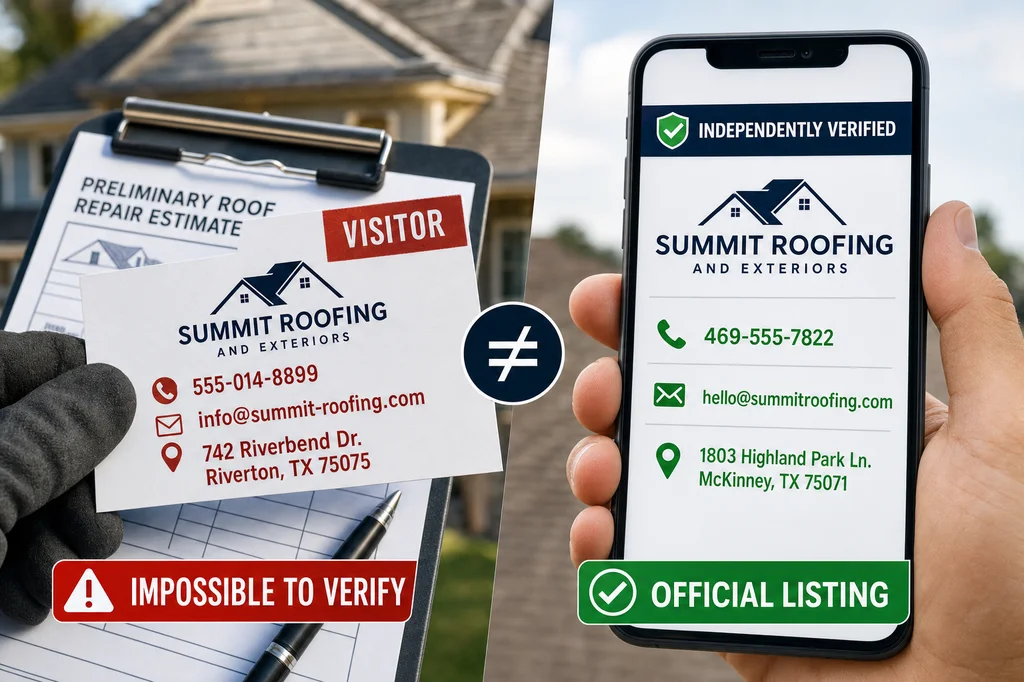
A free-inspection scam involving a roofer impersonator can start with a small repair offer and turn into pressure for a full replacement. In one Colorado case, callers using Rocky Mountain Home Renovations’ name quoted $500 for a hole, then demanded $20,000 after going on the roof. Treat a sudden scope change as a stop-and-verify moment.
The $500 repair that turned into a $20,000 demand
The danger is not simply an expensive estimate. It is a bait-and-switch pattern in which a modest, specific problem becomes an urgent replacement demand after the crew has gained access to the roof.
The Colorado homeowner was offered a $500 repair for a small hole. When the workers returned a few days later, they spent about 20 minutes on the roof and reported that the problem was much worse. They said the entire roof needed replacement for about $20,000. The homeowner paused to contact his insurance company and his son; the workers began packing up and left.
That response matters. A legitimate finding may change a repair scope, but you do not need to approve a much larger project while strangers are at your house. Pause the work, keep the original estimate or business card, and get an independent assessment before authorizing removal or replacement.
How the Rocky Mountain Home Renovations impersonation was exposed
The name on a card is not enough to establish who is at your home. In this case, Rocky Mountain Home Renovations was a real company in good standing with Colorado, but the phone number, email address, and address on the card did not match the company’s independently found details.
That distinction is central to this scam. An impersonator can borrow the reputation and apparent legitimacy of a real business while directing calls and payments to different contact information. The actual owner later learned of another family facing a similar situation.
Before accepting an inspection or signing anything, build your own contact trail rather than relying on the visitor’s card, text message, or link. Use a state business listing where available, the company’s established social-media presence, or another independently located listing to compare details.
- Phone number: Call a number you found independently. A disconnected number or a different business response is a clear reason to stop.
- Email address: Compare the address on the proposal or card with the contact information published by the real company.
- Street address: Check whether the address matches the company you believe you are hiring.
- Company identity: Ask the independently reached business whether it sent the people who visited your home.
These checks do not prove that a contractor’s work will be good. They do help answer the first question: are you dealing with the company whose name is being used?
What to say when a free inspection becomes a replacement pitch
You can slow the interaction down without debating the diagnosis. The useful goal is to avoid authorizing work before you know who is proposing it and what they found.
Use direct language: “I am not approving additional work today. Please leave a written description of the problem and your company contact information.” If the visitor claims insurance will not cover the work, do not treat that statement as a coverage decision. Coverage can depend on your policy, the cause of damage, and the insurer’s evaluation.
If an inspection produced a new replacement recommendation, request a written scope that separates the alleged damage from the proposed remedy. It should identify what was found, where it was found, and which work is repair versus replacement. Then have a separate roofing professional evaluate the condition before you decide.
In the Colorado case, the homeowner’s son found substantial damage after the workers left. The homeowner later found another roofer for repairs, and his insurer agreed to pay for replacement because of hail damage. That outcome does not establish that insurance covers damage caused by every visitor or that a replacement recommendation is valid. It shows why the cause of damage and the identity of the company need separate review.
Protect the home if workers may have caused damage
Documenting the condition promptly can preserve the facts while you arrange professional help. Do not go onto the roof to investigate or attempt repairs yourself.
From the ground, take photos of visible debris, materials, vehicles, signs, and any areas of damage you can safely see. Save the business card, texts, voicemails, proposal, payment requests, and the date and approximate time of each visit. Write down what was offered first and what changed later, including the $500 repair and $20,000 replacement figures if those were used in your case.
Contact your insurer directly using the number in your policy materials if you believe a covered event or new damage may be involved. An insurer can explain the claim process under your policy; a roofing professional can assess roof conditions and recommend needed work. If you suspect property damage or fraud, report it to local law enforcement.
Choose the company after the identity check
A verified identity is the starting point, not the final hiring decision. Once you know whom you are speaking with, compare the written scope, the explanation of the roof condition, and the proposed repair or replacement before committing.
Be especially cautious when the same visit combines an unsolicited free inspection, a dramatic new diagnosis, a request for an immediate decision, and contact information that cannot be confirmed. Those details are more useful together than any single sales claim.
For a new inspection or repair estimate, Directorii lists verified contractors.
Source: Roofing News report
FAQ
How can I tell whether a roofer is impersonating a real contractor?
Compare the visitor’s phone number, email address, and street address with contact details you find independently for the real company. In the Rocky Mountain Home Renovations case, the business was real, but the details on the card did not match its established information. Call the independently found number and ask whether that company sent the visitors.
What should I do if a free roof inspection suddenly turns into a replacement demand?
Do not approve the larger scope during the visit. Request a written description of the reported problem and the proposed work, then obtain an independent roof evaluation. A repair recommendation can legitimately change after closer review, but a jump from a small repair to a full replacement deserves time and separate verification.
Should I rely on a business card from a roofer offering a free inspection?
No, a business card alone does not establish that the visitor represents the named company. Find the business through an independent source, such as an established company listing or a state business record where available, and compare the card’s phone number, email, and address before moving forward.
Can a roofer tell me that my insurance will not cover the roof work?
A roofer can offer an opinion, but that is not a coverage decision. Coverage may depend on your policy, the cause of damage, and your insurer’s evaluation. Contact your insurer directly using the number in your policy materials if you need to understand whether a claim may apply.
What if workers may have damaged my roof during an inspection?
Document what you can safely see from the ground and preserve all cards, messages, estimates, and payment requests. Do not climb onto the roof to inspect the damage. Arrange an independent professional assessment, contact your insurer directly if appropriate, and report suspected fraud or property damage to local law enforcement.