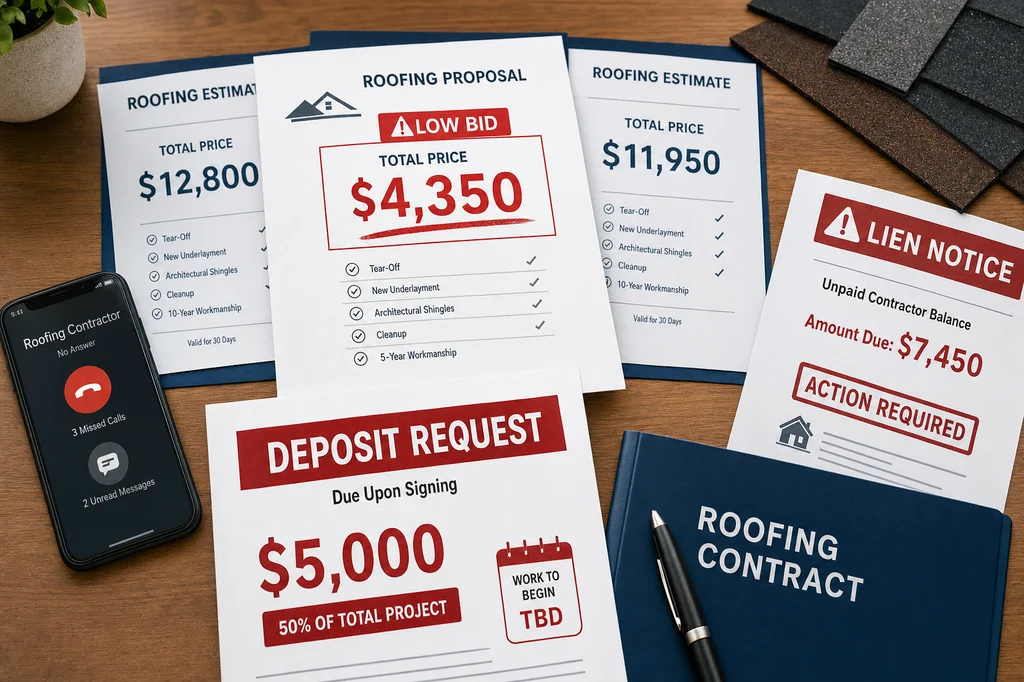
Signs that a roofer may be going out of business can include a bid far below comparable estimates, a large deposit request without a realistic installation window, lien notices, and a sudden drop in communication. These issues can leave homeowners facing a delayed project, unpaid project bills, or an unfinished roof.
Compare an unusually low roofing bid before signing
A low price is not automatically a bad price, but an estimate that sits far below several comparable bids deserves a closer look. The concern is whether the company priced the work high enough to pay for materials, labor, operating costs, and problems that arise during a project.
For example, if several proposals cluster in a similar range and one is dramatically lower, do not treat the low number as a straightforward savings. It may reflect a different scope, missing work, an error, or a company trying to bring in cash quickly. A business can also fail after winning work it cannot complete profitably.
- Match the roof scope. Compare the roofing material, tear-off, flashing, ventilation work, cleanup, and any repairs listed in each proposal.
- Look for omissions. A short estimate may leave out items another company included rather than offering the same roof for less.
- Request an explanation in writing. Ask why the price differs and what could change the final amount.
- Be cautious with urgency. A steep discount tied to an immediate signature can make it harder to evaluate the actual scope.
The useful test is not whether a contractor has the lowest bid. It is whether you can see how that bid pays for the roof you expect to receive.
A large deposit without an installation window is a warning sign
A contractor taking your money should be able to give you a realistic installation window, even if weather and material availability prevent an exact day. “We expect to start in a few weeks” and “we cannot say when your job may happen” are materially different promises.
A vague schedule paired with a large upfront payment may mean the company is overbooked or using incoming funds to deal with earlier obligations. Neither conclusion is certain from one conversation, but the risk increases when the company cannot explain its workload, material ordering, or who will contact you as the date approaches.
Before paying, make sure the contract identifies the work, payment schedule, and expected timing. Keep the signed contract, proposal, payment receipts, change orders, emails, and text messages together. Those records matter if the schedule slips or a dispute develops.
Search for unresolved deposits and changing company identities
Reviews and public complaints cannot prove that a roofing company is failing, but repeated reports of deposits not returned, jobs never started, or calls unanswered are relevant warning signs. Pay attention to patterns and dates rather than relying on a single positive or negative review.
Check whether the company has a meaningful online presence that matches the claims it makes about its size and history. A company that says it has a large operation but has little traceable history warrants more research. It can also help to search the owner’s name, not only the company name, especially if you are concerned that a business has operated under multiple names.
Large storm-response teams need special scrutiny when they are new to your area. A company working away from its established market may face added travel, lodging, transportation, and management costs. That does not make every out-of-town roofer unreliable, but a large crew alone is not proof that the company has the financial capacity or local track record to finish your project.
How to respond to lien notices and missed commitments
A lien notice after you have paid your roofer is not something to file away. It may indicate that a subcontractor or supplier says it has not been paid for work or materials connected to your property. The notice does not, by itself, establish what you owe or whether a lien is valid, because requirements vary by state and contract.
Act promptly and keep the response factual. Notify the roofing company in writing, request an explanation and documentation, and preserve the notice with your payment records. If you are unsure of your obligations, consult a qualified attorney or confirm the rules with the appropriate state or local office. Do not assume that payment to the general contractor settles every issue with every party on the job.
Missed commitments deserve the same early attention. Supply shortages and labor issues can affect schedules, but a contractor should communicate a revised plan rather than repeatedly moving the date without a clear explanation. A promised start that keeps becoming “tomorrow” can be an early sign of a larger operational problem.
What to say when your roofer stops responding
Communication failure is most concerning when a salesperson was highly responsive before the contract was signed and becomes difficult to reach after receiving payment. One missed call is not proof of financial trouble. Repeated unanswered calls, texts, and emails while your start date passes call for a documented response.
- Send one clear written message that identifies your address, contract date, unpaid or incomplete work, and the response you need.
- Ask for a specific update: the installation window, project status, material status, or a written explanation for the delay.
- Save screenshots, voicemail records, emails, and any replies. Avoid relying on verbal assurances alone.
- Review your contract before making decisions about cancellation, payments, or another contractor. Contract rights and procedures can vary.
- If a lien notice, substantial payment, or prolonged silence is involved, get qualified legal or insurance guidance appropriate to your state and policy.
The central issue is not whether the roofer has an excuse. It is whether the company provides a concrete, documented plan that matches what it promised you.
Choose a roofer based on evidence, not appearances
A flashy vehicle, a large sales team, or a fast promise does not establish that a company is financially stable. Likewise, an established company can still have problems. Focus on the written scope, price logic, schedule, recent customer patterns, and the company’s response when a problem is raised.
If you decide to replace a contractor after serious warning signs, do not let urgency push you into another poorly documented agreement. Directorii lists verified contractors.
Source: How to Spot a Roofing Contractor Going Out of Business
FAQ
What are the clearest signs a roofer may be going out of business?
The strongest warning signs are a bid far below comparable proposals, a large deposit request without a realistic start window, repeated delays, lien notices, and a contractor who stops responding. None proves a company is failing on its own, but several signs together justify pausing, documenting the issue, and getting professional guidance.
Should I accept the lowest roofing estimate?
You should accept the lowest estimate only after confirming it covers the same work as the other proposals. Compare materials, tear-off, flashing, ventilation, cleanup, and repairs. A dramatically lower number may reflect omitted work, a pricing error, or a business taking jobs without enough revenue to complete them properly.
Can a roofer ask for a deposit without giving an installation date?
A roofer may need an upfront payment under the contract, but you should expect a realistic installation window and a clear explanation of the project schedule. Weather and materials can affect exact timing. A company that cannot provide even a meaningful timeframe while requesting substantial payment deserves closer review.
What should I do if I receive a lien notice after paying my roofer?
Treat the notice seriously, notify the roofing company in writing, and save it with your contract and payment records. A lien notice may involve unpaid labor or materials, but it does not automatically establish what you owe. Because lien procedures vary by state and contract, seek qualified legal guidance promptly.
How long should I wait when a roofer keeps delaying the project?
You should respond when the contractor misses the agreed window and cannot provide a concrete revised plan. Delays can happen because of weather, labor, or material issues, but repeated vague promises are different from a documented update. Review your contract before changing payments, cancelling work, or hiring someone else.
What if my roofer suddenly stops answering calls and texts?
Send a concise written message requesting a specific project update and keep copies of every attempted contact. Include your address, contract date, promised schedule, and the answer you need. If the silence continues after money has changed hands or a lien notice arrives, review the contract and obtain qualified advice.