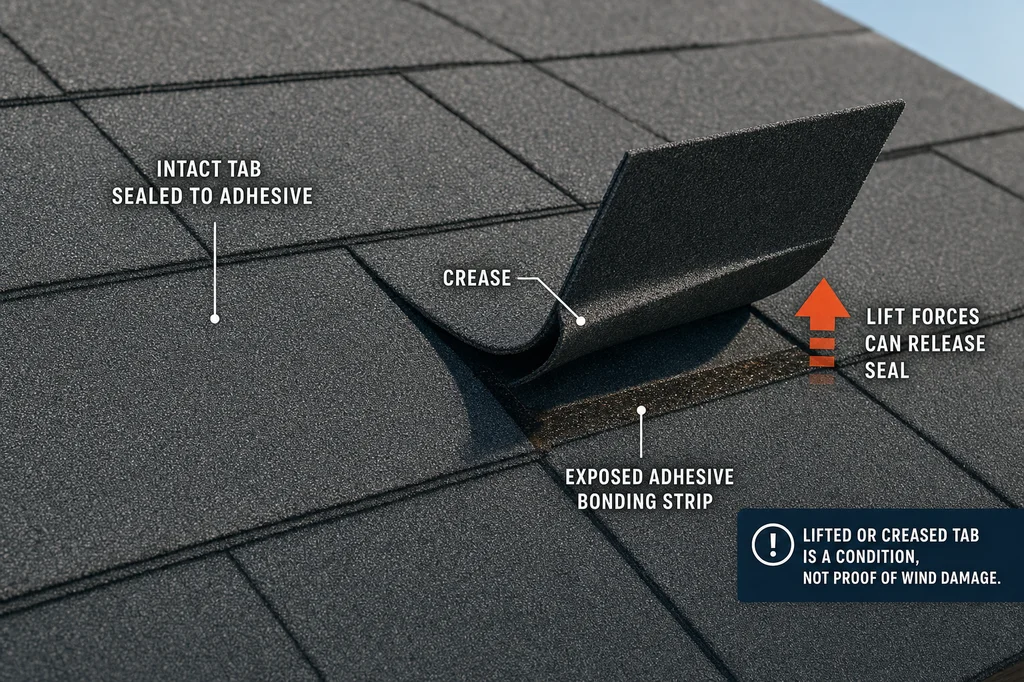
A roofing-fraud investigation captured a distinctive sound: adhesive releasing as shingle tabs were lifted. The roof shown was old and dark, but its shingles were still present rather than blown off. The allegation was that a roofer forced bonded tabs upward, breaking their adhesive seal and then treating the resulting crease as wind damage.
That distinction matters. An aged roof can have wear or need work without having storm damage. A bent or unsealed tab is an observed condition; the claimed cause is a separate question.
The Velcro-like sound behind suspected shingle creasing
Asphalt shingles overlap and bond together. In the footage, lifting a tab produced a sound compared with Velcro. The concern was not simply that the shingles were old. It was that the tabs appeared to be in place before they were forcibly lifted until the adhesive released.
Kristen Mercer, special agent in charge of the Department of Insurance fraud control division, described the allegation as roofers replicating wind damage to earn commissions connected to insurance payouts. The footage showed the alleged method directly: lift the shingle, crease it, and claim wind damage.
An old roof is not automatically a storm-damaged roof
The roof in the footage was described as aged and likely in need of maintenance, with possible future leak issues. But it was also described as not having weather damage, hail damage, or missing shingles before the tabs were lifted.
That is the central safeguard for homeowners considering a wind-damage claim: separate the roof's condition from the explanation for that condition. A roof can be old, dark, worn, or in need of replacement without supporting a claim that wind caused the problem.
What to preserve before a claim is pursued
If a company points to lifted or creased tabs and recommends an insurance claim, keep the inspection record focused on what was actually found. Request the company's photos, proposed scope, and a written description of the affected areas. Ask the company to separate its observed roof condition from its claimed cause.
- Was the claimed evidence a missing shingle, or a tab that is lifted, bent, or unsealed?
- Where are the specific shingles the company says were damaged?
- What does the company identify as the cause of the condition?
- What work does it recommend if the condition is treated as age-related rather than wind-related?
Keep the proposal, images, messages, and visit details together before deciding how to proceed. Do not try to recreate the adhesive-release test yourself. The key issue in the investigation was that forcing an otherwise-present shingle upward could create the very condition later presented as wind damage.
Why the alleged tactic has consequences
The investigation described an alleged financial incentive: commissions from insurance-funded roof replacements. It also raised the broader concern that fraudulent claims can affect homeowners through insurance costs. For an individual homeowner, the immediate risk is being drawn into a claim based on damage that may have been created during the inspection rather than caused by weather.
Directorii lists verified contractors.
Before a wind-damage claim is pursued, return to the detail that made this footage unusual: an audible adhesive release, followed by forced lifting of shingles that were still present. Preserve the inspection record and insist that the company distinguish what it observed from what it says caused it.
Source: Roofing fraud investigation and suspected shingle creasing
FAQ
What is suspected shingle creasing?
It is the concern that a bonded shingle tab was manually lifted and bent until its adhesive seal released, creating a condition later alleged to be wind damage. The investigation footage focused on tabs being forcibly lifted rather than shingles missing from the roof.
Why does the adhesive-release sound matter?
The footage captured a sound compared with Velcro as a roofer lifted a shingle tab. The sound was presented as the adhesive bond releasing while the tab was being forced upward.
Does an old roof prove wind damage?
No. The roof shown in the investigation was described as old and dark, with shingles still present. It was also described as not having storm or hail damage before tabs were lifted. Age-related condition and a claimed weather cause are different questions.
What should I request when a roofer says lifted tabs are wind damage?
Request photos, the locations of the claimed damage, a written description of the roof condition, and the company's explanation of the claimed cause. Ask the company to separate what it observed from what it says caused the condition.
Should I test bonded shingle tabs myself?
No. Do not try to lift tabs to check whether adhesive releases. In the investigation, forcing tabs upward was the alleged way damage was created. Preserve the company's inspection record instead.