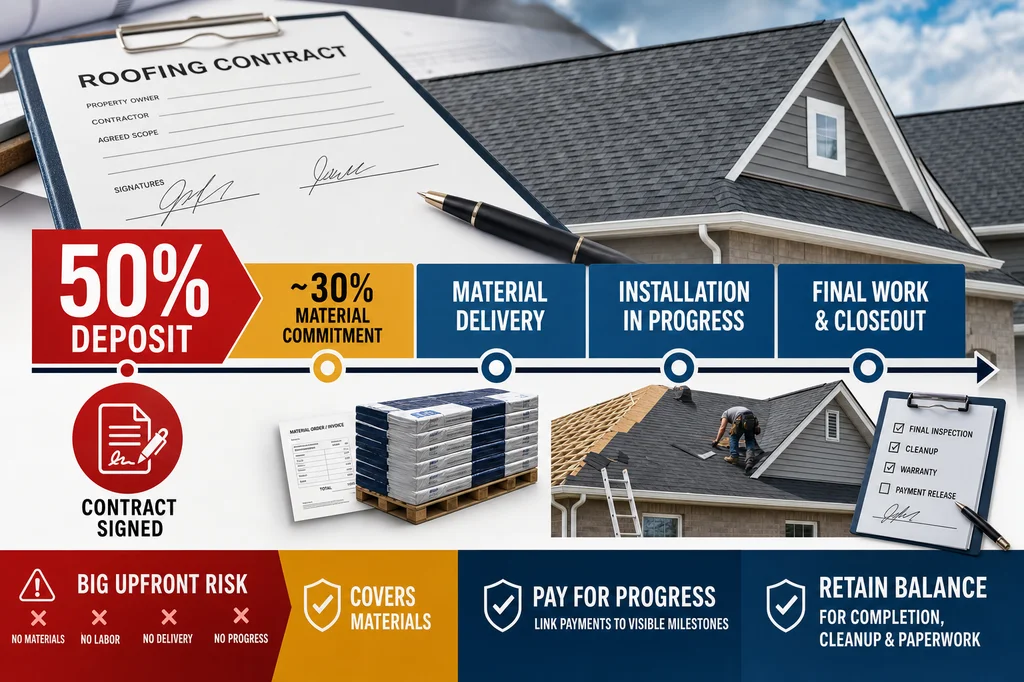
A 50% roofing down payment can put a large share of your project cost at risk before materials arrive or work begins. A deposit is not automatically a warning sign, but you should compare the request with the contractor’s material needs, your state’s rules, and a written schedule tied to visible progress.
Why a large deposit changes your exposure
The more you pay before work starts, the more money is at risk if the contractor delays, disappears, or runs into financial trouble. That does not mean every roofer requesting a deposit is unreliable. It means the payment terms deserve the same scrutiny as the roof system and contract scope.
A large initial payment can be especially hard to recover when a company uses new customer deposits to cover older jobs, labor, supplier balances, or overhead. If cash flow breaks down, homeowners may be left with an unfinished roof and the cost of hiring another company to complete it.
Insurance proceeds can make this risk easier to overlook. Money paid by an insurer is still money allocated to your repair. Before releasing it, make sure the payment terms match actual work and documented material commitments.
Compare the deposit with the materials the job requires
A deposit should have a clear purpose, not simply be the largest amount a company believes a customer will accept. One industry estimate puts materials at about 30% of a roofing job, which is one reason a 50% deposit may exceed immediate material needs.
That estimate is not a universal roofing price rule. Material mix, roof size, special-order products, and the contractor’s financial structure can all differ. Still, it gives you a useful way to evaluate a request: ask what the upfront payment will fund now and what evidence will show that it was used for your project.
- Materials ordered for your roof: Request a clear description of the products, quantities, and whether anything is special order.
- Reason for the upfront amount: Ask whether the deposit is needed to order materials or is part of the company’s usual payment terms.
- Work not yet completed: Do not treat a signed contract as proof that labor, delivery, or scheduling are already in place.
- Remaining project balance: Make sure enough payment remains to motivate completion, cleanup, corrections, and final paperwork.
State limits may affect a roofing deposit
Some states and local areas may limit what a home-improvement contractor can collect before work begins. Requirements can depend on the location and contract type.
Do not rely on a sales presentation or a general online claim to determine the rule that applies to your home. Confirm current requirements with your state consumer-protection agency, state licensing authority, or a qualified local attorney before signing.
Use milestones instead of one large advance payment
A written milestone-based schedule gives both sides a clearer record of what payment is buying. It also reduces the chance that most of your contract amount is paid before the roof reaches a meaningful stage of completion.
Your agreement should state the total contract amount, any initial deposit, and the specific event that triggers each later payment. Avoid vague labels such as “progress payment” without explaining the progress required. A useful schedule can connect payments to material delivery, the start of installation, a defined installation stage, and completed final work.
Keep copies of the signed contract, payment receipts, change orders, product selections, and messages about schedule changes. If the contractor requests more money earlier than the agreement states, pause and get a written explanation before changing the payment plan.
Warning signs behind a 50% deposit request
The request itself is less revealing than the company’s response when you seek details. A dependable contractor should be able to explain the amount, the timing, and the work or materials it covers without pressuring you to pay immediately.
- Urgency without a project-specific reason: Be cautious if you are told to pay today but are not given a written scope, product list, or start expectation.
- No connection between the deposit and materials: A contractor who cannot explain what the money funds may be relying on customer cash for general operations.
- Changing terms after you agree: Repeated requests for additional money before visible progress can signal a cash-flow problem.
- An unusually low bid paired with a large upfront payment: The low price may hide missing scope, weak financial footing, or both.
- Payment terms that live only in conversation: If it is not in the contract, it can be difficult to establish what was promised later.
These signs do not prove wrongdoing. They do tell you to slow down, compare proposals, and choose a company whose financial request makes sense for the work promised.
What should the payment clause say?
Your contract should make the payment schedule easy to understand before you hand over a check. Focus on the connection between each payment and a real project event, not just the percentage requested.
- What exact materials or commitments does the initial payment cover?
- When will materials be ordered, and how will you know they were ordered for your project?
- What work must be complete before the next payment is due?
- What happens if product availability or weather changes the start date?
- How will approved change orders affect the payment schedule?
- What final work, cleanup, or documentation remains before the last payment?
A financially stable company may offer lower upfront terms, while another may need a deposit to order materials. The key is not to assume either arrangement is safe or unsafe without reviewing the written details and the company behind them.
Choosing the wrong roofing contractor can make a deposit dispute much more expensive. Directorii lists verified contractors.
Source: Roofing School: Do Roofers really need 50% DownPayment for Roofing Jobs?
FAQ
Should I pay a roofer a 50% deposit before work begins?
A 50% deposit is not automatically a reason to reject a roofer, but it creates more exposure before your project has progressed. Ask what the money will fund, whether materials must be ordered upfront, and what local limits may apply. Make sure the contract ties later payments to defined project milestones.
What should a roofing deposit cover?
A roofing deposit should have a specific, documented purpose, such as materials or commitments needed to start your job. One industry estimate puts materials at about 30% of job cost, but that is not a universal rule. Review your product selections and written scope before agreeing to an amount.
Can a roofer collect more than the amount needed for materials?
A roofer may request an amount above immediate material costs, but you should understand why and check whether local contract rules limit deposits. A large advance payment can expose you if the company has scheduling or cash-flow problems. Ask for a payment schedule that leaves substantial payment tied to completed work.
How can I tell whether a large roof deposit request is risky?
A risky request often lacks a clear written explanation of what the deposit buys and when work will begin. Watch for pressure to pay immediately, changing payment demands, and vague contract language. Compare the proposal with other bids and verify that material orders, scope, and payment triggers are documented.
What payment milestones should be in a roofing contract?
Your roofing contract should identify the initial payment and the exact work or delivery event required before each later payment. It can address material ordering, delivery, installation progress, final cleanup, and completion documentation. Avoid undefined progress-payment language, because it does not tell you what must happen before you pay.