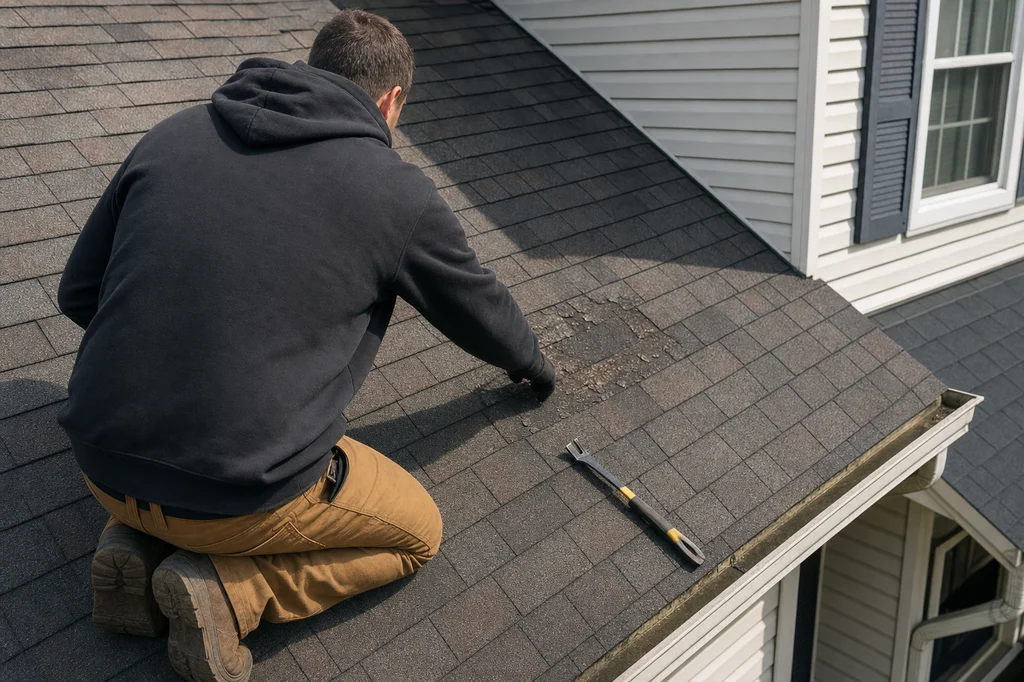
A roof contingency agreement can make changing contractors expensive. Before switching roofers, locate the cancellation terms and compare the stated charge with the inspection, appointments, and insurance-company calls actually completed.
Why a signed contingency agreement matters
In storm restoration, a contractor may identify damage and offer to help the homeowner pursue payment from an insurance company. A contingency agreement is a commitment: the homeowner signs, the contractor helps with the insurance process, and the homeowner agrees to hire that contractor for the work.
The problem arises when the homeowner changes their mind. A homeowner may lose trust after looking at reviews or decide to use a different contractor. The agreement may then become the basis for a cancellation charge.
The $10,000 question behind a 25% clause
A 25% charge on a $40,000 roof contract is $10,000. In the example discussed, the contractor knocked on the door, got on the roof, called the insurance company, and obtained a signed agreement, but would not perform the replacement work.
Set that percentage charge beside the initial time involved. At $250 per hour, four hours totals $1,000. The initial work described took roughly two to four hours and included an inspection, one or two appointments, and a few phone calls. These numbers are illustrations rather than standard prices or a legal measure of what is owed. They highlight the central question: how does a percentage of the entire roof contract compare with a time-based charge for the work completed before cancellation?
Checklist before signing or canceling
- Read the entire agreement. Identify the commitment created when you sign and any language about canceling.
- Find the fee language. Look for a stated cancellation amount or a percentage of the roof contract.
- Calculate the number stated in the document. For example, calculate what a 25% clause would equal using the roof contract amount.
- List the initial work that occurred. Include the inspection, insurance-company calls, and the one or two appointments involved.
- Request an explanation in writing. Ask for the amount being requested, the calculation used, and how it relates to the initial work completed.
If the amount or agreement language is disputed, consider having a qualified attorney review the signed document.
Before you sign with someone else
Keep the signed agreement and review its cancellation language before making another commitment. The key comparison is not whether a large percentage appears in the document alone; it is the difference between a 25% charge on the full roof contract and a time-based amount for roughly two to four hours of inspection and insurance-contact work. Neither figure is a universal standard, but the comparison can clarify the question you need answered in writing.
Directorii lists verified contractors.
Source: My Thoughts On Noncompete & Contingency Agreements
FAQ
What is a roof contingency agreement?
In storm restoration, a contingency agreement can document a homeowner's commitment to hire a contractor after the contractor identifies damage and offers help pursuing payment from an insurance company. Read the signed document to understand the commitment and any cancellation language.
Why can a 25% cancellation clause become expensive?
A percentage of the full roof contract can produce a large amount. In the example discussed, 25% of a $40,000 roof contract equals $10,000, even though the replacement work will not be performed.
How can I compare a cancellation charge with the initial work?
Identify the percentage and roof contract amount stated in the agreement, then list the initial work that happened: the inspection, insurance-company calls, and one or two appointments. Compare that percentage-based amount with a time-based illustration for roughly two to four hours of work, and request the calculation in writing.
What should I ask for if I dispute a roof cancellation fee?
Review what the agreement says and ask for the requested amount, the calculation, and an explanation of the work used to support it in writing. If the amount or contract language remains disputed, consider having a qualified attorney review the signed document.
What should I review before hiring another roofer?
Keep and reread the first signed agreement, especially its cancellation language, before making another commitment. Understand the stated percentage or amount and how it compares with the inspection, appointments, and insurance-company calls already completed.