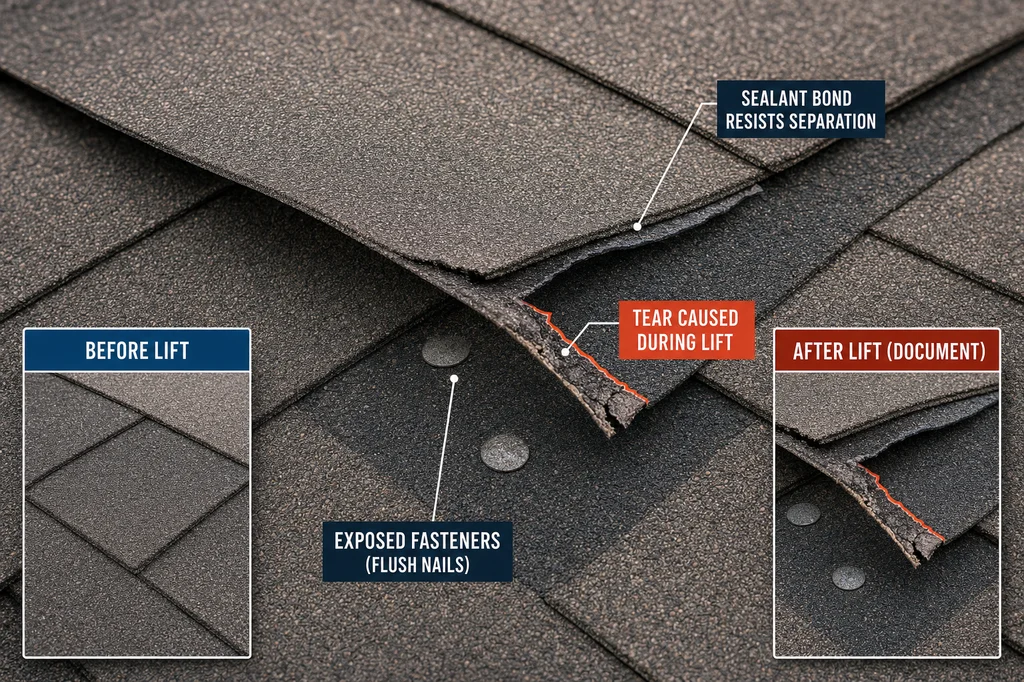
When an adjuster calls a hail-damaged or brittle-shingle roof repairable, the key question is whether damaged shingles can actually be removed and replaced without damaging the surrounding roof. A careful, documented attempt to lift shingles can turn a roof-top disagreement into a specific repairability question for the carrier to review.
Repairability is different from identifying storm damage
Storm damage and repairability are separate issues. On one metal roof, an adjuster marked a dent in chalk but recorded zero hail hits, saying there was no splatter mark within that dent. The roofer disagreed. That dispute concerned the cause of a mark.
A brittle-shingle dispute concerns a different question: what happens when a repair requires a shingle to be lifted to reach its fasteners? If shingles crease, tear, or come apart during a careful attempt to access the nails, that result is relevant to whether the proposed repair can be completed as described.
In one shingle evaluation, added sealant and matting transfer made shingles difficult to separate. The roofer said the material tore while he tried to unseal the common bond and reach flush nails. Those site conditions should be identified clearly rather than folded into a general argument about the claim.
What a useful brittle-shingle record should show
A repairability finding is more useful when it shows both the starting condition and what occurred during the attempted removal. The purpose is not to create damage. It is to determine whether a repair can be performed without damaging shingles that must be lifted.
- Location: Identify the roof slope and the shingles evaluated.
- Starting condition: Photograph the shingle before it is lifted.
- Method: Describe the steps needed to unseal the shingle and access the fasteners.
- Obstruction: Note conditions such as brittleness, added sealant, bonding, or matting transfer.
- Result: Photograph any crease, tear, broken corner, or separation after the attempt.
- Test-related damage: Identify shingles damaged during the evaluation instead of treating them as preexisting storm damage.
More than one shingle may be needed to show whether the condition is isolated or affects the repair area. In another inspection, three shingles tore during attempts to lift them; the roofer acknowledged responsibility for the areas damaged during that work. That distinction helps keep the record accurate.
Keep the request focused when the adjuster disagrees
One State Farm adjuster, identified as Jeff, said a roof was repairable after shingles tore during the evaluation. He said he was not a roofer and that he would forward his results to an in-office adjuster. The exchange illustrates why the written claim file matters: a field adjuster may make recommendations, while the carrier determines its claim position.
Submit the roofer's written findings and organized photos with a focused request for review. Ask the carrier to address the documented lifting results and to identify the repair method it believes can be used. Keep storm-damage evidence and repairability evidence in separate sections so each issue is easy to evaluate.
What to gather after a repairability dispute
- Written roofing findings: Include the area evaluated, the shingles involved, the repair steps attempted, and the resulting condition.
- Location-specific photos: Pair close images of the shingles with wider images that establish where the work occurred.
- The carrier's position: Request the estimate and inspection findings in writing.
- A communication record: Save estimates, inspection notices, emails, and the names of people involved in the review.
Appraisal was raised during one repairability dispute. Whether appraisal applies depends on the policy and the disagreement involved. Review the policy language and, when a dispute involves coverage or policy interpretation, consider guidance from a qualified claims professional or counsel.
Do not test shingles yourself
Do not go onto the roof or try to lift shingles yourself. Lifting a shingle can damage it and can create uncertainty about whether the damage was preexisting, storm-related, or caused during the evaluation. Use a qualified roofing professional who can document the original condition and any damage caused during the test.
Directorii lists verified contractors.
Source: Caught on Camera: Roofers Fight Back Against Insurance Adjusters
FAQ
What is a roof claim repairability dispute?
It is a disagreement about whether damaged roofing can be repaired without damaging surrounding material. With brittle shingles, the issue may arise when shingles tear, crease, or separate while being lifted to access fasteners.
What should repairability documentation include?
Include the roof area, the shingle condition before work, the removal steps attempted, any sealing or bonding conditions, and photos of the result. Identify any shingles damaged during the evaluation separately from preexisting damage.
Why should hail damage and repairability be documented separately?
They answer different questions. Hail documentation addresses whether a mark or dent was caused by the storm. Repairability documentation addresses whether the proposed repair can be performed without damaging shingles that must be lifted.
Should I perform a brittle-shingle test myself?
No. Lifting shingles can damage the roof and make it unclear whether the damage was already present or happened during the test. Have a qualified roofing professional perform and document the evaluation.
What if the field adjuster still says the roof is repairable?
Submit the written findings and organized photos, then ask the carrier to address the documented results and identify the repair method it believes will work. A field adjuster may make recommendations, while the carrier determines its claim position.