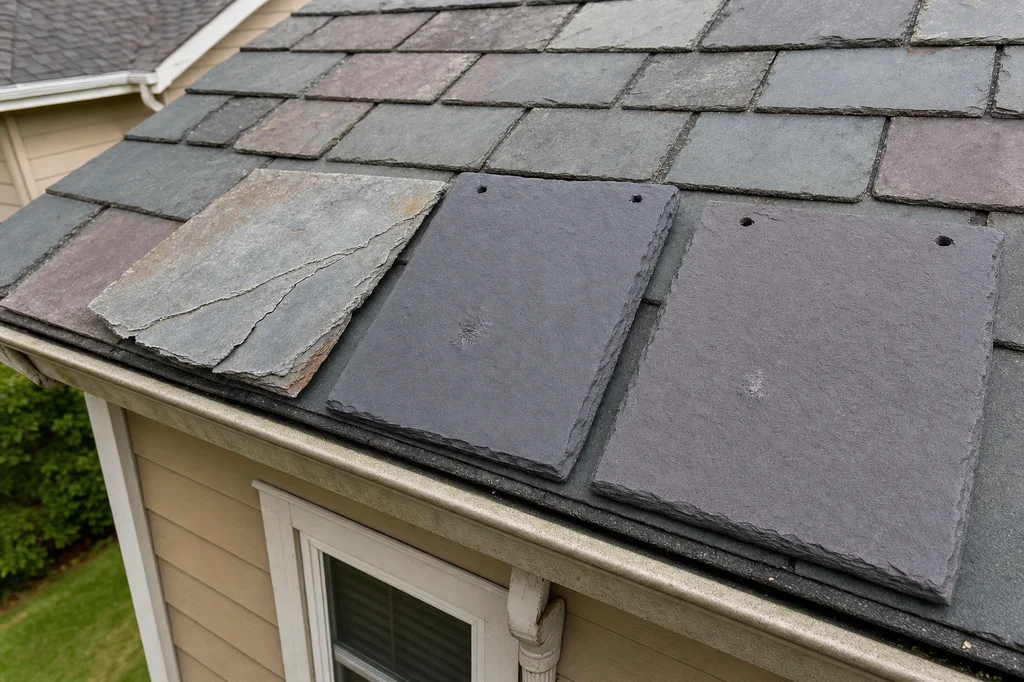
Real slate, Euroshield, and Boral Inspire can all create a slate-style roof, but they place very different demands on a home. When weighing natural stone against synthetic slate, start with structural weight, then compare the look you want and how each material may respond to impact.
Start with the roof structure, not the slate appearance
Natural slate can be dramatically heavier than slate-look alternatives, so the home’s framing may determine whether it is a realistic option. A roof built for asphalt shingles may need added framing before it can carry real slate.
Weight is measured per square, a roofing unit equal to one hundred square feet. The compared materials had these installed weights:
- Vermont natural slate: 800 pounds per square for a larger slate product.
- Natural slate sample: 550 pounds per square.
- CertainTeed Grand Manor: 425 pounds per square.
- Atlas StormMaster Slate: 230 pounds per square.
- Boral Inspire: 180 pounds per square.
That gap matters before you select a color or profile. Real slate is not simply a cosmetic upgrade over an existing roof; its load can require a home designed or modified to support it. Have a roofing professional and, where needed, a structural professional evaluate the existing framing before you commit to natural slate. Do not rely on a product sample or a visual comparison to answer a structural question.
Which product gives the closest natural-slate look?
Boral Inspire was presented as the closest visual match to the natural slate sample, particularly because it uses varied, natural-looking colors and a slate-like profile. Euroshield also aims for slate texture, including rougher edges and different available patterns and molds.
Natural slate has genuine stone variation, and its appearance comes with the material’s layered edges. Over time, those edges can flake. Synthetic products are manufactured to deliver a more consistent look across the roof, which may appeal to homeowners replacing older slate that has begun shedding small pieces.
The comparison found that Boral Inspire could be hard to distinguish from real slate once installed at roof level. That is an observation rather than a manufacturer specification. For your house, review full-size samples or photos of completed roofs in the exact profile and color under consideration. A sample board is useful, but it cannot show how shadow lines, color variation, and roof slope will read from the street.
Atlas StormMaster Slate and CertainTeed Grand Manor are asphalt slate-style shingles. They offer a slate-inspired appearance, but they did not emulate real slate as closely as the synthetic slate options. They may still fit a homeowner who wants a heavier, dimensional asphalt look rather than a near-stone replica.
How Euroshield, Boral Inspire, and real slate handled impact
Euroshield showed the least visible damage in an informal heavy-object drop test, while the real slate sample broke. Boral Inspire showed a mark but did not break through in the same demonstration; the asphalt products dented without being penetrated.
Euroshield is made from recycled rubber, including recycled tires, and is thicker than an asphalt shingle. Euroshield markets its rubber construction as highly impact resistant. In the demonstration, the dropped object appeared to bounce off Euroshield, leaving only a very small visible line. That result supports the product’s intended impact-resistant character, but it is not a standardized field test or a prediction of how every roof will perform during hail, falling branches, or other events.
The natural slate sample fractured under the same extreme impact. Slate’s vulnerability is especially relevant if overhanging trees, falling debris, or recurring impact concerns are part of your property. At the same time, a single drop test should not be treated as an insurance rating, a warranty promise, or a substitute for the manufacturer’s current product documents.
Choose natural slate when the home can carry it and stone is the priority
Choose natural slate if authentic stone is your non-negotiable goal and the roof structure is confirmed to support the load. It is the real material, but its weight and potential for edge flaking are central tradeoffs.
Choose Boral Inspire if you want a much lighter slate-look product with a close visual resemblance to natural slate. Its 180-pound-per-square weight in the comparison is far below the natural slate samples cited, making structural feasibility a different conversation. Review the manufacturer’s current product literature and warranty terms before deciding.
Choose Euroshield if impact behavior and a rubber-based synthetic slate profile are your leading priorities. It remains a heavy roofing product, so it should not be assumed to work on every existing roof without a framing review.
Choose an asphalt slate-style shingle such as StormMaster Slate or Grand Manor if you prefer an asphalt roofing system with a dimensional slate-inspired appearance. The visual effect is different from natural slate and the synthetic slate products, so make that choice intentionally rather than expecting an exact stone look.
What to confirm before signing a slate-style roofing contract
A slate-style roof needs a product-specific scope because material weight, layout, and replacement needs differ. The written proposal should make clear what is being installed and why it suits your house.
- Exact product and profile: Confirm whether the bid is for natural slate, Euroshield, Boral Inspire, or an asphalt slate-style shingle. “Slate look” is not a sufficient material description.
- Installed roof weight: Request the product’s stated installed weight and documentation of any structural evaluation needed for your home.
- Color and edge treatment: Review full-size samples and completed installations, especially if matching the irregular look of stone matters to you.
- Impact documentation: Ask for the manufacturer’s current documentation rather than relying on an informal demonstration.
The expensive mistake is selecting a roof for its street-side appearance before confirming that the structure, product details, and installation plan match. Directorii lists verified contractors.
Source: Real Slate Roof VS Synthetic Slate Roofing Shingles Comparison
FAQ
Is real slate much heavier than synthetic slate roofing?
It can be much heavier. The natural slate sample compared weighed 550 pounds per square, while Boral Inspire weighed 180 pounds per square; a larger Vermont natural slate product was listed at 800 pounds per square. Your home’s framing should be evaluated before selecting a heavy roofing material.
How did Euroshield perform against impact in the comparison?
Euroshield showed very little visible damage in an informal heavy-object drop demonstration. Its recycled-rubber construction is marketed as impact resistant, and the dropped object appeared to bounce off the sample. That demonstration is not a standardized test, so review current manufacturer documentation for product-specific performance information.
Can Boral Inspire look like real slate from the ground?
Boral Inspire was presented as a close visual match to the natural slate sample, with varied colors and a slate-like profile. The comparison found the two could be difficult to tell apart once installed on a roof. Review full-size samples and completed roofs because color and shadow appearance vary by roof design.
Should I choose natural slate if my current roof has asphalt shingles?
Not until the existing framing has been evaluated for the added load. Homes with slate may be engineered and built to handle its weight, while a home with an architectural asphalt roof may need added framing for natural slate. A roofing professional and structural professional can help confirm what your house needs.
What is the difference between slate-style asphalt shingles and synthetic slate?
Slate-style asphalt shingles are asphalt products designed to suggest a dimensional slate appearance, while synthetic slate products use other materials to more closely imitate stone. In the comparison, Euroshield used recycled rubber and Boral Inspire had a close slate-like appearance. Material weight and impact behavior differed among the products.