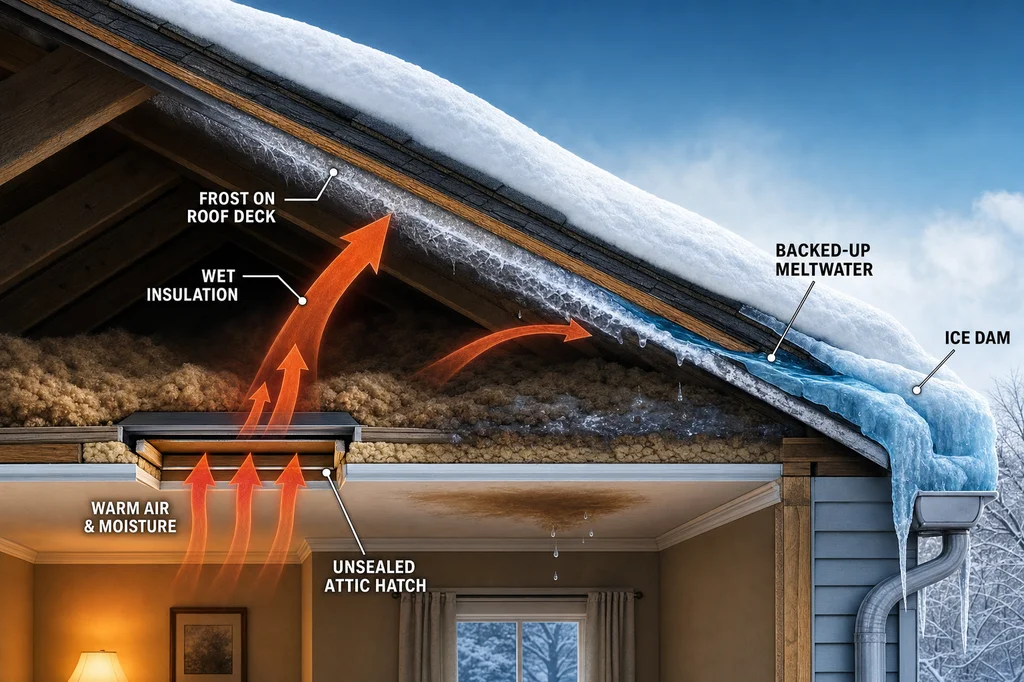
Preventing winter roof leaks often starts below the roof surface. Check the attic hatch for gaps, watch for ice-dam conditions at the eaves, and make sure bathroom and kitchen exhaust ducts carry moist air outdoors instead of into the attic.
Why a ceiling leak in winter may not be a roof failure
A wet ceiling during a cold spell can be caused by frost melting inside the attic, not necessarily by rain entering through shingles. Warm, humid indoor air can reach a cold attic, freeze on the underside of the roof deck, and later drip as temperatures change.
This distinction matters because replacing roof materials will not solve an indoor-moisture problem. If frost has accumulated overhead, the water may soak insulation and show up as a ceiling stain when it melts. Look for timing: leaks that appear after an extended freeze or during a warm-up deserve an attic and ventilation check alongside a roof assessment.
One reported field example involved frost building under the roof deck until it was about an inch thick. When it thawed, the water dumped onto the insulation and created what looked like a roof leak. The homeowner takeaway is simple: do not assume the visible stain identifies the water source.
How an open attic hatch can feed ice dams
An attic hatch that is uninsulated, poorly sealed, or left slightly open can send heated household air into the attic. That heat can melt snow above the attic, while water refreezes near colder roof edges and forms an ice dam.
Ice dams tend to develop around the perimeter of the roof, including the eaves. The backed-up meltwater can work beneath roof coverings. Large icicles may look dramatic, but they can also signal a melt-and-refreeze pattern worth investigating.
A former roofing-company owner described a Boston house where a slightly open, uninsulated attic door contributed to extensive ice dams within days. The reported removal work took four people a day and a half and cost the homeowner thirteen thousand dollars. That is a field account, not a universal cost or outcome, but it shows why a small air-sealing failure can become an expensive winter problem.
Start from inside the house. Check whether the attic hatch closes fully and whether insulation is present on its attic side. Also note recessed lights or other ceiling penetrations near problem areas. A roofing or insulation professional can identify air paths and recommend an appropriate repair without putting you on a snow-covered roof.
Bathroom and kitchen ducts should vent outdoors
Bathroom exhaust and kitchen exhaust ducts should carry moisture out of the house, not discharge into the attic. A disconnected duct or a duct that was never connected correctly can release humid air directly below the roof deck.
That moisture can freeze during severe cold, then thaw and drip later. It may be mistaken for a roof leak even if the roof covering is intact. The risk is especially easy to miss because the duct may run through the attic and appear connected from below while being separated near the roof termination.
- Bathroom exhaust: Steam from showers adds humidity that can condense or freeze in a cold attic.
- Kitchen exhaust: A duct serving a microwave or stove can also carry warm, moisture-laden air into the attic if it is disconnected or misrouted.
- Roof-deck frost: Frost beneath the deck points to an air and moisture issue that needs investigation before it becomes a recurring ceiling leak.
- Wet insulation: Insulation that receives thawing frost may allow water to reach the ceiling below.
You do not need to crawl across a hazardous attic or roof to diagnose the full path. Tell the professional whether the affected room is below a bathroom, kitchen, attic hatch, or roof edge. That detail helps separate a possible roof issue from a ventilation or condensation issue.
Snow at the eaves needs a safe removal plan
Heavy snow can add load to a roof and can hold meltwater as weather changes. Snow near the eaves is also part of the ice-dam pattern, because this is where meltwater may refreeze.
Do not climb onto a snowy or icy roof to remove snow. If accumulation is substantial or you see sagging, persistent ice buildup, or water entering the house, contact a roofing professional promptly. They can determine whether snow removal, an ice-dam response, or a closer evaluation is appropriate.
For homeowners in regions that rarely receive major snow, a sudden storm can expose roofs and attic systems that were not dealing with these conditions before. Watch the roofline from the ground, but keep the focus on changes that affect the house: new ice ridges at eaves, interior stains, dripping, or doors and ceilings that appear to shift.
What to document before calling a roofing professional
Clear observations help a roofer investigate the right failure mechanism instead of treating every winter leak as a shingle problem. Document what you can see safely from indoors and from the ground.
- Note the leak timing. Record whether dripping began during a deep freeze, after snowfall, or during a thaw.
- Photograph ceiling stains and drips. Include the room location and any visible change over time.
- Check the attic hatch. Note gaps, missing insulation, or a hatch that does not close flush.
- Identify nearby moisture sources. Tell the roofer if a bathroom, kitchen, or exhaust fan is near the affected area.
- Photograph the eaves from the ground. Show ice buildup, icicles, or uneven snow patterns without climbing a ladder or roof.
The written scope should distinguish roof-entry repairs from attic air-sealing or exhaust-duct corrections. If the cause is uncertain, ask what evidence supports the proposed repair and whether the contractor will inspect both the roof exterior and accessible attic conditions.
Choosing the wrong fix can leave the same condensation or ice-dam condition in place for the next freeze. Directorii lists verified contractors.
Cold-weather house sealing supports the roof system
Weatherstripping at exterior doors and windows does not repair a roof, but it can reduce unwanted heat loss from the home. Less escaping warm air can ease the conditions that contribute to uneven attic warming.
Focus first on the hatch and ceiling penetrations connected to the attic, because those are direct routes for warm air to rise. A roofer or insulation professional can help determine which improvements suit your home. If you suspect a frozen or damaged water line, contact an appropriate professional rather than assuming the ceiling water comes from the roof.
Source: 6 Tips to Prevent Winter Roof Leaks
FAQ
Can an attic hatch really cause an ice dam?
Yes, an attic hatch can contribute to an ice dam if it is uninsulated, poorly sealed, or slightly open. Heated indoor air can rise through that opening, warm the attic area above it, melt snow, and allow water to refreeze at colder eaves. Have a professional assess the hatch and nearby air leaks.
Why is water dripping from my ceiling after a hard freeze?
The water may be thawing frost that accumulated on the underside of the roof deck, rather than rain entering through the roof. Humid air from the house can enter a cold attic, freeze, and later melt onto insulation. A roofer should evaluate accessible attic conditions as well as the roof exterior.
Should bathroom exhaust vent into the attic in winter?
No, bathroom exhaust should vent outdoors rather than into the attic. Moist shower air released into a cold attic can freeze beneath the roof deck and later melt, creating ceiling leaks. A disconnected duct can produce the same problem, so have the full duct path and exterior termination checked.
Can a kitchen exhaust duct create a winter ceiling leak?
Yes, a kitchen exhaust duct can contribute to a winter ceiling leak if it releases warm, humid air into the attic. The moisture can freeze on cold surfaces and drip during a thaw. A professional should confirm that the duct is connected continuously and terminates outdoors.
What should I do if snow is building up at my eaves?
Watch for ice buildup, interior leaks, or signs of roof stress, but do not climb onto a snowy or icy roof. Snow at the eaves can be part of an ice-dam condition, especially when attic heat is melting snow above. Contact a roofing professional for a safe removal and evaluation plan.