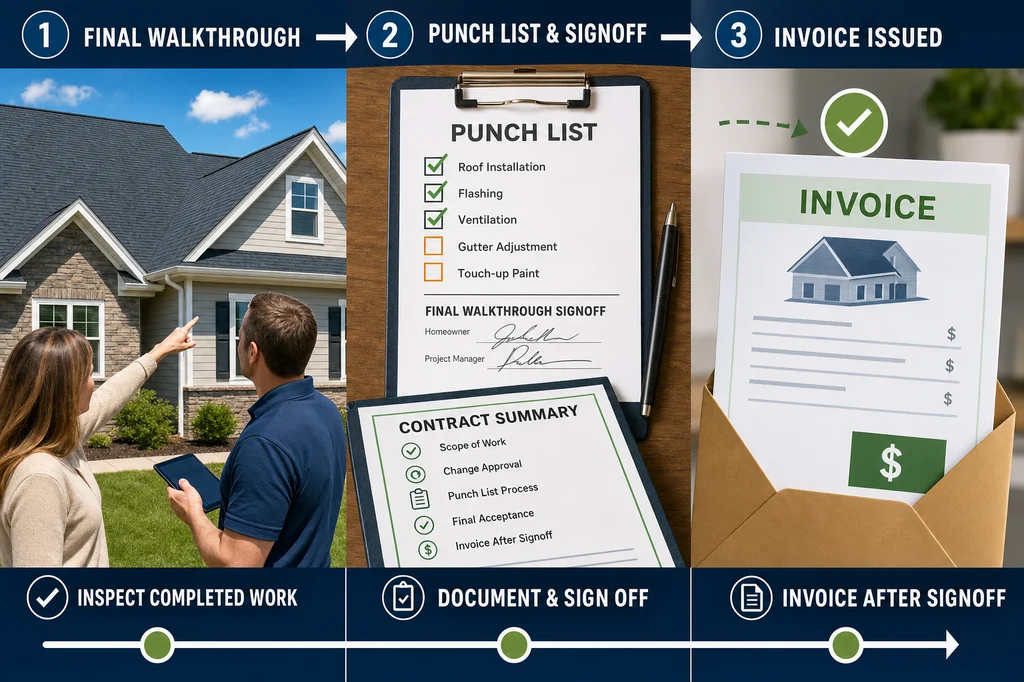
Cupcake Home Improvements uses a no-upfront-payment model in which it invoices after a final walkthrough and punch-list signoff. That approach can reduce the amount you pay before work is complete, but your renovation contract still needs clear terms for scope changes, unresolved defects, payment timing, and time to review the agreement.
Put the completion process in writing
Cupcake Home Improvements states that it does not request a deposit or down payment before starting a job. Its founders describe payment as due only after the work is complete and the homeowner is satisfied.
The company says its process ends with a final walkthrough alongside a project manager. The homeowner signs off on the punch list, and its system then creates and sends the invoice. For a homeowner, the useful feature is the sequence: inspect the completed work, identify remaining items, document them, and then move to payment.
That sequence is not the same as an unlimited promise to withhold payment over any disagreement. Your contract should spell out what “complete” means, how punch-list items are recorded, who decides whether an item is part of the original scope, and what happens if a correction requires more time.
Payment timing is only one part of the contract decision
A no-deposit offer can be appealing, especially for a large project involving roofing, siding, windows, gutters, or painting. Still, payment timing alone does not tell you whether the work scope is complete or whether the contractor has accounted for likely jobsite discoveries.
Cupcake Home Improvements describes renovation work as “surgery on the home” because opening exterior assemblies can reveal conditions that were not visible before work began. One homeowner project involved rot around older siding, while another company example involved a cut fiber line during siding work. The company reported that it addressed the problem and offered a credit for light fixtures after the disruption.
The homeowner lesson is simple: a contract needs a process for surprises. Do not rely on broad verbal reassurances that a contractor will “take care of it.” Identify how the company will notify you of concealed damage, provide change pricing, obtain approval, repair accidental property damage, and document the final result.
What to compare before accepting a no-deposit agreement
Compare the full payment and completion process, not just the first amount due. A contractor that requests money upfront may use a different payment structure for legitimate business reasons, while a no-deposit policy may come with its own definitions and conditions.
- Invoice trigger: Find out exactly what event creates the invoice. Cupcake Home Improvements says its invoice follows the final walkthrough and punch-list signoff.
- Punch-list format: Request a written list of incomplete or corrective items. It should distinguish small finish items from work that affects the project’s intended function.
- Scope of work: Match the contract to the products, locations, tear-out work, trim, flashing, painting, cleanup, and other promised details. This is what lets you tell whether a concern belongs on the punch list.
- Change process: Confirm how concealed rot, damaged components, or other discoveries are handled before extra work proceeds. Written approval matters because renovation work can expose hidden conditions.
- Final walkthrough: Know who will attend, when it occurs, and whether you receive a copy of the completed punch list and signoff.
- Communication path: Cupcake Home Improvements says it uses centralized texting and automated updates so its team can see homeowner communications. Regardless of the system used, keep project decisions and approvals in a record you can retrieve.
Do not let a same-day signature replace contract review
Cupcake Home Improvements advises homeowners to get competitive quotes and avoid contractors who demand a signature on the spot. High-pressure signing can prevent you from comparing scopes, payment triggers, and exclusions while you have time to read them.
Consider taking the written agreement with you, comparing it against other proposals, and noting whether each company is actually offering the same work. A lower proposal may omit a component, while a broader proposal may include it.
Pressure can also show up in softer language: a “today only” discount, an insistence that a manager needs a signature immediately, or a claim that details can be filled in later. Those are reasons to pause and review the terms, not reasons to skip review.
Questions that clarify final-walkthrough signoff
Use these questions before you select a company. They focus the conversation on the point where payment, workmanship concerns, and the written scope meet.
- What specific work must be finished before the final walkthrough?
- How will incomplete items be listed, photographed, and tracked to completion?
- Does signing the punch list mean I accept the entire project, or only acknowledge the listed items?
- What happens if the walkthrough reveals work that does not match the signed scope?
- Who can approve added work if hidden damage is uncovered after demolition begins?
- When will I receive the final invoice, and what documents come with it?
Read the agreement before signing, and consider legal advice if a payment, cancellation, or dispute term is unclear. Contract and consumer-protection rules can vary by state and by the agreement itself.
Choose the company that can explain the handoff
The expensive mistake is not necessarily paying a deposit; it is entering a vague agreement with no workable path from discovery to correction to final acceptance. A contractor should be able to explain the scope, communication process, change handling, final walkthrough, and invoice trigger in plain language.
Directorii lists verified contractors.
Source: Cupcake Home Improvements in Austin
FAQ
How does Cupcake Home Improvements handle payment for a renovation?
Cupcake Home Improvements states that it does not request a deposit or down payment before work begins. The company says a project manager completes a final walkthrough with the homeowner, the homeowner signs off on the punch list, and an invoice is then created and sent. Review the contract to see how that process is defined for your project.
What should I check before signing a no-upfront-payment contractor contract?
Check the full scope of work, the event that triggers the invoice, the final-walkthrough process, and how unfinished items will be documented. Also review how the contractor handles hidden damage or requested changes after work starts. A no-upfront-payment arrangement is most useful when the written completion and correction process is equally clear.
Should I sign a renovation contract during the sales appointment?
Take time to review the written agreement rather than sign because of pressure during an appointment. Cupcake Home Improvements recommends competitive quotes and cautions against on-the-spot signature demands. Compare each proposal’s scope, exclusions, payment terms, and completion process, because similar-looking bids may not include the same work.
What is a punch list at a final walkthrough?
A punch list is a written record of remaining items, corrections, or finish details identified near the end of a project. Cupcake Home Improvements says its final walkthrough includes punch-list signoff before invoicing. Your agreement should clarify how items are recorded, who completes them, and whether signoff applies to the list, the full project, or both.
What happens if hidden damage is found during siding or exterior work?
Hidden conditions can be discovered after exterior materials are opened, so the contract should provide a clear change process. Ask how you will be notified, how added work will be priced, and when your approval is needed. Cupcake Home Improvements notes that opening up a home can reveal issues that were not visible before the project began.