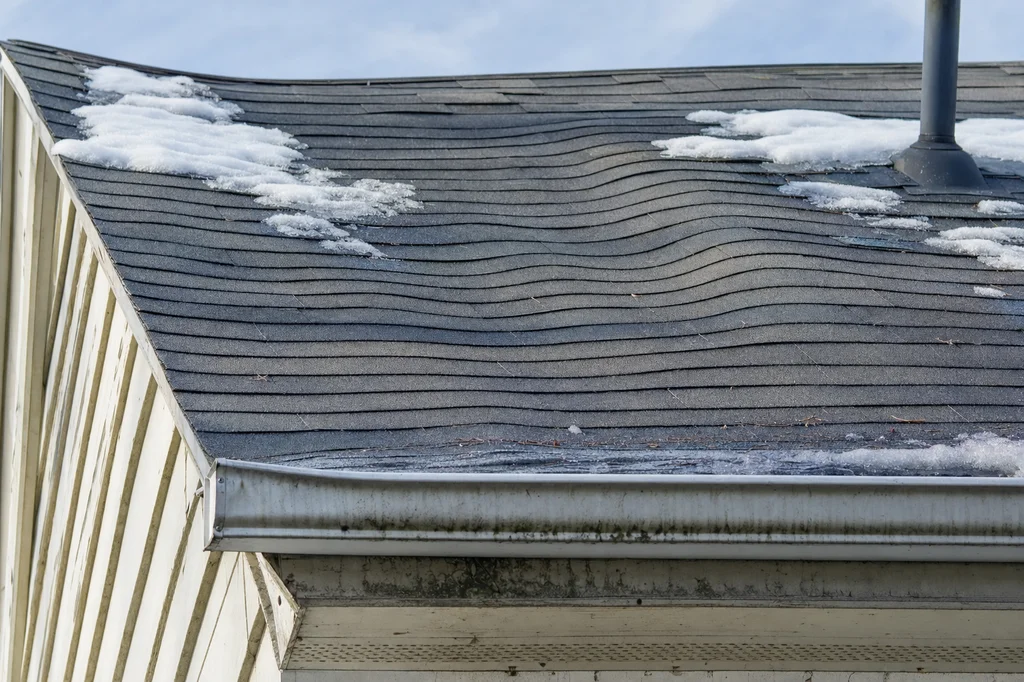
A roof that begins leaking after a reroof—and only after winter—calls for more than another shingle quote. One northern Ontario homeowner reported no issues after moving into a semi-duplex in 2008, then recurring spring leaks after a 2017 reroof. Rain did not trigger the leak; winter and spring thaw did.
The clues in that case were a relatively shallow 4/12 roof, visibly wavy and reportedly spongy 3/8-inch decking, snow that remained on the roof, and a leak that continued despite snow raking, added venting, drywall work, and repainting. Those facts do not prove one cause, but they give an inspection a clear starting point.
Start with the timing: rain versus thaw
When a roof stays dry during rain but leaks after winter, the timing matters. Snow can remain on the roof while meltwater moves beneath it. On the 4/12 roof shown, the uneven surface was identified as a concern because water may have difficulty finding a consistent way off the roof.
Shingles shed water, but the roof assembly below them also matters during winter conditions. In this situation, the investigation should connect the leak pattern to the roof surface, the decking, eaves and valleys, roof penetrations, and attic conditions rather than assuming the shingles alone explain the problem.
The wavy 3/8-inch decking is a central clue
The roof photos showed pronounced waviness, and the homeowner said an inspector described the original 3/8-inch decking as spongy. The speakers questioned whether the deck condition was contributing to the problem and whether reroofing over it had left an underlying issue in place.
Uneven or soft decking does not establish the precise water path on its own. It does, however, warrant inspection before new materials cover it. The contractor should identify the affected areas and explain whether the scope calls for localized deck work or replacing the decking.
- Visible waviness: It is a reason to inspect how the roof surface and deck are performing during snowmelt.
- Spongy decking: It raises a concern about deck condition that should be addressed in the proposed work.
- Leaks beginning after reroofing: That sequence supports examining both the original deck and the reroof work.
- A 4/12 roof: Its pitch and the amount of snow that remains on it should be considered when tracing a spring-only leak.
Do not treat attic-vent examples as a confirmed cause here
Two separate reroof cases involved connections that had not been reattached: a bathroom vent in one home and a furnace stack in another. Those were not confirmed defects at the northern Ontario property. They are examples of why an attic and roof-penetration review can be useful when moisture symptoms begin after roofing work.
A bathroom vent that is not connected can send humid air into an attic. A suspected issue involving a furnace stack should be evaluated promptly by a licensed professional appropriate for that system. An attic review can help distinguish an exterior water entry issue from moisture associated with attic conditions.
Use infrared as a guide, not a final diagnosis
Infrared scanning was suggested as a way to look for moisture or temperature differences in the attic and roof area. It can help focus the search, particularly after snow conditions, but it does not identify the cause by itself.
Pair infrared findings with a physical review of the attic, interior staining or moisture location, roof penetrations, decking, eaves, and valleys. The goal is to identify where moisture is appearing and what conditions line up with it.
Read the repair scope against the actual clues
The proposed estimate in this case included WeatherWatch leak barrier across the lower roof, two rows at the upper eave, ShingleMate roof-deck protection, new valley work, reuse of an existing Maximum ventilator, and cleanup. Those listed materials may be part of the work, but a material list is not a diagnosis.
Before approving another reroof, ask for the explanation that connects the scope to the evidence:
- Where does the contractor believe moisture is entering, and what supports that conclusion?
- Which deck areas are wavy or soft, and what work is proposed for them?
- What did the attic and roof-penetration inspection find?
- How do the eave and valley details address the spring-only pattern?
- Why is the existing ventilator being reused, if reuse is proposed?
A new roof may be part of the solution, but the work should address the verified path of the leak rather than simply repeat the prior replacement. Directorii lists verified contractors.
Source: Homeowner Nightmare: New Roof Still Leaking After Winter
FAQ
Why would a new roof leak after winter but not during rain?
A spring-only leak can point to conditions associated with snow remaining on the roof and meltwater movement. In the northern Ontario case, the roof reportedly did not leak in rain but leaked after winter, so the timing was treated as an important clue rather than proof of a single cause.
Does wavy 3/8-inch decking need attention during a reroof?
Wavy or reportedly spongy 3/8-inch decking warrants inspection. In this case, the visible waviness raised concerns that the deck condition could be part of the problem. The contractor should identify affected areas and explain the proposed deck work.
Were disconnected attic vents confirmed at the northern Ontario home?
No. The bathroom-vent and furnace-stack disconnections were separate reroof cases described by the speakers. They were examples of issues to check after roofing work, not confirmed findings at the northern Ontario property.
Can infrared scanning diagnose a winter roof leak?
Infrared scanning can help locate moisture or temperature differences that guide an investigation. It should be used with a physical review of the attic, roof penetrations, decking, interior symptoms, eaves, and valleys.
What should a proposed repair scope explain before another reroof?
It should explain the suspected moisture path and connect the proposed work to the spring-only leak pattern. In this case, that means addressing the documented deck condition, attic and penetration findings, and the role of eaves or valleys rather than relying on a list of materials alone.