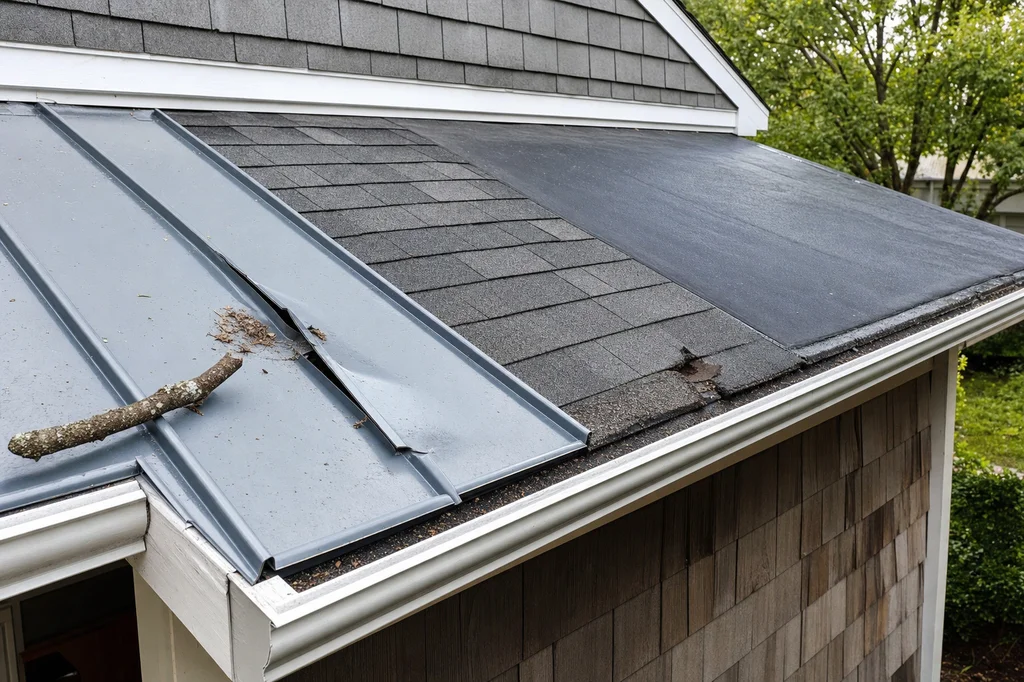
Choosing among metal, asphalt shingles, and rubber roofing is not a simple durability contest. The better choice depends on what is most likely to strike or stress your roof: windborne debris, hail, or snow and ice. Repair consequences also differ sharply after damage, so consider the likely failure before selecting a material.
Start with the damage that opens a roof
Your local hazard matters more than a blanket claim that one roof is always best. A material that performs well against hail may create different concerns in a wind-and-debris event or on a steep, snow-prone home.
In Cape Coral and Fort Myers after Hurricane Ian, flying debris was described as a central problem rather than wind alone. A metal panel can be vulnerable if debris opens a lock or seam. Once wind gets beneath that opened section, more of the roofing can lift away. Asphalt shingles can also blow off, but a limited damaged area may be easier to replace when matching shingles are still available.
- Windborne debris: Consider how a puncture or opened seam could spread into a larger roof failure.
- Hail: Prioritize an impact-resistant material if hail is a recurring local risk. Euroshield was cited as a rubber product that has handled hail impacts and hurricanes in Florida.
- Snow and ice: Consider the effects of snow and ice moving off a steep roof, particularly on tall homes with steep slopes.
- Ordinary weather exposure: In a market without frequent major wind or hail events, shingles may be the practical choice without paying for a higher-impact product you do not need.
Why repairability can favor asphalt shingles
Asphalt shingles can be the more manageable option when damage is confined to one area. A section that blows off may be repaired with replacement bundles, while a metal roof can require a much broader replacement after a seam failure.
This does not mean shingles are automatically stronger than metal. Metal was characterized as the superior material in some respects, especially when it is properly designed and installed. The homeowner decision is about the consequences of a breach. If a metal seam opens and the affected panels cannot be blended with the existing roof, replacing a larger section—or the full roof—may be necessary to achieve a consistent appearance.
Tile was viewed less favorably for hurricane-prone conditions because individual pieces can dislodge and become airborne hazards. That is a different failure pattern from shingles or metal panels, but it reinforces the same point: assess how the roof behaves after impact, not just how it looks on the day it is installed.
Where metal roofing needs closer scrutiny
Metal roofing can be a strong choice, but its panel style and installation details matter. A standing-seam metal roof was favored over exposed-fastener metal, sometimes called barn metal.
Exposed-fastener systems were described as needing annual attention to their fasteners. The reported concern was that owners who do not keep up with fastener checks may have limited warranty support. Review the written manufacturer warranty before choosing this style; warranty terms and maintenance obligations depend on the specific product.
Snow and ice also deserve special attention on steep roofs. In the Pittsburgh example, steep 12/12 roofs on three-story homes were identified as a setting where snow and ice movement can complicate metal-roof decisions. A roofing professional can assess the roof geometry and local snow conditions rather than treating a metal roof as a one-size-fits-all upgrade.
When Euroshield-style rubber roofing may make sense
Rubber and composite roofing may be worth considering where impacts are the main threat. Euroshield was described as a product that had remained in place through two hurricanes in Cape Coral, with hail appearing to bounce off the roof.
That is a field observation, not a universal performance guarantee. For a homeowner in a hail-prone market such as Colorado, an impact-resistant product such as Euroshield or another synthetic option may be a stronger fit than standard shingles.
Composite roofing was also identified as a likely direction for the market because engineered materials can offer a different balance of impact resistance and roof protection. The tradeoff is that the best material still depends on the hazards your home actually faces, not on whether a product is newer or more expensive.
Match the roofing system to the installer
A good material can still fail early if the roof system is poorly installed. New-construction roofs were specifically criticized for missing underlayment or ice-and-water protection, leading some relatively young roofs to be replaced.
When comparing proposals, identify the roofing material, panel or shingle system, underlayment, ice-and-water protection where appropriate, and the manufacturer warranty being offered. This gives you a way to compare proposals based on the full system rather than the visible roofing alone.
Before signing, focus your conversation on the decision that changes repair risk:
- Which local event is this roof designed to handle best: debris, hail, or snow and ice?
- If one area is damaged, can it be repaired without replacing a large visible section?
- For metal, is the proposed system standing seam or exposed fastener, and what maintenance does its warranty require?
- What underlayment and ice-and-water protection are included in writing?
Choosing the wrong installer can erase the advantages of any roofing material. Directorii lists verified contractors.
Choose for the failure you can live with
Asphalt shingles can be a sensible choice where repairability and modest storm exposure matter most. Metal may suit homes that need its strengths and can support the right panel system and installation. Rubber or composite roofing may deserve a closer look where hail impact is a recurring concern.
Do not select solely by a broad claim that one material lasts longer. Compare how each option responds after debris strikes it, hail hits it, or snow and ice load the roof.
Source: What’s the Best Roofing Material? Metal, Asphalt Shingles or Rubber?
FAQ
Are asphalt shingles easier to repair than metal roofing after storm damage?
Asphalt shingles may be easier to repair when damage is limited to one section and matching material is available. A metal roof can require a much larger replacement if debris opens a seam or lock and wind gets beneath the panels. The repair outcome depends on the damage pattern, roof design, and material availability.
Can windborne debris damage a metal roof even if the panels are strong?
Yes. Windborne debris can open a metal panel seam or lock, creating a path for wind to get underneath the roofing. That can lead to a larger section lifting off. This risk is especially relevant in areas where hurricanes or severe storms send debris into roofs, not simply where wind is common.
Should I choose Euroshield rubber roofing for a hail-prone area?
Euroshield may be worth comparing if hail is a repeated risk in your area. It was described as handling hail impacts and remaining in place through hurricanes in Cape Coral. Treat that as a reported field observation rather than a universal performance guarantee.
What is the concern with exposed-fastener metal roofing?
Exposed-fastener metal roofing was described as requiring annual fastener checks. If that maintenance is neglected, warranty support may be limited depending on the product terms. Review the manufacturer warranty carefully and make sure the proposal identifies the exact metal system, rather than simply saying that it includes a metal roof.
How do snow and ice affect a metal roof choice?
Snow and ice movement can be a significant consideration on steep roofs, particularly tall homes with sharp roof slopes. That does not rule out metal roofing, but it means the roof geometry and local weather need a closer review.