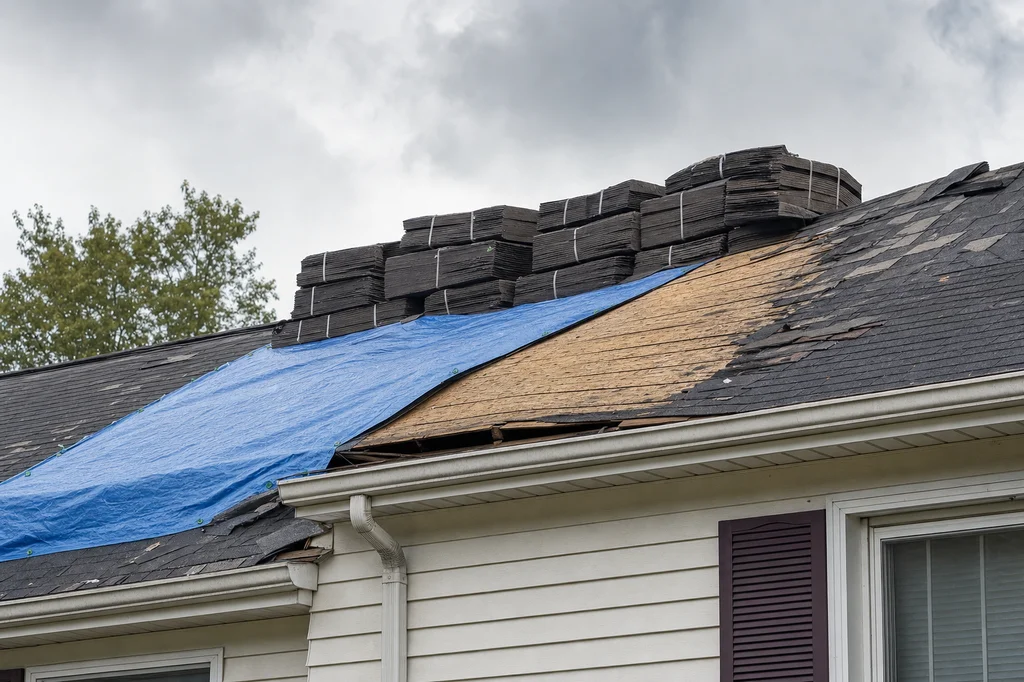
Before you hire Lowe's for a reroof, put the response to delivery-related truss damage in writing: who arranges immediate tarping, coordinates water mitigation, and is responsible if materials damage the roof. A reported Arizona case shows how quickly broken trusses, rain, and delayed action can become a much larger loss.
Who responds if a delivery damages roof trusses?
The urgent issue is not simply who dropped or placed the materials. It is who takes charge of protecting the home before the next rain and who coordinates structural repair.
In the Arizona case, homeowner Eric reported that a roofing supply company overloaded shingles near the roof peak, damaging trusses. He said rain followed, water entered the home, and the house later became unlivable. The account illustrates a critical distinction: a material delivery may involve a retailer, a delivery vendor, and an installation subcontractor, but your home still needs an immediate response while those parties sort out responsibility.
Put a single point of contact in the contract or project paperwork. That person should be able to tell you, in plain language, who will arrange emergency protection, who will evaluate damaged framing, and how you will receive updates. If framing is suspected to be damaged, confirm who will determine the repair needed before roofing resumes.
Written items to settle before Lowe's schedules the reroof
A broad installation agreement may not answer what happens if materials damage the roof before work is complete. Get the response plan in writing before delivery day, not after water is entering the house.
- Delivery placement: Identify who directs where shingles and other materials are placed and who is responsible for damage caused during delivery or loading.
- Emergency weather protection: State who will arrange tarping or other temporary protection if the roof is opened, damaged, or left exposed. Include how you report an urgent problem after normal business hours.
- Structural damage process: Require a clear process for evaluating suspected truss or deck damage and for approving the repair before the roof covering is installed.
- Water-mitigation coordination: Specify who contacts a water-mitigation company if interior water intrusion occurs and who documents the condition of the home.
- Subcontractor identity: Ask for the name of the installing company and the parties expected to deliver materials. You need to know who will be on site and who to call.
- Communication authority: Confirm whether the retailer, installer, or another vendor can authorize emergency work. A chain of calls is not a response plan.
This is not about predicting a disaster. It is about preventing a short delay from becoming continued exposure to rain and escalating interior damage.
What to do if materials damage the roof before installation
Move quickly to create a record and obtain temporary protection. Do not wait for every company involved to agree on fault before reporting active water entry or an exposed roof.
- Contact the retailer and the installation company using the project contact information. Describe the visible problem, whether rain is expected, and whether water is entering the home.
- Request written confirmation of the immediate protection plan, including who is being dispatched and when. Keep communications in one email thread or another saved format where possible.
- Photograph visible exterior and interior conditions from safe ground-level or indoor locations. Record the date, time, weather conditions, active drips, and rooms affected.
- Protect your household. If water reaches electrical components or the home is not safe to occupy, contact an appropriate licensed professional or emergency service provider.
- Notify your insurer promptly and ask what documentation it needs. Coverage and claim handling depend on your policy, so do not rely on a retailer or roofer to interpret coverage for you.
Water damage compounds while a roof remains exposed. Fast temporary protection does not decide who ultimately pays; it helps limit the damage that everyone may later need to evaluate.
Why a refund may not answer the homeowner's larger problem
A roofing refund addresses the price paid for roofing work, but it may not resolve a separate dispute over structural damage, water intrusion, temporary housing, or reconstruction. Keep the installation payment issue separate from the condition of the house and the emergency work needed to stabilize it.
Lowe's stated that it no longer does business with the contractor involved in the Arizona case, issued a full refund for the roofing work, and that the homeowner was compensated to the full value of the home through insurance and arbitration. The homeowner reported a different practical outcome: the home was gone after a prolonged dispute. Those statements are not a reason to assume how any future claim will be handled. They are a reason to insist on a clear emergency-response path before work starts.
If a serious damage dispute develops, preserve the contract, change orders, delivery records, photos, invoices, and written communications. Arbitration clauses, insurance terms, and property-damage responsibilities can vary by contract, policy, and state. Consider consulting qualified legal and insurance professionals for advice on your situation.
Questions that reveal whether the response plan is real
You do not need a long technical interview. You need direct answers that identify the people who act during the first hours after a delivery or installation failure.
- Who is my emergency contact if material placement damages the roof or rain enters the house?
- Will the installation company arrange immediate tarping, or does Lowe's control that decision?
- Who evaluates possible truss damage, and will roofing pause until that evaluation is complete?
- Which company is delivering materials, and what documentation will I receive if a delivery incident occurs?
- Who coordinates water mitigation if interior damage begins?
- Can you show me where these responsibilities appear in my agreement?
Vague answers such as “the appropriate department will handle it” leave you without a usable plan when time matters. A responsible project setup identifies names, phone numbers, and authority before the truck arrives.
For the installation side of the decision, Directorii lists verified contractors.
Source: YouTube
FAQ
What should I get in writing before hiring Lowe's for a roof replacement?
Get written terms covering delivery placement, emergency weather protection, suspected structural damage, water-mitigation coordination, and project contacts. The key is identifying who can authorize immediate action if materials damage the roof or rain enters the home, rather than relying on several companies to decide responsibility after the fact.
Can roof material delivery damage trusses?
It can, as the Arizona homeowner reported after shingles were allegedly overloaded near the roof peak. If you suspect framing damage, the roofing work should not simply continue over it. Confirm who will evaluate the condition and determine the appropriate repair before the roof covering is completed.
Who should tarp my roof if a delivery damages it?
Your contract should identify the party responsible for arranging immediate temporary protection and provide an emergency contact. The retailer, installer, and delivery vendor may be separate businesses, so do not assume they share the same response process. Get the plan and the person authorized to act in writing before delivery.
Should I call my insurer if water enters during a reroof?
Notify your insurer promptly and ask what documentation it needs if water enters your home during the project. Your policy controls coverage and claim handling, which may differ from the installation agreement. Save photos, written communications, invoices, and records of the date, weather, and rooms affected.
Does a roof-work refund resolve water damage to my home?
Not necessarily. A refund for roofing work and responsibility for structural damage, water intrusion, mitigation, or other losses can be separate issues. In the reported Arizona case, Lowe's said it issued a full refund and that compensation occurred through insurance and arbitration, while the homeowner reported that the home was ultimately lost.