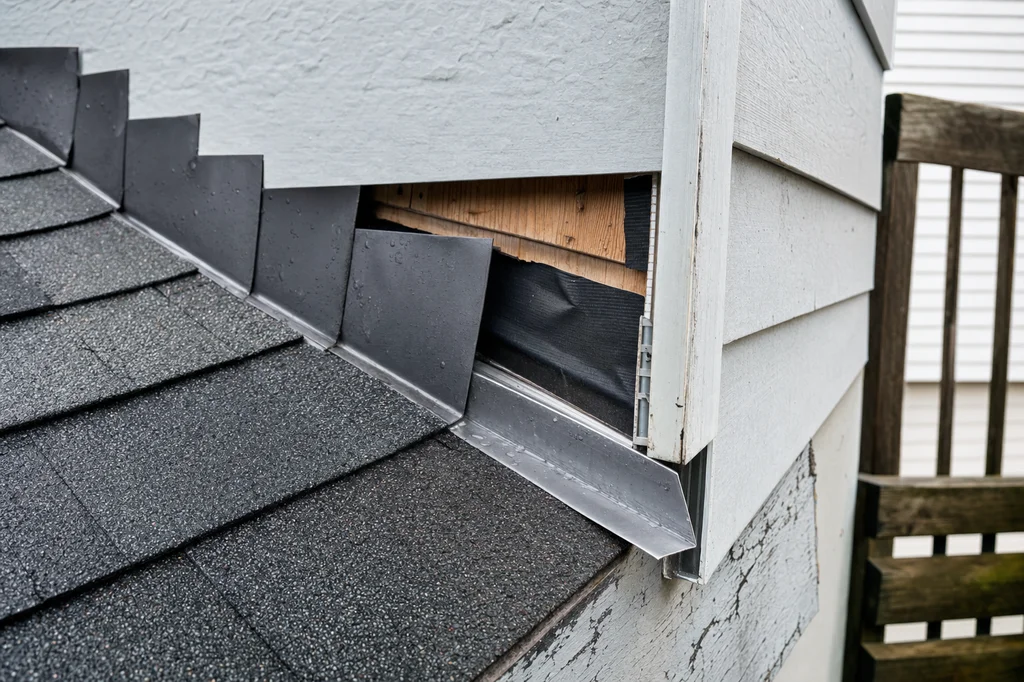
The American Flashings Jade Out Kick Out is designed to direct water leaving a roof-to-wall intersection away from the siding instead of letting it run behind wall cladding. That small transition piece matters because concealed runoff can damage sheathing, framing, trim, and a deck connection before indoor stains appear.
Where roof-to-wall water goes after step flashing
Step flashing helps manage water where a sloped roof meets a vertical wall, but the runoff still needs a deliberate exit at the bottom of that wall. A kickout flashing is the piece intended to turn that water outward and discharge it beyond the siding.
In the reported example, the issue was not simply a missing shingle. Water had apparently traveled behind the wall finish at a chimney-side roof intersection. The resulting damage extended beyond exterior sheathing to framing, floor joists, and the area where a deck attached to the house. The repair could require siding removal, framing work, and removal of some deck boards to evaluate and rebuild the connection.
That is why this detail deserves attention during a reroof, siding replacement, or investigation of a suspected wall leak. Water may soak into a wall and dry repeatedly without creating obvious interior staining. In the example, spray foam in the wall was described as one reason the homeowner did not see water evidence indoors promptly.
What makes the Jade Out Kick Out different
American Flashings markets the Jade Out Kick Out as a kickout flashing with a J-channel built into it. The stated purpose is to give the siding installer a defined transition rather than leaving a homemade kickout made from step flashing vulnerable to being bent, removed, or covered over.
American Flashings says roofers had been creating kickouts from step flashing, while siding crews sometimes found the pieces in their way and either removed them or crushed them against the wall. On new construction, that could lead to a failed inspection and a return visit to replace the kickout. The integrated channel is intended to make the intended siding interface more apparent.
For homeowners, the product decision is not just about whether a flashing looks neat. It is about whether the final roof, flashing, water-resistive layers, and siding trim leave a visible route for water to escape. A kickout that is buried, flattened, or routed behind cladding cannot perform the same drainage function.
- Manufacturer-stated feature: The Jade Out Kick Out includes an integrated J-channel.
- Reported field problem: Homemade kickouts can be disturbed during siding work.
- Homeowner meaning: Have the roofing and siding scope address the same roof-to-wall transition instead of treating them as separate details.
Checklist for siding, fiber cement, and vinyl transitions
The right detail depends on the wall cladding, but runoff must remain directed away from the wall. Fiber-cement and vinyl siding handle this transition differently, so the finished assembly should be reviewed before work is closed up.
- Identify every roof-to-wall endpoint. Look for places where a sloped roof dies into a sidewall, chimney, dormer, or other vertical surface. These are the locations where a kickout may be needed.
- Confirm that water exits beyond the siding. The key result is visible discharge away from the wall, not water trapped behind the cladding or inside a trim channel.
- Check the cladding-specific clearance. American Flashings described fiber-cement siding as commonly using a two-inch clearance above the roof line. Confirm the required clearance and installation details for your particular siding with its manufacturer and a licensed professional.
- Review the J-channel path on vinyl siding. In the approach described by American Flashings, water that enters the J-channel can drip out at the seam near the kickout rather than continue behind the wall finish.
- Do not accept a bent cover as the whole solution. A piece of flashing bent to hide step flashing may look finished, but appearance alone does not show where roof runoff will discharge.
- Document the transition before siding covers it. Ask for photos of the completed kickout and roof-to-wall flashing while the detail is still visible. This is useful if future siding or roof work affects the area.
Why hidden wall rot can become a structural repair
A small drainage failure can spread farther than the visible siding. Once water repeatedly reaches sheathing and framing, the repair may involve opening the wall, replacing deteriorated wood, and checking nearby deck framing or attachment points.
The example showed a wall corner with severely deteriorated studs and damage that wrapped around the chimney-side wall. Moisture behind fiber-cement siding was also associated with flaking material and paint loss. American Flashings also raised concerns about mold, insects, and animals where wet or deteriorated wall assemblies create openings.
Do not use the absence of a ceiling stain as proof that the wall is dry. If you have peeling paint near a roof-wall intersection, damaged siding, repeated leaks around a fireplace, or soft exterior trim, arrange for a qualified roofer and the appropriate repair professional to assess the assembly. If structural damage is suspected, confirm the repair approach with a licensed professional.
What to put in a reroof or siding-work scope
The most expensive mistake is allowing one trade to assume the other will solve roof-to-wall drainage. Put the required flashing detail and the completed drainage path in writing before the roof or siding is installed.
Use one focused conversation with the professional who will coordinate the work:
- Which roof-to-wall intersections will receive kickout flashing?
- How will runoff be directed beyond this siding and trim system?
- Who is responsible for preserving the kickout when siding or J-channel is installed?
- Will the crew photograph the flashing before the wall cladding conceals it?
- If damaged sheathing or framing is found after opening the wall, who will evaluate it and provide the repair scope?
American Flashings says the Jade Out Kick Out is available in black, white, brown, gray, bronze, and tan. Color can help the finished detail fit the roof or siding, but drainage and compatibility with the wall system should drive the selection.
For a reroof, leak investigation, or coordinated siding repair, Directorii lists verified contractors.
Source: American Flashings Jade Out Kick Out overview
FAQ
What does kickout flashing do at a roof-to-wall intersection?
Kickout flashing is intended to divert water leaving step flashing away from the wall and beyond the siding. Without a clear exit path, runoff may travel behind cladding, where it can affect sheathing, framing, trim, and nearby deck connections before visible indoor water stains develop.
How is the American Flashings Jade Out Kick Out designed to work?
The American Flashings Jade Out Kick Out is marketed as a kickout flashing with a J-channel built into it. The integrated channel is intended to create a clear siding transition and help keep the kickout from being removed, crushed, or covered during siding installation.
Should fiber-cement siding touch the roof or flashing?
Fiber-cement siding should be installed with the clearance and flashing details required for that specific product. American Flashings described a two-inch clearance above the roof line for fiber-cement siding, but you should confirm the applicable requirement with the siding manufacturer and a licensed professional.
Can a wall leak exist without stains inside my house?
Yes, water can enter a wall without promptly producing obvious interior stains. In the reported example, spray foam was associated with delayed visibility of the leak, while damage developed in sheathing, framing, and floor-joist areas behind the exterior wall.
What should I ask before a roofer and siding crew start work?
Ask who will install and preserve each roof-to-wall kickout, how runoff will exit beyond the finished cladding, and whether the completed detail will be photographed before siding covers it. Also ask how concealed sheathing or framing damage will be handled if it is discovered.