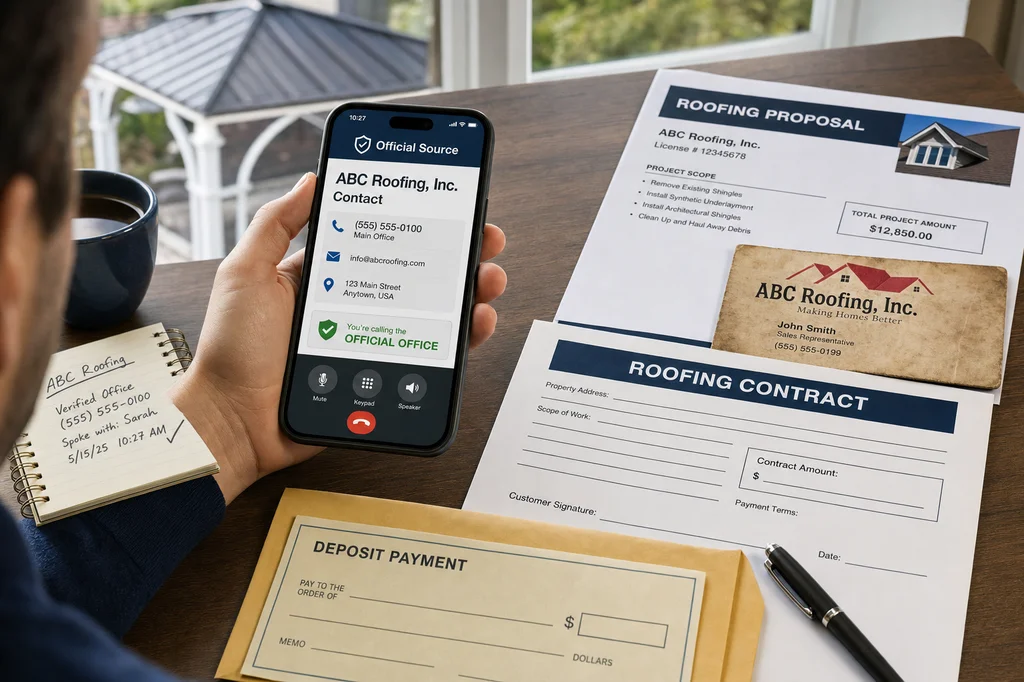
The Keondra Walker case is a reminder that a roofing company name, old business card, or license number may not prove the person taking your deposit currently represents that business. Before money changes hands, contact the company through an independently found phone number and verify the salesperson, scope, and payment instructions.
What the Keondra Walker allegations mean for homeowners
Investigators alleged that Keondra Walker posed as a roofing contractor after no longer working for a roofing company, using old business cards, company letterhead, and a former employer’s contractor license number. The reported victims included a homeowner who paid for work on a gazebo roof and another homeowner who said work at two properties was not completed or was not completed properly.
The core risk is impersonation, not simply choosing a contractor with a weak online rating. A document can carry a real company’s name while the person presenting it has no current authority to sell work, collect money, or schedule crews for that company.
Reports stated that Walker was charged in an earlier case with scheme to defraud and unlicensed contracting, then was accused in a later case. Those are allegations and charges, not a reason to assume that every sales representative or roofing company is untrustworthy. They do show why homeowners should verify the relationship directly rather than rely on persuasive sales talk or printed materials alone.
How to confirm who is authorized to take a roofing deposit
Call the roofing company using contact information you find yourself, such as its official website or a state licensing listing. Do not use only the phone number printed on the proposal, business card, or text message you received.
Tell the office the salesperson’s full name and ask whether that person is currently authorized to offer your project, sign a contract, and receive a payment on the company’s behalf. Then verify that the company recognizes the address, proposed scope, contract amount, and payment method.
- Match the company name. Confirm the legal or operating name on the contract is the same company you reached independently.
- Match the representative. Ask whether the specific person at your door or on the phone is a current employee or authorized representative.
- Match the job. Describe the roof, gazebo, repair, or replacement work being proposed. A legitimate office should be able to confirm the project exists in its system.
- Match the payment recipient. Ask exactly who should receive payment and whether the company accepts the proposed method. A payment direction that differs from the office’s instructions deserves an immediate pause.
- Keep the confirmation. Save the name of the office contact, the date, and written follow-up if available. This creates a clear record if a dispute develops.
These checks are most valuable before a deposit, not after a promised crew fails to appear. They also help expose a mismatch between a salesperson’s story and the company’s actual records.
Old letterhead and a license number are not proof of current authority
Company letterhead, branded clothing, business cards, and a contractor license number can make a proposal look established. They should support verification, not replace it.
In the reported allegations, the claimed use of a former employer’s license number was central because it could make a person appear connected to a legitimate roofing company. Homeowners should check the license or registration with the appropriate state or local authority and confirm with the named company that the license is being used for their specific project.
Licensing requirements and the meaning of a license lookup vary by state and locality. A listed license may identify a company, but it does not automatically confirm that every person using the number is authorized to collect funds. If the project involves permits, confirm local requirements with the licensing authority or a licensed roofing professional.
Separate a failed roofing job from a possible deposit theft
Bad workmanship, unfinished work, and a person taking money without doing the promised work are different problems, even though each can leave you with a damaged roof and a financial loss. Preserve evidence instead of trying to classify the situation yourself.
The reporting distinguished between work that was not done and work that was not done properly. An incomplete or defective job may involve contract terms, warranty obligations, and technical questions about the installation. A person who was never authorized to represent the named company may create an additional fraud concern.
Take dated photos from the ground where possible, save the contract, proposal, invoices, texts, emails, payment records, business cards, and any license information provided. If weather protection or roof safety is at stake, have a licensed roofer document the condition and recommend necessary professional repairs. For suspected deception, contact local law enforcement and the appropriate consumer-protection or licensing authority. Insurance coverage, contract remedies, and reporting options can depend on your policy, contract, and state, so get advice from qualified local professionals when needed.
What to say before signing a roofing contract
A short verification call can be direct and specific. The goal is not to accuse the salesperson; it is to establish who is responsible for your project before you pay.
- “Is this person currently authorized to represent your company at my address?”
- “Do you have this exact scope and contract amount in your records?”
- “Who should the payment be made payable to, and do you accept payment through this method?”
- “Will your office send the final contract or payment instructions directly?”
- “Who will be my company contact if the work is delayed, incomplete, or defective?”
If the office cannot verify the person, the project, or the payment directions, do not treat a branded document as confirmation. Stop the transaction until the mismatch is resolved in writing.
Choose the company, not just the person selling the roof
A confident salesperson may make an urgent repair sound simple, but the company should be able to stand behind the agreement, payment process, and completed work. The Keondra Walker allegations illustrate why homeowners should verify the business relationship before relying on the individual in front of them.
When you are comparing roofers, Directorii lists verified contractors. Still confirm the representative assigned to your project and make sure the contract identifies the company responsible for the work.
Source: Roofing Scam Alert: Keyondra Walker accused of posing as Roofing Contractor
FAQ
How can I verify that a roofing salesperson really works for the company?
Contact the roofing company through a phone number or website you locate independently, then provide the salesperson’s full name. Ask whether that person is currently authorized to represent the company, offer your project, sign documents, and collect payment. Also confirm that the office recognizes your address, scope, amount, and payment instructions.
What should I do if a roofer uses a company license number on the proposal?
Treat the license number as something to verify, not as proof that the salesperson works for that company. Check it with the applicable state or local licensing authority and call the named company independently. Ask whether it authorized use of that license number for your particular roofing project and payment arrangement.
Can old business cards or company letterhead be used by someone no longer employed there?
They can create the appearance of an active company relationship, which is why they are not enough on their own. The allegations involving Keondra Walker included old business cards and former company letterhead. Confirm current employment or authorization directly with the company before signing or providing any deposit.
What is the difference between bad roofing work and a possible deposit scam?
Poor or incomplete work may be a contract, warranty, or installation dispute, while taking payment without doing promised work or without authority to represent a company may raise additional fraud concerns. Save all records and photos. Have a licensed roofer assess urgent roof conditions, and contact appropriate local authorities if you suspect deception.
Should I pay a roofing deposit to an individual salesperson?
Do not rely on a salesperson’s instructions alone. Before paying, independently confirm with the company who should receive the payment and which payment method it accepts. Make sure the company recognizes the exact project and contract. If the office’s instructions differ from the salesperson’s, pause until the discrepancy is resolved.