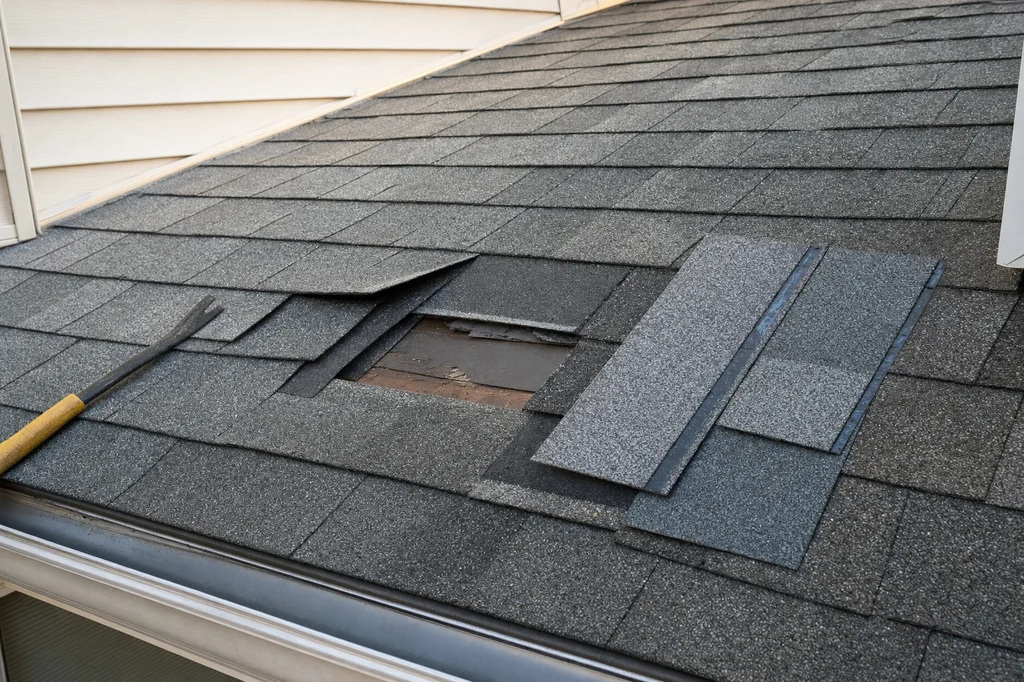
An ITEL report used to identify a roof shingle can help after damage, but it should not be treated as proof that a proposed spot repair will work. Before accepting a repair-based claim decision, compare the report’s identification and replacement suggestion with product availability, manufacturer documentation, and the practical compatibility of the materials.
What an ITEL report can—and cannot—settle
ITEL’s stated mission is to provide science- and fact-based analysis of building products involved in a claim dispute. It may identify shingles as well as materials such as tile, flooring, siding, and interior finishes.
For a roof claim, identification is the starting point. A report may identify the original shingle and may suggest a product that appears close or is available for purchase. That does not automatically answer whether the suggested shingle can be used in the same roof plane without creating a functional or installation problem.
The key distinction is between identification and repairability. A replacement can look similar in a photo or share a general color family while still raising questions about whether it can be integrated with the existing roof. Availability, how the materials work together, and whether the repair can be performed properly are separate questions.
Why a physical shingle sample deserves more weight than photos
A physical sample generally gives an identification service more information than an app submission or photographs. That can make identification more reliable when weathering, shadows, granule loss, or color variation make images hard to interpret.
Do not remove shingles yourself or walk the roof to obtain a sample. If an ITEL submission is needed, a roofing professional can determine whether a sample can be collected safely and without unnecessary damage. Keep a record of where the sample came from and who collected it.
Read the full report, including qualifications and notes, rather than relying only on checkmarks or summary labels. A prominent positive identification or matching indicator may be paired with language directing owners and installers to verify physical and visual compatibility before installation.
Check compatibility before agreeing to a spot repair
Compatibility is broader than color. The central question is whether the proposed repair material can be installed with the existing shingles in a way that functions properly and produces an acceptable result.
Evaluate the actual product construction and the condition of the surrounding roof, not merely whether two shingles appear gray, brown, or weathered in a similar way. The repair method also needs to be repeatable. A one-off demonstration that damages shingles, relies on unusual handling, or cannot be consistently performed is not the same as a workable repair plan.
- Original product status: Determine whether the shingle identified by ITEL is available, temporarily unavailable, or discontinued.
- Replacement suggestion: Identify the exact substitute named in the report or repair scope, then determine whether it is simply similar in appearance or can work with the existing shingles.
- Installation feasibility: Determine whether existing shingles can be separated and reinstalled without avoidable breakage or damage.
- Same-plane result: Consider how the replacement will function and appear beside the existing field shingles, not just as an individual sample.
- Repair scope: Keep the proposed repair area and method in writing before authorizing work.
Use discontinued-product documents to fill gaps in the report
When the original shingle is no longer made or cannot be obtained, manufacturer records can be as important as the identification itself. A discontinued-product letter, bulletin, or product-change notice can establish that the original material is no longer available and may identify listed alternatives.
CertainTeed maintains a consolidated list of discontinued products and may supplement it with letters or bulletins for particular product lines. GAF publishes multiple documents covering discontinuations, product changes, and outsourcing changes. These documents do not decide coverage by themselves, but they help establish the product history to consider alongside the ITEL report and repair proposal.
Save complete documents rather than screenshots of isolated lines. They can clarify whether a proposed replacement is unavailable, has changed, or is not identified as a compatible alternative in the manufacturer’s materials.
Build an ITEL-centered response to a repair decision
Keep the response tied to the proposed repair rather than the word “match.” The useful record connects the ITEL identification, its replacement suggestion, and the report’s compatibility disclaimer to the specific material and method proposed for the roof.
- Keep the written repair scope and the exact replacement product proposed for the roof.
- Separate the ITEL identification from its replacement suggestion; they are not necessarily the same conclusion.
- Attach discontinuation letters, product bulletins, and availability information for the shingle identified in the report.
- Document whether the proposed method can be performed without avoidable damage and repeated consistently across the repair area.
- Provide the organized report, manufacturer records, and repair information to the person authorized to make the claim decision.
Keep records of communications, reports, photos, and repair proposals. Coverage, matching requirements, and claim procedures can vary by policy and state. For help interpreting policy language or a disputed legal issue, confirm it with your insurer, state insurance department, or qualified legal counsel.
Directorii lists verified contractors.
Source: John Senac: Itel, Name that shingle, how to sell $2.4 million in Roofing
FAQ
What does an ITEL shingle report actually tell me?
An ITEL report is primarily used to identify the building product submitted for review and may suggest a similar or available replacement. It does not, by itself, establish that a proposed replacement shingle is suitable for a repair. Availability, physical compatibility, and the repair method need separate evaluation.
Should I accept a repair because the ITEL report shows a close match?
Review the complete report and the proposed repair plan first. A close visual result may not answer whether the substitute can function with existing shingles or whether the repair can be performed properly. Compare the exact proposed product with the report’s identification, replacement suggestion, and compatibility language.
Is a physical shingle sample better than submitting roof photos to ITEL?
A physical sample can provide more information for identification than photos or an app submission. Have a roofing professional determine whether a sample can be collected safely and without unnecessary damage, and keep documentation showing where it was taken from the roof.
What records should I collect if the identified shingle is discontinued?
Collect the manufacturer’s discontinued-product letter, bulletin, or product-change documentation, along with availability information for the shingle identified by ITEL. Compare those records with the exact material proposed for the repair. The documents can clarify product history, but they do not determine claim coverage by themselves.
Why does same-plane compatibility matter for a shingle repair?
A shingle can be similar in color yet still raise concerns about installation, function, or appearance beside the existing field shingles. The repair method should be workable without avoidable damage and repeatable across the repair area.