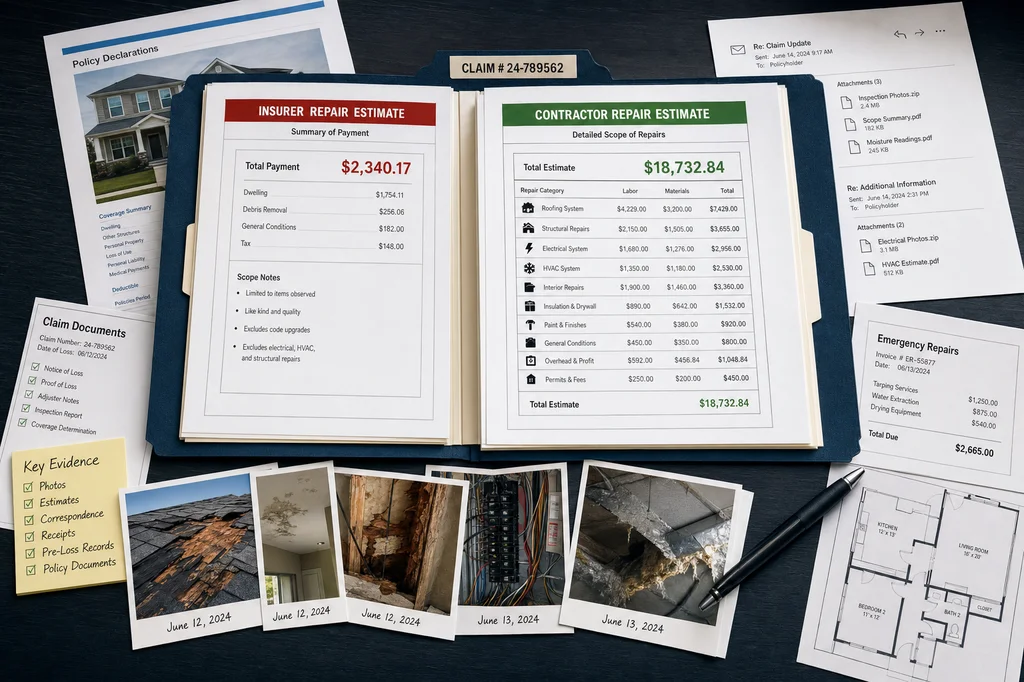
American Reliable and USAA claim battles show why homeowners facing a severely underpaid property-loss claim should preserve every written message, repair estimate, photo, and insurer document. The homeowners in these cases did not rely on a verbal disagreement alone; the disputes centered on records that showed damage, costs, and claim-handling decisions.
Why written communication can protect your claim record
Written communication creates a dated trail of what you reported, what the insurer requested, and how it responded. That can matter if an insurer later says it was not told about a problem or that you were difficult to reach.
In the California dispute involving sisters Jennifer Garnier and Angela Tuft, American Reliable Insurance Company initially offered $5,000 after a 2019 storm flooded their home. The reported damage included electrical problems, wall cracks, and an HVAC system affected by water and mud in the crawl space. The insurer later contended the sisters were hard to reach because they insisted on written communication. Their attorney reportedly maintained that updates had been sent for years.
The homeowner lesson is not that written communication guarantees payment or a court result. It is that emails, letters, claim-portal messages, and written summaries of phone calls can make it easier to show what happened and when. After a significant loss, keep communications in one folder and use a consistent claim number in the subject line.
- Save outgoing messages: Keep the full message, attachments, and sent date—not only a screenshot of the text.
- Save insurer responses: Retain estimate revisions, reservation letters, denial letters, payment notices, and requests for information.
- Summarize calls promptly: Note the date, participants, topics discussed, and any promised next step in a follow-up email or personal log.
- Do not discard earlier versions: A low initial estimate and a later supplement can both be relevant to understanding the claim history.
What the American Reliable case says about repair estimates
A contractor estimate can document the scope and cost of repairs that a low insurer payment may not address. It should be a usable repair document, not simply a one-number opinion.
The California homeowners reportedly provided multiple contractor estimates showing damage above $100,000, while the initial offer was $5,000. American Reliable later paid the $140,000 policy limit, according to the reported case timeline. A jury then found breach of contract and bad faith, with an $18 million award that included unpaid loss, emotional-distress, and punitive-damage components.
That verdict is a case-specific outcome, not a measure of what another homeowner can expect. The practical point is narrower: where the claimed damage includes systems such as electrical service and HVAC, a detailed repair scope may reveal the gap between a payment and the work needed to restore the property.
Request estimates that identify the damaged area or system, the proposed repair or replacement work, and the materials and labor included. If an insurer’s scope omits work your contractor identifies, preserve both documents side by side. You need a clear comparison, not an argument about a single total.
How USAA’s pre-loss files became a key issue
Pre-loss documents can be as useful as post-storm photos because they establish the condition, layout, and value of property before damage occurred. Keep copies of records that describe your home before a major event.
Silva and Paul Miner’s dispute with USAA followed Hurricane Katrina damage to their Mississippi beachfront home. The policy reportedly covered wind damage but not flood damage. USAA initially paid $37,000. The Miners challenged the payment and supplied floor plans and photos; USAA later located its own pre-storm files and issued a supplemental payment.
The litigation later involved allegations that USAA had internal records concerning wind damage, including a confidential memo about windows. A jury awarded damages in 2013, and later proceedings produced further awards and attorney-fee amounts. The Mississippi Supreme Court reportedly affirmed a $10.5 million award in 2024 and added fees. Those facts do not establish what any policy covers, but they show why the documents already held by an insurer can become important.
Preserve records that may help separate pre-existing conditions from new damage or document what was there before the loss:
- Prior inspection reports, appraisals, and property photos.
- Receipts and permits for prior repairs or improvements.
- Floor plans and inventories of major contents.
- Earlier insurer declarations, endorsements, and claim correspondence.
Also request copies of the policy, declarations page, insurer estimate, adjuster reports, engineering reports, photographs, and claim correspondence. Whether you can obtain a particular record can depend on your policy, state, and the stage of a dispute. An attorney or your state insurance department can help you understand available options.
Build a repair file before work starts
Documenting damage before repairs begin helps preserve evidence while giving you a workable construction scope. Emergency mitigation may be necessary to prevent further damage, but avoid disposing of damaged materials or altering conditions without first creating a clear record when practical.
Take date-stamped photos and video from safe locations. Photograph broad views of each affected room or exterior area, then closer views of damaged finishes, equipment, and contents. Keep invoices for emergency work and receipts for related expenses. Do not climb onto a roof or attempt roofing repairs yourself; a licensed roofing professional can assess roof conditions and prepare a written scope from a safe inspection.
For a major property-loss repair, the contractor’s role is to identify construction damage and price the necessary work. The contractor is not the decision-maker on policy coverage, legal rights, or the validity of an insurer’s position. If the difference between repair evidence and the insurer’s decision remains substantial, consider speaking with a qualified insurance-coverage attorney or public adjuster, as appropriate in your state.
When a low payment calls for a second repair scope
A second repair scope is most useful when the insurer’s estimate omits visible damage, does not account for connected systems, or proposes work that does not match the property’s actual condition. It gives you a concrete document to compare against the insurer’s scope.
Choose a licensed professional with experience in the damaged trade, and give them the insurer’s estimate without asking them to tailor a number to the payment. Ask for an independent written scope that identifies what they observed and what work is needed. If roofing is involved, make sure the scope distinguishes roof work from interior, HVAC, electrical, or other trade work rather than rolling unrelated repairs into an unexplained total.
Directorii lists verified contractors.
Keep the claim dispute separate from the repair decision
You may need to plan repairs while the claim remains unresolved, but do not let pressure to move quickly erase your records. A signed repair contract should clearly state the work, materials, payment terms, and any work excluded from the scope.
Before authorizing major work, decide which damage has been documented, what emergency work is necessary, and what evidence must be retained. Read any insurer payment or settlement document carefully. Its effect can depend on the wording, policy, contract, and state law, so seek legal advice before signing if you do not understand whether it resolves part or all of your claim.
Source: Homeowner claim battle examples
FAQ
What records helped the American Reliable homeowners support their claim?
Written communications and multiple contractor estimates were reported as key evidence in the American Reliable dispute. The estimates reportedly showed damage above $100,000 while the initial offer was $5,000. Keep dated messages, attachments, damage photos, repair scopes, payment notices, and insurer letters together so the timeline can be reviewed clearly.
Why should I keep written communication with my insurer?
Written communication can show what you reported, when you reported it, and how the insurer responded. In the American Reliable case, the insurer reportedly argued that the homeowners were hard to reach because they preferred written communication, while their attorney said updates had been sent for years. A written record does not guarantee an outcome, but it preserves facts.
What USAA documents should I request after a major storm claim?
Request your policy, declarations page, insurer estimate, claim correspondence, reports, photographs, and any other records related to the claim. In the USAA dispute, pre-storm floor plans, photos, and internal files became issues in the case. What records are available can depend on your policy, state, and the circumstances of the claim.
Should I get a contractor estimate if the insurer already gave me one?
A separate contractor estimate can help you compare the insurer’s repair scope with the work a construction professional identifies. It is especially useful when the insurer’s estimate appears to omit systems or repairs. Ask for a detailed written scope, not just a total price, and preserve both versions for a direct comparison.
Can I start repairs before my insurance claim is resolved?
Emergency work may be needed to prevent further damage, but document conditions before repairs begin whenever practical. Take photos and keep invoices and receipts. Do not handle roof work yourself; use a licensed roofing professional. Before signing major repair or settlement documents, review the wording carefully and seek qualified advice if the claim remains disputed.