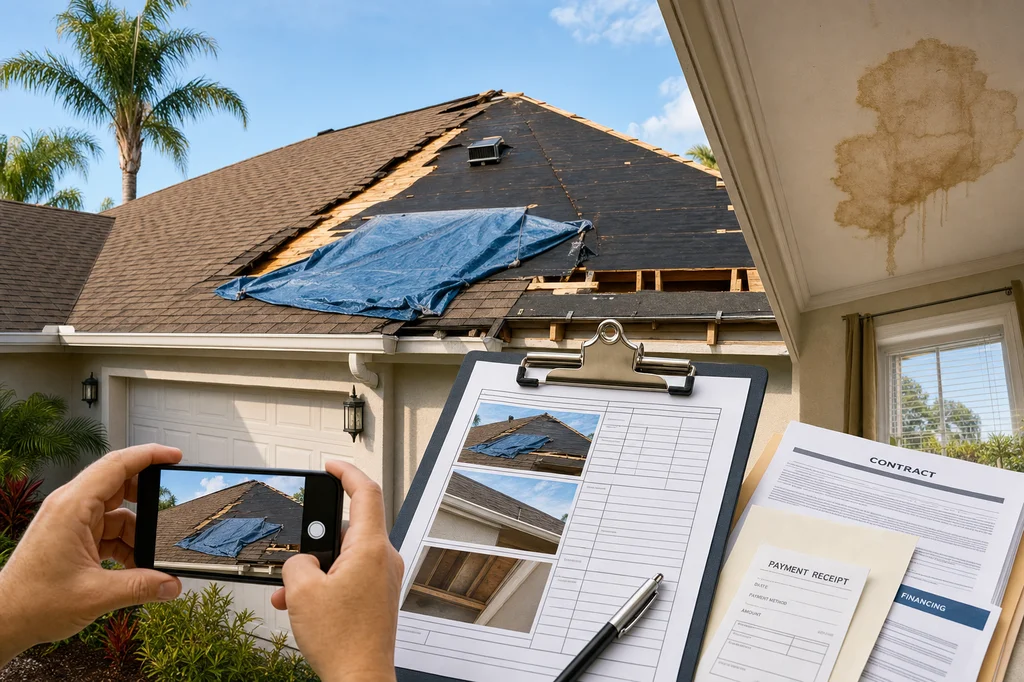
If the Honest Abe Roofing franchise in Tampa left your roof unfinished, your deposit unrecovered, or your home leaking after work stopped, act quickly to preserve a clear record. A Tampa franchise shutdown reportedly left some customers with unfinished projects, lien concerns, and unresolved communication. Your immediate priority is to document the condition of the home and limit further damage.
Start with the roof’s current condition, not the dispute
A new leak or exposed roof area can become a larger home-repair problem while payment and responsibility questions are being sorted out. Put the home’s condition first by having a licensed roofer assess and document active water entry, unsecured materials, penetrations, and any incomplete roof areas.
One homeowner reported that materials were collected from her property after the Tampa location closed and that punctures were left behind, followed by roof leaks. That account does not establish what happened at every property, but it shows why you should not rely on a verbal description of the remaining work.
- Photograph the exterior from the ground. Capture missing materials, tarps, exposed edges, debris, and visible roof openings without getting on the roof.
- Record interior effects. Photograph ceiling stains, wet insulation visible from an attic access point if safely accessible, drips, and damaged belongings.
- Save dated communications. Keep texts, emails, voicemail records, notices, and call logs showing attempts to reach the Tampa franchise or company representatives.
- Make a condition timeline. Note the contract date, deposit date, work dates, last contact, date work stopped, material pickup date if applicable, and when any leak appeared.
- Get a written stabilization scope. If another roofer recommends temporary protection or repairs, ask for the condition observed, the immediate work proposed, and photographs. This separates emergency work from the eventual replacement or completion decision.
Do not authorize broad replacement work just because the original project is in dispute. First, obtain a written description of what is incomplete, damaged, or unsafe. That record can help you compare options and avoid paying twice for work that was already contracted.
Collect the documents that show what you paid for
Your contract and payment trail are the clearest starting point for determining what was promised and what remains. Organize them before contacting the franchise, corporate office, a lender, an insurer, or a new roofing company.
A reported Tampa customer paid a $5,000 deposit and said the company stopped returning calls before it closed. Another complication was financing that reportedly fell through. Whether your project was paid by check, card, cash, or financing, retain records that connect each payment to the roof contract.
- The signed contract, proposals, change orders, and any cancellation paperwork
- Receipts, bank statements, card statements, canceled checks, or financing disclosures
- Any material lists, delivery tickets, permits, inspection records, or warranties you received
- Photos from before work began, during work, and after the crew stopped
- Names and contact information for people who visited the property or collected materials
- Any lien notice, waiver, release, invoice, or demand you received
Keep originals and make a digital copy. Avoid altering documents or relying only on a reconstructed memory of conversations. If you received lien-related paperwork, do not assume it is valid or invalid based on a contractor’s opinion. A local construction attorney can explain what applies under your contract and state law.
Contact the franchise, corporate office, and lender in writing
Written notice creates a usable record of what you need: a refund, completion plan, repair of new damage, payment history, or clarity about financing. Keep the request factual and specific rather than trying to resolve every issue in one emotional message.
Honest Abe Roofing described its franchise locations as locally owned and said there was no shared responsibility with the corporate office, according to a company spokesperson. The company also reportedly agreed to have other Florida franchises help customers with unfinished projects. That does not mean assistance will be available for every homeowner, so request a written answer about your particular contract and address.
- Send a dated written notice to the Tampa franchise address and any corporate contact listed in your contract or prior correspondence.
- State the property address, contract date, amount paid, work completed, work remaining, and current damage or leak concerns.
- Attach a concise photo set and copies of the key payment records, not your only originals.
- Request a written response identifying who will handle completion, repairs, materials, refunds, or lien-related questions.
- If financing was involved, contact the lender directly and ask for the account status, payment history, and documentation needed to dispute inaccurate billing or report an unfinished project.
Do not assume a financing problem automatically cancels the underlying roof contract, or that a shutdown automatically ends a financing obligation. The contract and financing documents control those questions. If the paperwork is unclear, get advice from a qualified consumer or construction attorney.
How to hire a roofer to stabilize an unfinished roof
A replacement roofer should begin with a condition assessment and a clearly limited first scope, especially if the original project stopped midstream. The goal is to stop active damage and establish what the existing roof assembly needs before you commit to a full replacement or completion contract.
Give the roofer the photos and timeline, but ask for an independent written assessment. They should distinguish between existing roof conditions, incomplete work, material removal damage, and work needed to make the home weather-tight. Avoid asking a new roofer to decide who is legally responsible; their useful role is documenting roof conditions and proposing repair work.
Questions for the roofer evaluating the unfinished work
- What conditions need immediate stabilization to prevent further water entry?
- What parts of the original scope appear complete, incomplete, or damaged?
- Can you provide photos and a written scope that separates emergency repairs from a full roof project?
- Will the proposed work affect materials, warranties, permits, or inspections connected to the prior project?
- What existing materials can remain safely, and what must be removed before new work begins?
A vague proposal can make an already complicated situation harder to untangle. Require the new scope to identify the specific work being performed and the condition it addresses. Directorii lists verified contractors.
Do not let possible lien issues disappear into the roof repair
Reported customers of the Tampa franchise were left with lien concerns after the location shut down. Treat any lien notice, supplier invoice, or payment demand as a separate documentation issue, even if you urgently need roof repairs.
Ask the company or any party making a claim for written documentation identifying the work, materials, amount, and property involved. Keep those records alongside your contract and payment proof. A licensed attorney in your state can advise on the meaning of a notice and the steps available under your contract and local law.
Meanwhile, do not delay necessary emergency protection solely because a payment dispute is unresolved. A written stabilization scope, invoices, and before-and-after photos can show why limited work was needed to protect the home.
Keep the recovery process organized
A single file with contracts, photos, correspondence, financing records, and repair documents is more useful than repeated calls without a paper trail. It also gives a new roofer, lender representative, insurer, attorney, or state consumer office a clear picture of the unfinished project.
If you plan to report the matter to a state consumer-protection or licensing agency, confirm its current complaint process directly. Insurance coverage for leaks or incomplete work can depend on the policy and the cause of damage, so contact your insurer for policy-specific guidance rather than assuming coverage.
Source: Roofing report on the Honest Abe Roofing Tampa closure
FAQ
What should I document after Honest Abe Roofing Tampa stopped work on my roof?
Document the signed contract, every payment record, all communications, and dated photos of unfinished work or leaks. Also create a timeline covering when work started, when communication stopped, any material pickup, and when damage appeared. A licensed roofer can provide a written condition assessment and photographs of urgent roof issues.
Can I pursue a refund for a deposit paid to Honest Abe Roofing Tampa?
You can request a refund in writing and support the request with your contract, receipt, payment records, and a concise description of work not completed. A reported homeowner sought return of a $5,000 deposit after the Tampa location closed. Your available options depend on the contract, payment method, and applicable state law.
What if my roof started leaking after materials were removed?
Have a licensed roofer document the leak source and stabilize the roof before further water damage develops. One homeowner reported punctures and leaks after materials were collected from her roof. Keep photos, the roofer’s written scope, invoices, and communications because they help distinguish emergency protection work from the original unfinished project.
Should I contact the roofing franchise corporate office after a local location closes?
Yes, send a factual written request to both the local franchise and the corporate contact listed in your documents. Honest Abe Roofing reportedly described franchises as locally owned while also arranging for other Florida franchises to help some customers with unfinished projects. Request a written response about your address, contract, and remaining work.
What should I do if roofing financing fell through after the contractor closed?
Contact the lender directly and request the account status, payment history, and records tied to the project. Keep your financing documents with the roofing contract and proof of work completed or not completed. Financing and contract obligations can be separate issues, so seek qualified legal advice if the documents or billing are disputed.
How should I handle a lien notice after an unfinished roofing project?
Keep the notice, request written documentation identifying the claimed work or materials, and preserve proof of your payments. Do not rely on a roofing company to decide whether a lien-related claim is valid. A construction attorney licensed in your state can review the notice, contract, and local requirements.