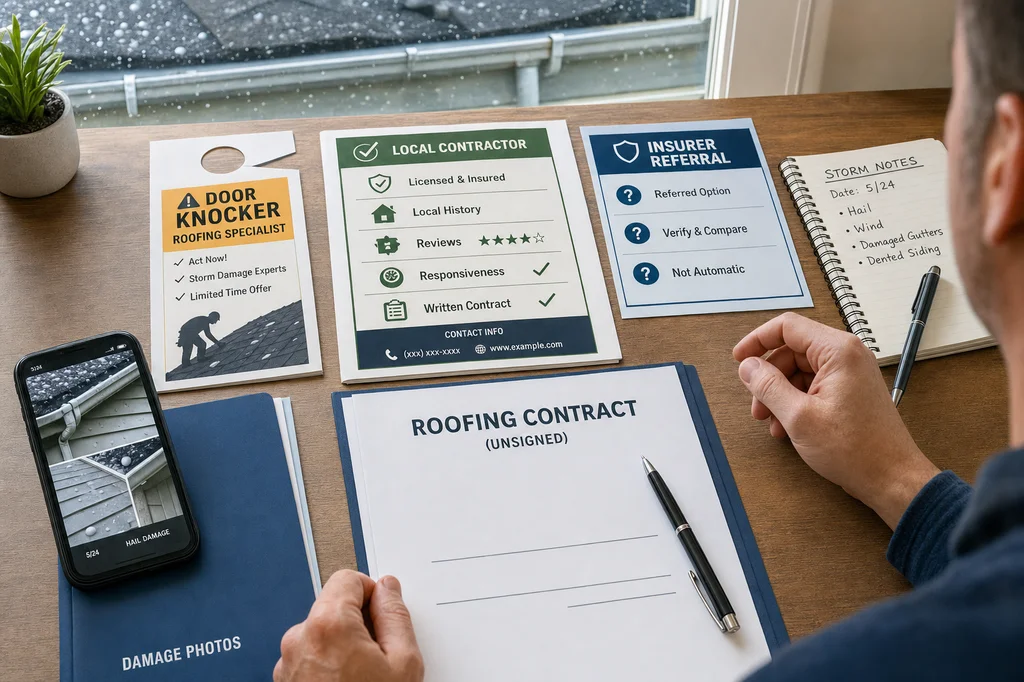
After hail damage, do not let storm door knockers or an insurer-referred contractor rush your decision. Document visible damage promptly, take time to screen every company, and choose the roofer yourself before signing anything that could commit you to a repair or replacement process.
Document hail damage before the evidence changes
Start with a record of what happened at your property, especially damage you can see from the ground. Hail can affect roofs, siding, gutters, plants, plastic items, and outdoor belongings, while some building damage may not be obvious immediately.
Photos and video taken soon after the storm can help preserve details that may be harder to show later. Keep the files in one folder, along with the storm date and notes about anything that was undamaged before the event. This is useful if an insurance adjuster cannot inspect right away or if questions arise about whether hail affected your area.
- Photograph visible changes: Capture damaged plants, outdoor furniture, plastic items, siding, gutters, and other accessible areas without climbing onto the roof.
- Save original files: Keep photos and videos on your device or backed up in a folder rather than relying only on text messages.
- Write down the timing: Note when the storm occurred and when you first noticed each issue.
- Protect the property safely: If you suspect roof damage or an active leak, arrange for a roofing professional to assess it rather than inspecting the roof yourself.
How to handle storm door knockers after hail
A contractor knocking on your door is not automatically a problem, but urgency tactics are. After a widespread hailstorm, multiple companies may canvass the same neighborhood, including businesses from outside the area.
The practical rule is simple: take the information, not the pressure. A salesperson may present the storm as an emergency and imply that you need to select their company immediately. Your property may need attention, but you do not need to make a doorstep decision.
You can say, “I am documenting the damage and researching companies before I sign anything. Please leave your card and a copy of the contract.” That response gives you room to evaluate the company without arguing about the condition of your home.
Do not sign a contract, authorization, or other paperwork on the spot unless you have read it and understand what it does. A document may affect who represents you during the repair process, what work is authorized, or how payment is handled. If terms are unclear, review them carefully and consider getting advice from a qualified local professional before signing.
Screen a hail roofer for a real local track record
A storm contractor should be easy to identify, research, and contact after the initial sale. The biggest warning sign is not simply that a company is new to you; it is a lack of verifiable history combined with pressure for a quick commitment or payment.
Search the company name and the owner’s name. Look at review patterns, not just a star score. Complaints describing deposits collected without work being completed deserve close attention. Also review the company’s public posts and business information for consistency. A contractor’s online presence cannot prove workmanship, but it can reveal whether the company has a visible record in your area or a trail of unresolved concerns.
Local availability matters after the storm rush fades. A contractor may be responsive while canvassing but difficult to reach once many projects are underway. Favor companies with an established local presence and enough history for you to verify how they communicate and follow through.
What to compare before selecting a company
- Identity: Confirm the company name, owner or representative, phone number, and physical business information match across its card, contract, and online listings.
- Reviews over time: Read recent and older reviews for patterns involving deposits, scheduling, cleanup, and unfinished work.
- Written paperwork: Request the proposed contract before signing so you can review the scope, payment language, and responsibilities.
- Responsiveness: Notice whether the company returns calls and answers direct questions before it has your signature.
- Local record: Give added weight to a contractor you can verify has served nearby homeowners over time.
Should you use the roofer your insurer recommends?
An insurer’s referral can be one option, but it should not end your search. Compare that contractor with other qualified local roofers and decide based on the company’s track record, proposed scope, communication, and contract.
Insurance restoration work can involve an estimate that changes as damage is uncovered or materials and required repairs become clearer. That is why a contractor may not be able to provide one final number at the beginning. A rough estimate and a final insurance-related scope are not necessarily the same thing.
What matters is that you understand the agreement you are being asked to sign. Read how the contract addresses the insurer’s estimate, changes in scope, supplements, your deductible, and any payment you may personally owe. Coverage and payment obligations depend on your policy, the contract, and state rules, so confirm disputed insurance or legal questions with your insurer, state insurance department, or qualified counsel.
Do not assume an insurer-referred contractor is automatically the best choice, and do not assume every independent contractor is better. Treat each company as a candidate that must earn your confidence through verifiable information and clear paperwork.
Use a deliberate selection process after a hailstorm
The best response to post-storm pressure is to keep control of the selection process. You choose the contractor; neither a door knocker nor an insurance referral should choose for you.
- Document visible storm damage and save your records.
- Collect contact details and contracts from any companies you are considering.
- Research each company before agreeing to work.
- Compare the written scope and contract language, not only verbal promises.
- Choose the contractor you can verify and communicate with clearly.
A poor contractor choice can become especially expensive when work is incomplete, deposits are mishandled, or the company disappears after the storm rush. Directorii lists verified contractors.
Keep your claim records, contract, and contractor communications together throughout the project. If the scope changes, make sure you understand why it changed and what documentation supports the revised work.
Source: Roofing contractor hiring tips for hail claims
FAQ
How soon should I document damage after a hailstorm?
Document visible damage as soon as you can do so safely from the ground. Take photos and video of damaged plants, plastic items, gutters, siding, and other changes, then save the original files with the storm date. A prompt record can be helpful if an inspection is delayed or the storm event is questioned later.
Should I sign with a roofer who knocks on my door after hail?
You should not feel required to sign with a roofer during a doorstep visit. You can take the company’s card and request a contract, then research its business history, reviews, and contact information. A company that pushes you to decide immediately is giving you a reason to slow the process down.
What should I research before hiring a roofer after hail damage?
Research the company name, the owner or representative’s name, review history, and public business information. Pay attention to complaints involving deposits, delayed work, or jobs left unfinished. Also compare the company’s contact details across its card, contract, and online listings so you know who you are dealing with.
Can I use a contractor recommended by my insurance company?
You can consider an insurer-referred contractor, but you should compare that company with other qualified local roofers before deciding. Review its reputation, responsiveness, written scope, and contract terms just as you would any other candidate. The best choice depends on the company and the agreement, not simply who made the referral.
Why might a hail repair contract not show a final price?
A final project amount may not be known at the start because the repair scope can change as damage is identified or additional work is needed. Before signing, understand how the contract handles the insurance estimate, scope changes, supplements, deductible, and any amount you may owe. Policy and contract terms can affect the result.