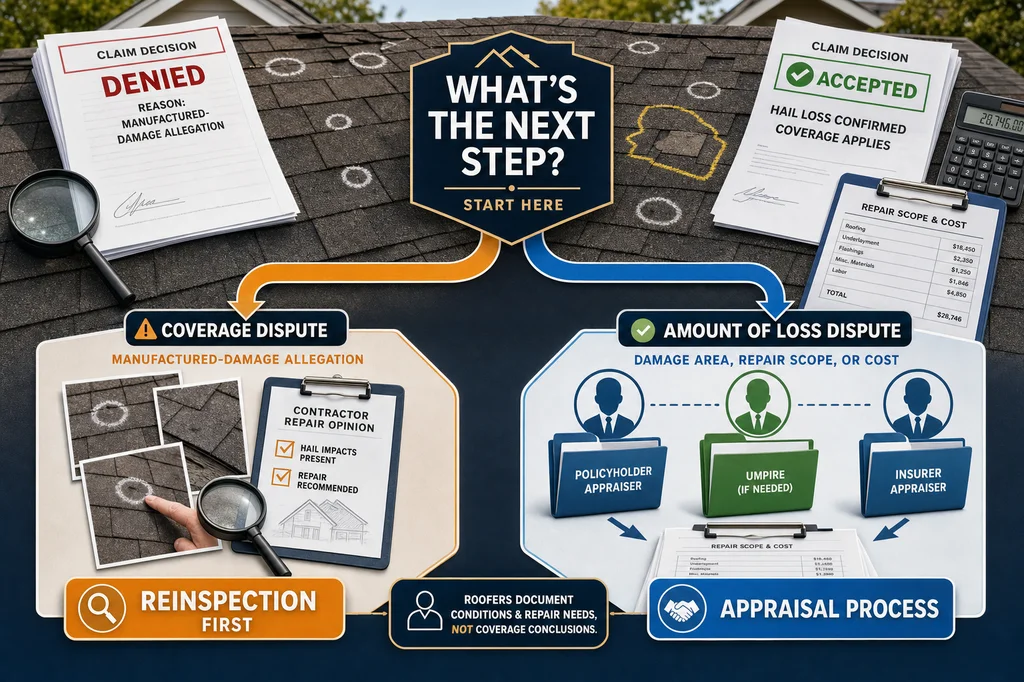
A disputed hail claim is not always a dispute about price. The key question is whether the insurer accepts covered hail damage but disagrees about the loss, or whether it says the apparent damage was manufactured. That distinction can determine whether appraisal fits the problem or whether the homeowner should pursue a reinspection first.
A manufactured-damage allegation is a different kind of dispute
Consider the scenario discussed: a roof has what appears to be obvious hail damage, but the adjuster attributes it to manufactured damage. If that allegation is true, the issue is not simply the cost to repair the roof. It is whether the claimed damage is covered at all.
In most states, that is generally a coverage question outside the scope of appraisal. The homeowner can ask for a reinspection and contact their local insurance agent. A contractor can document visible roof conditions and provide a repair opinion, but should not present a coverage conclusion as legal advice.
If the insurer maintains the manufactured-damage position after reinspection, a homeowner may consider a public adjuster or an attorney who handles property-insurance matters. The policy and applicable state law control.
When the roof insurance appraisal process may fit
Appraisal is created by the insurance policy and has long been used to resolve disputes over the amount of loss without a lawsuit. It is not a substitute for resolving every claim disagreement.
When the dispute is whether roof areas were damaged by hail, rather than an allegation of vandalism or manufactured damage, that issue is appraisable in most states. Appraisal can also address the scope of damage and the cost to repair it.
Before invoking appraisal, read the insurer's written position closely. The practical dividing line is simple: an accepted hail loss with a disagreement about damage, scope, or repair cost may fit appraisal; a denial based on an allegation that the damage was manufactured may call for reinspection first.
How appraisal is intended to work
- Each party appoints an appraiser. The policyholder and insurer each select an independent, unbiased appraiser.
- The appraisers examine the loss. They try to reach agreement on the damage, repair scope, and cost.
- An umpire addresses unresolved differences. If the appraisers cannot agree, their remaining disagreements go to a third party they agree upon.
- An award resolves the amount of loss. In the intended process, two of the three participants—or all three—agree on the scope of damage and repair cost.
The appeal of appraisal is that it can resolve an amount-of-loss dispute without public adjusters, lawyers, or litigation. But the process depends on being used fairly and with qualified participants; appraisal has also developed growing pains as its use has expanded.
Use evidence that matches the actual disagreement
For a reinspection request, keep the insurer's written decision, photos of the claimed roof conditions, and the contractor's repair opinion. Those materials help focus attention on the stated reason for the denial.
For an appraisal dispute, the useful question is narrower: what damage, repair work, or repair cost remains disputed? Appraisal works best when the parties can identify the amount-of-loss issue rather than relitigate a coverage denial through a valuation process.
Repair versus replacement can remain fact-specific
A dispute over a damaged roof does not automatically mean a full replacement is owed. Whether a roof can be repaired, whether materials can be matched, and what the policy requires can depend on the facts, policy language, and state law. The central appraisal question remains the reasonable scope and cost of the covered loss.
A roofing professional can explain the physical repair issue and market cost. Keep that role separate from deciding what the policy covers.
Source: Steve Badger Calls Out Roofers
FAQ
What is the roof insurance appraisal process?
Appraisal is a policy-based process for resolving an amount-of-loss dispute. The homeowner and insurer each appoint an appraiser. The appraisers try to agree on the damage, repair scope, and cost; unresolved differences can go to an umpire. An award is intended to be reached by two of the three participants or by all three.
Should I use appraisal if the insurer says my hail damage was manufactured?
Usually, request a reinspection first. An allegation that apparent hail damage was manufactured is generally a coverage question and, in most states, is outside appraisal. Review the policy and the insurer's written reason for its decision.
Can appraisal address a disagreement about whether roof areas have hail damage?
In most states, a disagreement about whether roof areas were damaged by hail can be appraisable when it is a damage question rather than an allegation of manufactured damage. Appraisal can also address disputed repair scope and cost.
What can a roofer do during a hail claim dispute?
A roofer can document visible roof conditions and provide an opinion about needed repairs. A roofer should not make legal determinations about policy coverage or present coverage advice as legal advice.
What happens if the two appraisers cannot agree?
Their unresolved differences are submitted to an umpire, a third party agreed upon under the appraisal process. The umpire works with the appraisers toward an agreement on the disputed scope of damage and repair cost.