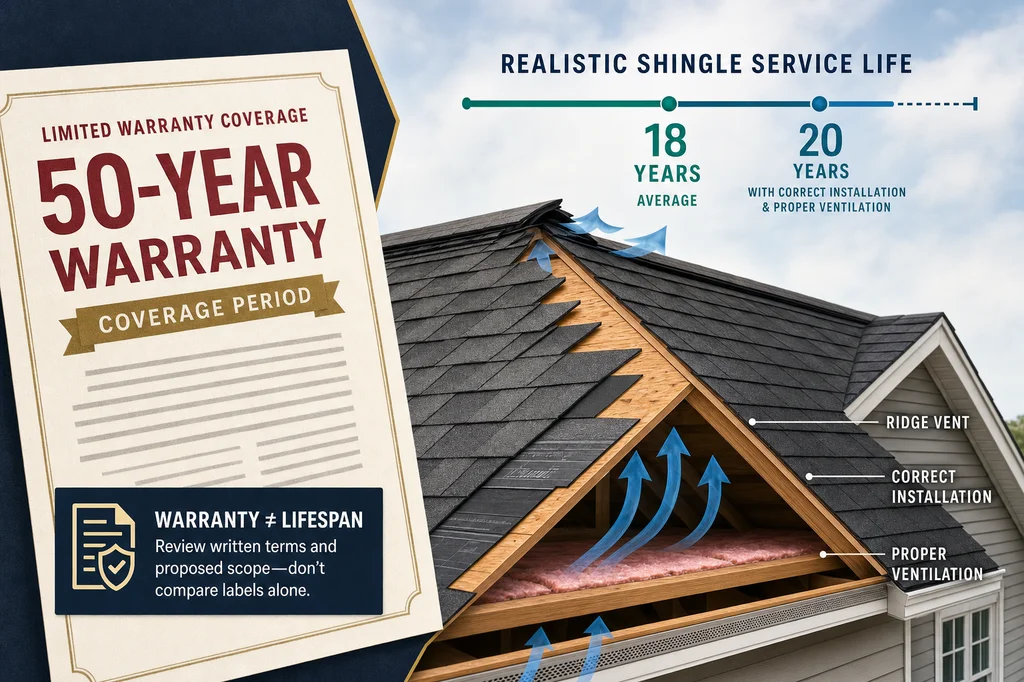
A 50-year roof warranty label is not the same thing as a prediction that shingles will last 50 years. Mike Goldenstein said average shingle life is about 18 years and referred to Minnesota guidance stating that correctly installed shingles with proper ventilation might reach 20 years.
Those figures are not a promise for every roof. They highlight the question homeowners should answer before treating a large warranty number as a lifespan: what conditions help shingles perform as intended on this house?
Checklist: separate the label from expected roof life
- Do not read “50 years” as expected service life. A warranty label and the time shingles remain in service are different ideas.
- Ask about installation. Goldenstein connected correct installation with better expected shingle performance.
- Ask about ventilation. He also identified proper ventilation as part of the conditions that may support longer shingle life.
- Get the proposed materials in writing. The written scope should identify the shingles and the ventilation work being proposed, so you can compare the plan with the completed roof.
- Read the actual warranty document. Do not rely on a broad statement that a roof is “50-year” coverage. Review the written terms that apply to the materials offered for your home.
Installation and ventilation are part of the real-life question
A long warranty label does not remove the importance of roof-system details. Goldenstein tied correct installation and proper ventilation to better expected shingle performance. When evaluating a replacement, focus on how the proposed work addresses those two conditions rather than comparing warranty numbers alone.
The right approach can vary with the home and roof design. A licensed roofing professional can evaluate the existing setup and explain the work proposed for the replacement.
When new shingles do not look uniform
Goldenstein said shingles from different plants can sometimes look different because their base granules may differ. He also described staining that can occur when shingles are stacked under pressure in warm weather, especially with dark charcoal-colored shingles. Oils from one shingle can press onto another, creating an unusual appearance that may remain visible for weeks.
He also noted that production conditions, including the speed of a plant line, can affect how granules appear on shingles. An appearance difference is not automatically a defect, but it is worth documenting if you notice it after installation.
What to document if appearance is a concern
- Take dated photos of the affected roof areas from the ground where possible.
- Keep the contract and material information with the photos.
- Contact the installing contractor about the appearance concern and request a review.
- Use the written warranty document when discussing a possible product concern.
Directorii lists verified contractors.
Source: Mike Goldenstein on 50-year warranties and shingle service life
FAQ
Does a 50-year roof warranty mean shingles will last 50 years?
No. Goldenstein said average shingle life is about 18 years and referred to Minnesota guidance that correctly installed, properly ventilated shingles might reach 20 years. A 50-year label should not be treated as a 50-year service-life promise.
What conditions did Mike Goldenstein connect to longer shingle performance?
He specifically identified correct installation and proper ventilation. These conditions were part of his explanation of why shingles may perform longer on a roof.
Why can new shingles look different from one another?
Goldenstein said shingles from different plants can have different base granules. He also said production conditions, such as plant-line speed, can affect the visible granule appearance.
Can warm weather cause temporary staining on shingles?
Goldenstein described staining that can occur when shingles are stacked under pressure in warm conditions. Oils from the back of one shingle can press onto another, particularly on dark charcoal shingles, and the appearance may last for weeks.
What should I keep if I notice an unusual shingle appearance?
Keep dated photos, the roofing contract, and the material information. Contact the installing contractor to review the concern and refer to the written warranty document when discussing a possible product issue.