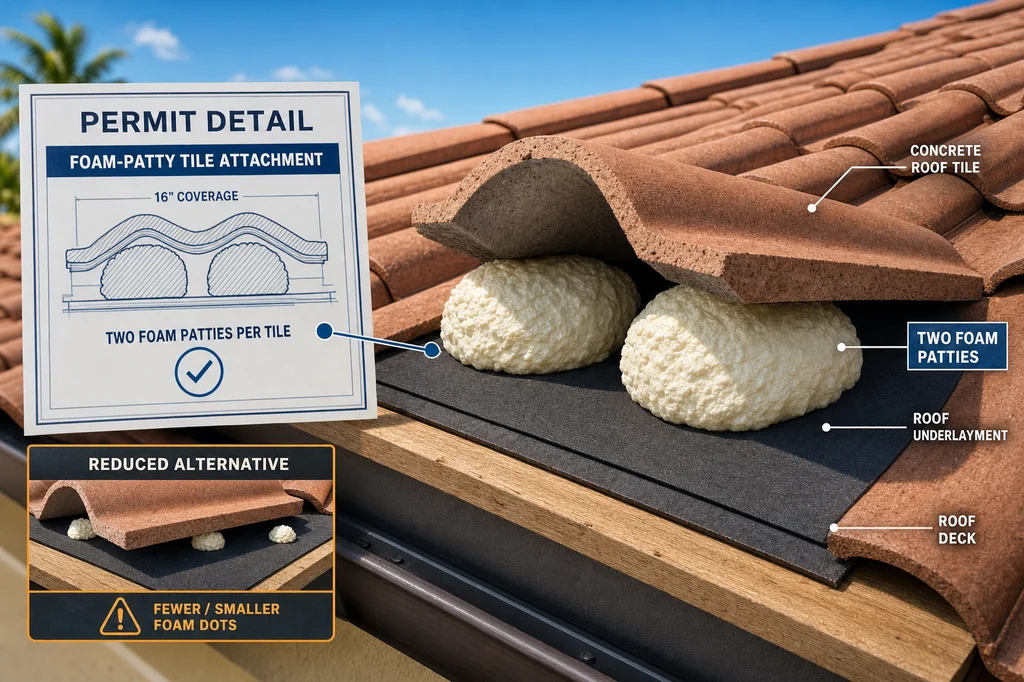
For a South Florida tile reroof, the permitted foam-patty specification should match the foam actually applied beneath your tiles. Foam size and quantity can affect wind uplift and insulation, while a very low bid may conceal a reduced installation detail that is difficult to see after the roof is complete.
Why foam placement changes a tile roof’s performance
Foam is not just an adhesive detail on a foam-set tile roof. The size of each foam patty and the amount used can materially change how the tile system performs in wind and how the roof insulates.
All Phase Construction described several foam approaches used in Florida tile work: a two-patty system, medium patties, and large patties. The company’s representative said that moving between those options can dramatically affect wind uplift. He also said the foam application affects roof insulation.
For you, the key point is simple: a proposal that merely says “foam-set tile” leaves out the part that may distinguish one installation from another. Your contract, permit documents, and completed roof should describe the same foam system.
Where a low tile reroof bid can hide a major difference
Reduced foam use was identified as a leading corner-cutting risk in the South Florida tile market. It can lower the installer’s material cost without making the finished roof’s difference obvious from the ground.
A representative of All Phase Construction gave an example involving a 30-square roof: changing from large patties to medium patties could mean a difference of five to six thousand dollars, and changing again from medium patties to a few small dots could save another five thousand dollars. Those figures are an example from that company, not a price guide for every roof.
That explains why a bid that is far below competing proposals deserves a scope comparison, not an automatic acceptance. The important question is not whether one contractor calls the roof “foam-set.” It is whether each bidder is pricing the same permitted patty size, quantity, and installation method.
- Large price gaps: They may reflect a different foam application rather than a better deal.
- Vague scope language: “Foam installation” does not tell you whether the patties match the permitted design.
- Permit-to-install mismatch: A contractor may permit one foam detail but apply less material in the field.
- Only visual reassurance: Finished tile can hide the foam underneath, so documentation matters.
Checklist for comparing Florida tile roof foam proposals
Compare the foam detail before you sign, while competing bids are still easy to evaluate. A line-by-line review is more useful than comparing only the final totals.
- Get the foam system in writing. Ask each bidder to state whether the price includes a two-patty, medium-patty, large-patty, or other specified system. If the description is unclear, have the contractor clarify it in the written scope.
- Match the proposal to the permit plan. Review the permitted foam-patty specification once it is available. The installed work should not be substituted for a smaller or less substantial application without a properly documented change.
- Compare like for like. Put each proposal beside the others and identify differences in foam patties, underlayment, tile handling, and other stated upgrades. A cheaper quote may be pricing a different roof system.
- Ask how the installation will be documented. All Phase Construction described using job photos, material tracking, and measurements as internal controls. Request progress photos that show the foam application before tiles conceal it.
- Set the documentation expectation before work starts. Do not wait until the tiles are installed to ask what foam was used. After completion, the relevant detail may no longer be visible.
What to do if the foam detail changes during the job
A material shortage or project condition can disrupt a tile reroof, but it should not turn into an undocumented downgrade. Foam availability was described as a real project issue after a Texas freeze affected a plant supplying roof foam to South Florida roofers.
That type of disruption can also create scheduling problems. If tile cannot be installed, prolonged underlayment exposure may become a concern, and loading tile before the roof is ready can create additional work if materials must be removed and the underlayment redone. Your contractor should explain the project-specific plan rather than simply proceeding with a changed foam approach.
If a change is proposed, ask for the reason and the revised written scope.
How to respond to pressure and an unusually cheap offer
Do not let a same-day discount replace a meaningful comparison of tile-roof specifications. A contractor who can explain the foam design, alternatives, and tradeoffs gives you a better basis for deciding than one focused only on an immediate signature.
All Phase Construction’s representative described tile reroofs as having multiple installation approaches in Florida, with different resulting performance. He also described a case in which a lower-priced contractor allegedly used less foam than the amount permitted after the homeowner’s consultant monitored the work. That is one reported example, not proof that every low bidder will cut corners. It does show why written scope and installation records matter.
For a reroof where the installation detail carries this much weight, Directorii lists verified contractors.
Keep records for the life of the roof
Save your signed scope, permit documents, approved changes, invoices, progress photos, and final project records together. These documents can help establish what was sold and installed if questions arise later after a major storm or an insurance claim.
Insurance coverage and claim decisions depend on the policy and the facts of the loss. A mismatch between the permitted specification and installed work may draw scrutiny, so discuss coverage questions with your insurer or a qualified insurance professional rather than relying on a roofing salesperson for a coverage determination.
Source: All Phase Construction interview
FAQ
What should a Florida tile roof foam proposal say?
It should identify the foam application being priced, including the applicable patty system or patty size. A generic reference to foam-set tile may not be enough to compare bids. You also want the written scope to align with the permitted roof design so the contractor is not pricing a less substantial foam application.
Can a cheaper tile reroof bid use less foam?
Yes, a lower bid can reflect reduced foam use rather than the same installation at a better price. All Phase Construction described substantial material-cost differences between large, medium, and minimal foam applications on one example roof. Compare the stated foam detail, not just the proposal total.
Why does foam-patty size matter under roof tiles?
All Phase Construction said the foam detail can affect wind uplift performance and roof insulation. The applicable foam detail should be shown in the project documents so you can compare what each contractor is proposing.
How can I verify foam was applied before the tiles cover it?
Request dated progress photos showing the foam application before tiles conceal it, and retain them with your contract and permit records. You can also ask how the contractor documents material use and field quality checks. Establish that expectation before installation begins, not after the roof is finished.
What if my roofer wants to change the foam specification during the project?
Ask for the reason and a revised written scope. Material availability can disrupt a project, but an undocumented reduction in the foam application is not the same as a scheduling adjustment.
Should I accept a same-day discount for a tile reroof?
First compare whether the discounted proposal includes the same foam-patty specification and other roof details as competing bids. A same-day price reduction does not answer what material quantity or installation method is included. Request a clear written scope before deciding.