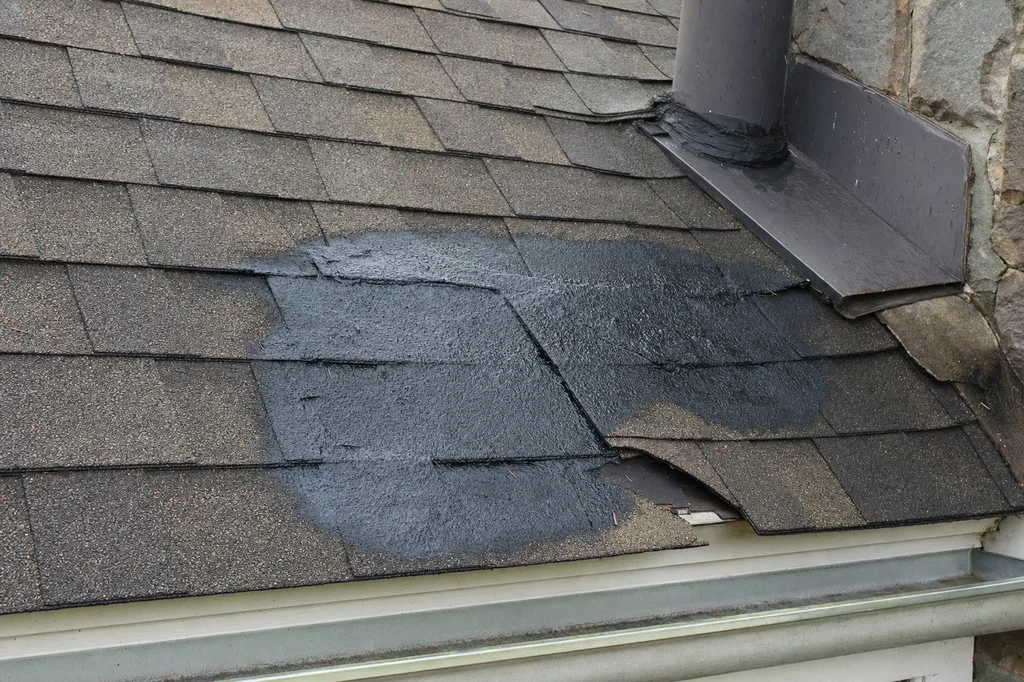
A Flex Seal roof repair can coat a small roof opening, but using it over a leaking or missing asphalt shingle can trap water where shingles are designed to drain it away. A sprayed patch may look sealed from the ground while leaving the underlying roof assembly vulnerable to continued leakage and harder repairs.
Why asphalt shingles need a drainage path
Asphalt shingles are water-shedding materials, not a continuously waterproof surface. Their overlaps, gaps, and the underlayment beneath them work together to direct water down and off the roof.
That distinction matters after wind damage, a missing shingle, or nail holes. Water can get past a very small opening, but it also needs a route back out. Covering seams or a broad damaged area with a rubberized spray can block that route. Water may then move sideways beneath shingles or collect near flashing, pipes, or other roof transitions instead of draining normally.
The same principle applies to several exterior systems. Shingles, siding, and metal components need room for movement as temperatures change. A coating that bridges too much of the assembly can crack as materials expand and contract. A crack in the coating does not restore the roof’s intended drainage design; it can simply create another uncertain path for water.
How a Flex Seal patch can turn a small leak into a hidden problem
A Flex Seal patch may repel water at the spot where it was sprayed, especially after multiple coats. That does not make it a durable shingle repair or prove that water is no longer entering elsewhere around the patch.
The visible coating can create three homeowner problems:
- It covers the symptom rather than restoring the shingle. A missing or torn shingle still leaves the roof without its intended overlapping layer.
- It can interrupt drainage. Sealing across shingle courses may hold back water that should flow beneath the next overlap and out of the system.
- It can obscure the repair area. A roofer may need to remove sprayed material before locating damaged shingles, nail penetrations, or failed flashing details.
- It changes the roof’s appearance. A dark or uneven spray patch can be conspicuous from the ground and can reduce curb appeal.
The practical takeaway is simple: a coating that sheds hose water on its surface is not necessarily solving the reason the roof leaked. The repair needs to restore the layered path that moves water downhill.
What to do after a shingle goes missing or roof damage appears
Call a qualified roofing professional promptly when a shingle is missing, torn, lifted, or punctured. The usual lasting approach is to assess the surrounding shingles and replace the damaged piece or pieces rather than spray over the opening.
A proper shingle replacement works with the roof’s construction. The roofer lifts the adjoining shingles as needed, removes the damaged material, and installs a matching replacement so the overlaps can shed water again. This is different from trying to make a continuous sealed membrane across a shingle field.
If the problem followed a storm, document what you can safely see from the ground. You can also contact your insurer to understand your policy and whether a claim is appropriate. Coverage, deductibles, and claim requirements depend on the policy, so avoid assuming that a roof patch or a contractor’s opinion determines the outcome.
When sealant belongs near a roof—and when it does not
Sealants can have a limited role at certain transitions where hard surfaces meet, such as details near flashing. They are not a substitute for the shingle layers, mechanical fastening, and water-shedding design across the main roof surface.
That is why a broad spray repair is especially risky around roof penetrations and flashing. Water that cannot drain as intended may seek another route around a chimney, pipe, or flashing edge. The correct repair depends on where water entered and whether the defect involves a shingle, a fastener hole, flashing, or another component.
Do not try to diagnose that from a ladder or by walking the roof. Tell the roofer what you observed, such as a missing shingle, an interior stain, or water after a particular storm. Then request photos and an explanation of the failed component before authorizing work.
What to request before approving a shingle repair
A clear repair scope helps you distinguish replacement work from a cosmetic patch. You should know what material failed, how the repair restores drainage, and whether surrounding components need attention.
- Identification of the damaged component: Ask whether the issue is a shingle, nail penetration, flashing detail, or another roof element.
- The repair method: The written scope should state whether damaged shingles will be removed and replaced rather than merely coated.
- Photos of the affected area: Images can help you connect the proposed work to the visible damage and later confirm what was addressed.
- Warranty implications: A coating or unapproved repair may affect product warranty coverage. Review the applicable warranty terms instead of relying on a verbal assurance.
- Matching material availability: Ask whether a compatible replacement shingle is available and how the new piece will integrate with the existing roof.
Choosing a roofer who can explain the water path is more valuable than choosing the fastest-looking patch. Directorii lists verified contractors.
Source: Roof repairs with Flex Seal: Please don't do it.
FAQ
Can I use Flex Seal on a missing asphalt shingle?
Flex Seal may coat the exposed area, but it does not replace the overlapping shingle layer that directs water off the roof. Spraying a missing-shingle area can interfere with drainage and make the underlying damage harder to evaluate. Have a roofer assess the area and replace the damaged shingle when appropriate.
Why can a Flex Seal roof patch still leak?
A sprayed patch can shed water on its own surface while water moves underneath or around the surrounding shingles. Asphalt roofing relies on overlaps and a drainage path, not a fully sealed surface. If sealant blocks that path or later cracks with temperature changes, water may find another route into the roof assembly.
Will Flex Seal affect my roof warranty?
It may affect warranty coverage if the coating or repair method is not accepted under the applicable product terms. The effect depends on the specific roofing product and warranty language. Before applying any coating, review the warranty documents and have a qualified roofer explain whether the proposed repair preserves the roof’s intended installation method.
What is the proper repair for nail holes in asphalt shingles?
The appropriate repair depends on the hole location and the condition of the affected shingles, but it should restore the roof’s water-shedding layers rather than simply cover a broad area with spray. A roofing professional can identify whether the shingle, fastening, flashing, or nearby materials need replacement or a targeted repair.
Should I call my insurer before repairing storm-related roof damage?
You can contact your insurer to understand your policy and decide whether a claim is appropriate, particularly after a storm. Policy terms, deductibles, and claim requirements vary. Document visible conditions from the ground, avoid making a permanent patch that obscures damage, and seek a professional roof assessment.