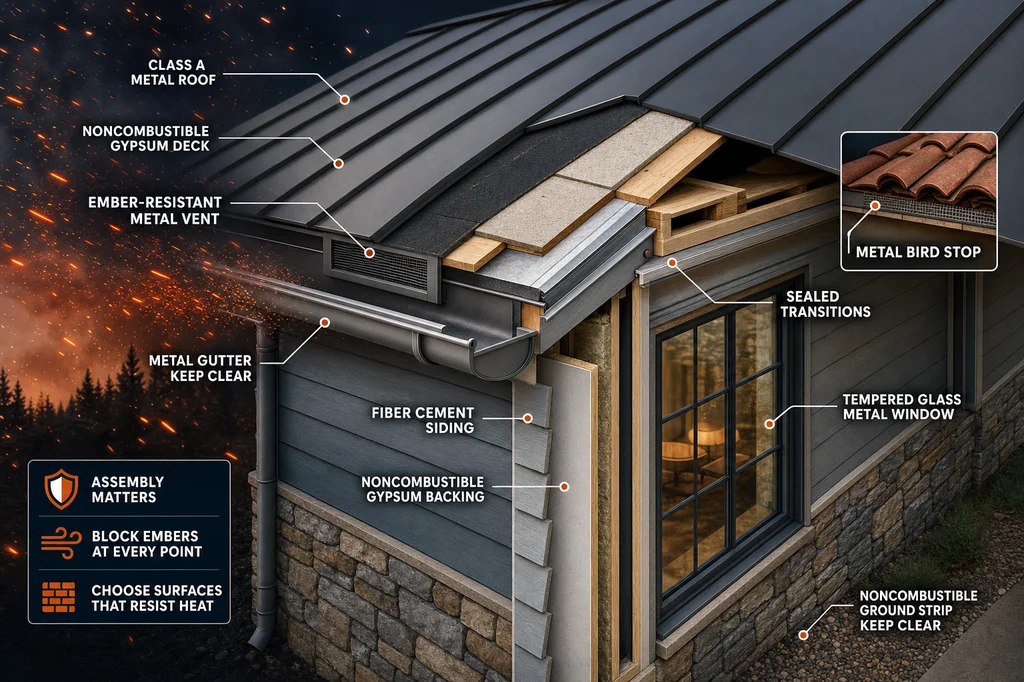
For wildfire areas, fire-resistant roof and siding choices include metal, tile, Class A asphalt, stone, fiber cement, and metal siding. Choosing them is not simply a matter of a Class A label: the full assembly, aging, gaps, and nearby openings influence how the exterior handles embers and heat.
What a Class A label tells you about wildfire exposure
A Class A rating is a useful starting point, but it is not proof that a house is fireproof. Fire-resistant materials can slow or limit fire spread, yet prolonged heat, wind-blown embers, damaged components, and openings in the exterior can still lead to serious damage.
Roof products are commonly evaluated under ASTM E108. The testing described for a Class A roof includes intermittent gas-flame exposure, limited flame spread, and resistance to a burning brand. Siding products use different testing, including ASTM E84, which evaluates flame spread and smoke production. These labels help you compare products, but they do not describe every part of a completed wall or roof system.
What this means for your home: compare the rating of the complete listed assembly, not just the visible roofing or siding panel. A material may need a specific underlayment, deck, backing, or installation method to deliver its rated performance.
How metal, tile, and asphalt roofs differ in a wildfire area
Metal and tile are noncombustible roof-covering options, while Class A asphalt shingles can be a more budget-conscious choice with different aging concerns. The right choice depends on the assembly your home can support, local exposure, appearance goals, and the condition you can maintain over time.
- Metal roofing: Metal does not catch fire from embers landing on its surface, which matters because embers can travel well ahead of an active wildfire. Steel, aluminum, copper, and zinc offer different options; aluminum, copper, and zinc may be considered where salty coastal air is also a concern. Metal can also be formed to resemble shingles or slate.
- Clay or concrete tile: Tile is also noncombustible and its density can slow heat transfer. The profile of tile roofing creates airflow beneath the tile, but cracked or chipped pieces can become a weakness when embers blow through the area. Tile is heavy, so the home must be able to support the system. Bird stops help limit dry fuel buildup beneath tiles.
- Class A asphalt shingles: Many premium architectural shingles carry a Class A rating, and the surface granules provide a measure of fire resistance. Asphalt is petroleum-based, however, and granule loss, cracking, and wear can reduce its performance as the roof ages. Check the product documentation for ASTM E108 testing rather than assuming every asphalt shingle has the same rating.
Metal roofing is often rated Class A by assembly, not by the metal panels alone. Depending on the product, the manufacturer may call for an underlayment such as GAF VersaShield or Owens Corning Titanium, and possibly noncombustible gypsum decking such as DensDeck. Those named components are not interchangeable assumptions. Review the metal manufacturer’s required assembly for the exact panel and roof design.
Which siding materials hold up best against flame and heat?
Stone and fiber cement offer the strongest combination of noncombustible material and heat resistance in the options discussed, while metal siding remains a durable choice with a different heat-transfer tradeoff. Cost, wall construction, and the exposure near the base of the home can change the best fit.
- Natural or manufactured stone: Stone is noncombustible and can tolerate substantial heat. It is generally a premium exterior choice, including veneer, but can be relatively low maintenance when installed by experienced professionals. Solid concrete or brick walls may also be worth considering when evaluating a home in a wildfire-prone area.
- Fiber cement siding: Fiber cement combines cement, sand, and wood fibers. It is presented as an affordable noncombustible option that can withstand direct flame exposure without catching fire. It is available in varied colors and profiles. Caulk maintenance may be needed, and a noncombustible gypsum board behind the siding can be part of maintaining the intended fire-resistant wall design.
- Metal siding: Metal siding is noncombustible, low maintenance, and available in many designs. But because siding sits closer to vegetation, furniture, and other fuel sources, it must contend with both embers and nearby flames. Extended high heat can bend or dent metal, and metal can transfer heat to materials behind it more readily than stone or fiber cement.
What this means for your home: metal siding is not automatically the top siding choice just because metal is a leading roof option. Where direct heat near the wall is a concern, stone or fiber cement may offer a more favorable wall-surface tradeoff. For metal or fiber cement, verify whether the product manufacturer or local fire code calls for noncombustible gypsum backing.
Assembly gaps can defeat a strong roof or wall material
The roof and siding are only part of the exterior defense. Embers can enter through vents or collect in places where dry debris accumulates, so a noncombustible surface alone cannot solve every wildfire vulnerability.
Focus the project conversation on the transitions and openings that connect the exterior to the house:
- Ember-resistant metal vents, particularly where openings lead toward attic areas.
- Metal gutters that do not add another combustible exterior component.
- Multi-pane tempered glass or fire-resistant glass blocks for windows, along with metal window frames or cladding where appropriate.
- Exterior doors made from noncombustible materials such as metal or fiberglass, with a metal threshold.
- Noncombustible wall backing where required for the selected siding system.
- Bird stops below tile and clear roof, gutter, and wall-adjacent areas that could collect dry fuel.
Defensible space also matters. Removing flammable plants, outdoor furniture, and debris near the house reduces fuel at the exterior. Stone walls and pathways can help interrupt the route flames take toward the building. Local fire rules and product requirements can vary, so confirm the planned assembly with a qualified roofing or siding professional and local code officials.
What to put in the scope before replacing a wildfire-area exterior
A bid should identify the tested system and the details that make it work, not merely name a roof or siding material. This is especially important for metal roofs that depend on specified layers and for tile roofs that need support and ember-control details.
Before signing, request a written scope that addresses:
- the exact roof or siding product and its stated fire rating;
- required underlayment, roof decking, gypsum backing, and other assembly components;
- tile support requirements and bird-stop details, if tile is selected;
- vent, gutter, window, and door work included with the exterior project;
- how existing cracked tile, worn shingles, failed caulk, or combustible debris will be handled; and
- the manufacturer instructions the installer will follow for the selected system.
Choosing a material without confirming its required assembly can leave you paying for a surface that does not perform as expected. Directorii lists verified contractors.
Source: Can FIRE RESISTANT Siding and roofing Save Your House From Wildfires?
FAQ
Does a Class A roof mean my home is fireproof?
No, a Class A roof does not mean the home is fireproof. The rating indicates performance in specific roof-fire tests, but wind-blown embers, prolonged heat, damaged materials, vents, and other openings can still allow damage. Review the complete tested roof assembly rather than relying on the roof covering label alone.
Is metal roofing better than Class A asphalt shingles for wildfire areas?
Metal roofing is noncombustible and can resist embers landing on its surface, while Class A asphalt shingles offer a rated alternative with more vulnerability as granules wear and shingles crack. Metal may require specified underlayment and decking to achieve its full assembly rating, so compare complete systems rather than surfaces alone.
Should I choose tile or metal for a wildfire-resistant roof?
Choose based on your home’s structural capacity, required assembly, maintenance expectations, and design preferences. Tile is noncombustible but heavy and can lose effectiveness when cracked or chipped; bird stops can help control debris beneath it. Metal is noncombustible but may depend on specific underlayment or decking to meet its intended rating.
Is fiber cement siding a good choice near wildfire risk?
Fiber cement can be a strong value choice because it is noncombustible and can withstand direct flame exposure without catching fire. Its fire-resistant wall design may require maintained caulk and noncombustible gypsum board behind the siding. Cutting and sanding can release toxic dust, so use an experienced installer for the work.
Why is metal siding not always the top fire-resistant siding option?
Metal siding is noncombustible, but walls face both embers and heat from nearby fuel sources. Long exposure to high heat can bend or dent metal, and metal can transfer heat to more combustible materials behind the wall. Stone and fiber cement may provide a different heat-resistance tradeoff for the wall surface.
What details should I include with a wildfire-area roofing project?
Include the exact rated roof product, required underlayment and decking, vent treatment, gutter work, and how debris-prone gaps will be addressed. For tile, include structural requirements and bird stops. Also identify the manufacturer installation instructions that apply to the chosen system, because the visible roof covering may not provide the intended protection on its own.