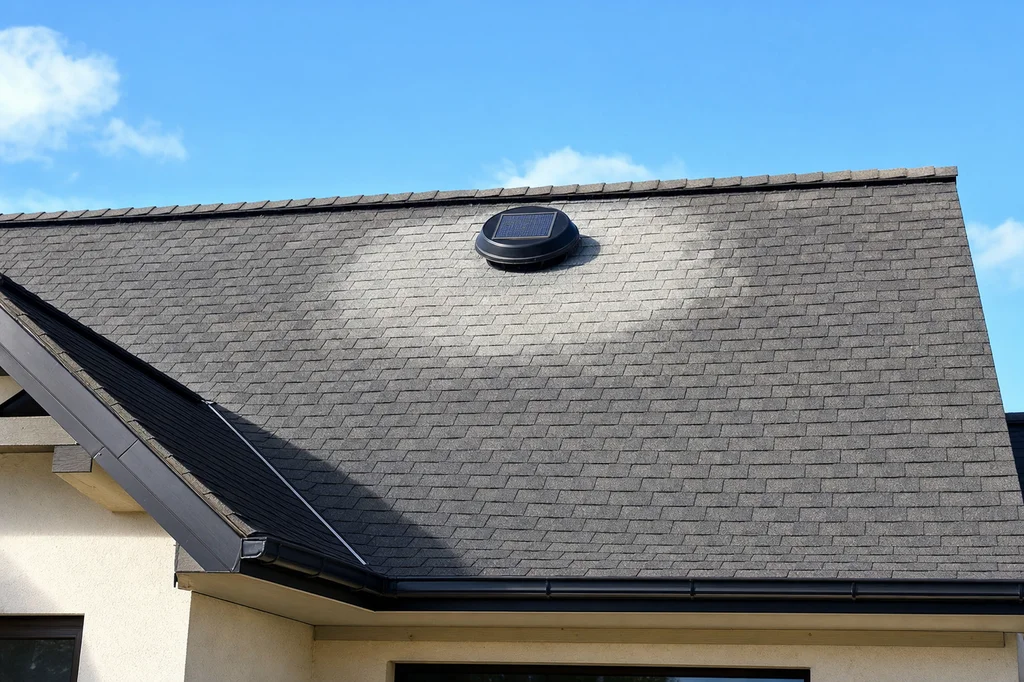
Euroshield roof discoloration around a solar attic fan can look like a defect, but the reported case points to a different mechanism: unusually strong airflow kept shingles near the vent cooler and slower to weather than the surrounding roof. That distinction matters before you blame the product or approve a similar ventilation design.
Why a cooler patch can look lighter
The apparent color difference in the reported Euroshield roof was attributed to uneven weathering, not a patch that was aging faster. Shingles away from the fan had weathered and darkened, while shingles close to the fan had not changed at the same pace.
A Euroshield representative described a large home with a large attic and a solar fan that was also hardwired and reported to run continuously. On the day evaluated, the outside temperature was reported at about 88 degrees. The roof surface away from the vent was about 153 degrees, while the area around the vent was about 117 degrees. That temperature difference was linked to the high volume of air moving through the vent.
For a homeowner, the key point is simple: a lighter halo around a vent is not automatically evidence that the vent is overheating the roof or that the shingles are fading. In this account, the opposite was proposed. The cooler area had simply not weathered in as quickly as the hotter field of the roof.
What Euroshield says about color weathering
Euroshield’s reported explanation depends on the material’s black recycled-tire base. The representative said that as surface color pigments break down to some extent, the product can appear darker rather than lighter, unlike some plastic-based materials that may fade lighter.
That is a manufacturer-side explanation, not a promise that every color variation has the same cause. The reported condition was also unusual: a very large attic, a high-performing fan, and a large amount of continuous airflow near one roof opening. The representative said this degree of differentiation is not typically seen.
The homeowner decision is therefore not whether a roof must look identical at every location from day one. It is whether you can accept that a high-airflow vent may create a visible zone that changes at a different rate, especially during early weathering. If a temporary visual mismatch would bother you, raise the issue before selecting the shingle color and ventilation layout.
Review the attic-fan design before choosing the roof
A solar attic fan is not just an accessory mounted near the ridge. Its airflow pattern and operating time can affect how nearby roofing material heats up and weathers.
Before a roof replacement, have a roofing and ventilation professional evaluate the existing fan as part of the full roof system. You do not need to inspect the roof yourself. Provide ground-level photos and any available information about whether the fan is solar-only, hardwired, or both.
- Location: Identify where the fan sits relative to the roof’s most visible slopes. A color difference near a peak may be more noticeable from the street.
- Attic volume: A large attic can change how much air the fan is moving and how consistently it operates.
- Power source and run time: A solar fan that is also hardwired may run more consistently than a solar-only unit.
- Existing ventilation plan: Ask whether the fan works with, or changes, the rest of the attic ventilation rather than considering the opening by itself.
- Visual expectations: Put concerns about differential weathering in writing before material is ordered, particularly if the fan will remain in place.
Do not assume that removing or disabling a fan is the right answer. In the reported situation, turning off the fan was discussed as a possible way to let the shingles near the vent weather in more similarly, but the homeowner preferred to leave the system as it was. Ventilation choices should be evaluated for the particular attic by a qualified professional.
How to respond when a color difference appears
Document the pattern before deciding that a product has failed. A clear record can help separate a localized condition around a vent from a broader issue across the roof.
- Take dated ground-level photos in more than one lighting condition. The reported variation could look worse at certain times of day and from certain viewpoints.
- Note whether the difference is concentrated around one powered vent or appears in unrelated areas. A localized shape around a vent supports investigating airflow and temperature first.
- Gather your contract, material information, ventilation scope, and product paperwork. These documents help establish what was installed and what was retained or changed.
- Request a site review from the installing contractor. Ask for the observed condition and proposed cause to be documented in writing.
A visible mismatch deserves attention, but it does not establish its cause on its own. Avoid accepting a quick diagnosis based only on a photograph, whether that diagnosis is “fading,” “defect,” or “bad ventilation.” The useful question is why that particular roof area is behaving differently.
Choosing an installer who will evaluate the whole system
The expensive mistake is treating shingles, attic ventilation, and roof openings as separate decisions. A contractor should account for the fan already on the home before recommending a roof material or promising a uniform appearance.
Use the proposal to compare how each contractor handles the existing fan: whether it remains, is replaced, or is evaluated as part of the ventilation design. The written scope should also identify roof openings and who is responsible for the work around them. Directorii lists verified contractors.
What to ask about a solar fan and Euroshield shingles
Ask focused questions before signing, rather than relying on a broad assurance that the roof will “match.” The answers should help you decide whether the current fan setup suits your appearance expectations and roof plan.
- Does this fan’s airflow and operating pattern create a risk of differential weathering near the opening?
- Will the fan remain solar-only, be hardwired, or operate another way after the roof work?
- What other attic ventilation is present, and how does the fan fit into that design?
- If a localized color difference develops, what documentation will you provide for a manufacturer review?
Source: The Truth About Euroshield Rubber Roofing shingles | Discoloration Controversy
FAQ
Why is my Euroshield roof lighter around an attic fan?
A lighter area around an attic fan may be weathering more slowly than the rest of the roof. In the reported case, strong continuous airflow kept shingles near the vent substantially cooler than shingles farther away, while the surrounding material darkened as it weathered. A site review is needed to identify the cause on your home.
Does a lighter patch near a solar attic fan mean Euroshield is fading?
Not necessarily. Euroshield’s representative described the reported patch as an area that had not weathered in as quickly, rather than material fading faster. The explanation was tied to the product’s black recycled-tire base and a large temperature difference around a powerful vent. Photos alone cannot confirm that explanation for every roof.
Should I turn off a solar attic fan if shingles look different around it?
Do not turn off an attic fan solely to change roof appearance without a professional evaluation. In the reported case, turning off the fan was discussed as an option to allow the shingles near the vent to weather in more similarly, but the homeowner chose to keep it operating. A qualified professional should assess the attic ventilation design first.
What should I document if a roof changes color around a vent?
Take dated photos from the ground in different lighting, then collect your contract, material records, ventilation scope, and product paperwork. Note whether the variation is confined to a powered vent or occurs elsewhere. This record helps the installer evaluate whether airflow, temperature, or another condition needs closer review.
Can a hardwired solar attic fan affect how a new roof weathers?
It may, particularly if it runs continuously and moves a high volume of air through a large attic. The reported Euroshield condition involved a solar fan that was also hardwired, with a cooler roof area immediately around the vent. Have the existing fan evaluated with the roofing and ventilation plan before choosing materials.