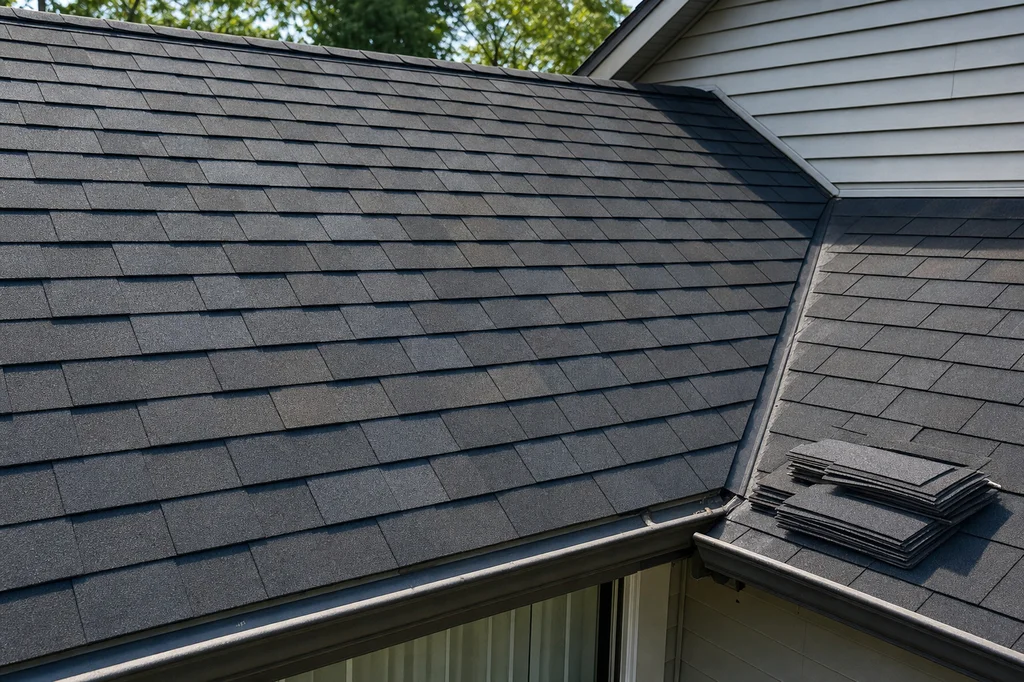
Reviewing a Euroshield rubber roof means weighing unusual tradeoffs: a reported tire-like odor that can linger, possible color variation between batches, and an interlocking shingle design that does not depend on glue for wind resistance. Its hail-cannon showing is encouraging, but it was presented as a demonstration rather than a scientific test.
What makes Euroshield’s interlocking design different?
The key product feature is the physical interlock between shingles. The reported appeal is wind resistance created by the shingle connection itself, rather than relying on adhesive alone.
That distinction matters because wind performance depends on more than the roofing material’s toughness. A roof can have durable individual shingles and still perform poorly if layout, fastening, transitions, and perimeter details are wrong. For this product, the interlocking design is a meaningful reason to consider it, but it also makes careful installation especially important.
Before selecting it, have the installer explain how the system will be laid out on your roof’s edges, ridges, valleys, and penetrations. You are not looking for a sales pitch about “windproof” roofing. You are looking for a clear explanation of how the installed system keeps its intended interlocking pattern across the complicated parts of your roof.
How much weight should you give the hail-cannon test?
The demonstration showed Euroshield shingles taking repeated hits before damage occurred. That is a useful visual sign of material toughness, not a complete prediction of how every roof will respond to a real hailstorm.
The cannon shots were presented as non-scientific event demonstrations. That limitation is worth keeping in view. Hail varies in shape, density, speed, angle, and the way it strikes a roof. A roof also faces aging, heat, debris, installation details, and impacts near seams or flashings that a loose sample may not represent.
For a homeowner, the practical takeaway is narrower: Euroshield appeared difficult to damage in this particular high-impact demonstration, so it may be worth considering where hail resistance is a high priority. Do not treat the demonstration as an insurance promise, a guarantee against damage, or proof that every part of an installed roof will perform identically.
- Use the test as a screening factor: It supports the case for looking more closely at the material.
- Separate product performance from roof performance: Shingles, flashings, fasteners, and roof geometry all affect the finished result.
- Check your policy before choosing for hail: Coverage and claim handling can depend on your specific policy and insurer.
Why tire-like odor is the biggest comfort question
A long-lasting rubber odor was the clearest reported downside. In one sample-board experience, a Euroshield board kept indoors was described as smelling strongly like a tire shop; moving it into direct Florida sun did not remove the odor within a week, and the odor reportedly took about three months to go away.
That was a sample-board experience, not a manufacturer specification for every completed roof. Still, it gives you a concrete issue to investigate if you are sensitive to odors or if roofing work will take place near open windows, attic ventilation, or outdoor living areas.
The practical decision is not simply whether an outdoor roof will smell. It is whether you are comfortable with the possibility of a noticeable odor during the early period after installation. Ask to inspect a current sample, preferably one that has been stored or exposed similarly to the products planned for your home. If possible, smell it yourself rather than assuming the odor will be insignificant.
How batch-color variation can make a roof look splotchy
Color consistency may depend on mixing material from different batches during installation. If that mixing is skipped or handled poorly, the roof can look splotchy even when the individual shingles are otherwise sound.
This is not a minor cosmetic detail. A roof covers a large, highly visible surface, and uneven color can be difficult to ignore once the installation is complete. The reported issue does not mean every Euroshield roof will have color variation. It means the crew’s handling of batches belongs in the plan before shingles are installed.
Get the color-control approach in writing as part of the installation scope. The scope should identify the selected color and state how the crew will blend shingles from available batches across the roof. If a color sample is important to your decision, keep it with your project paperwork so you have a clear reference for the intended appearance.
What should you confirm before choosing Euroshield?
Euroshield can suit a homeowner who values an interlocking rubber roof and accepts that it has different appearance and odor considerations than conventional shingles. The best decision comes from checking the product-specific tradeoffs before materials arrive.
- Odor tolerance: View and smell a sample, then decide whether a potentially persistent tire-like odor is acceptable for your household.
- Color blending plan: Confirm how shingles from separate batches will be mixed so the roof does not develop a patchy appearance.
- Detailed installation scope: Make sure the written scope addresses the roof’s edges, valleys, ridges, and penetrations, not just the field shingles.
- Hail expectations: Treat the cannon demonstration as evidence of reported toughness, not as a claim outcome or an all-damage guarantee.
- Policy fit: Review your insurance policy with your insurer or a licensed insurance professional if hail coverage affects your material choice.
Installation quality can turn a promising product into a disappointing roof, especially where color blending and interlocking details are involved. Directorii lists verified contractors.
Source: Euroshield Rubber Roof: Smell And Hail Cannon Test
FAQ
Does a Euroshield rubber roof smell like tires after installation?
It may have a noticeable tire-like odor for a period after installation. A reported Euroshield sample board retained a strong odor after one week in direct Florida sun and reportedly took about three months to lose it. That was a sample-board experience, so inspect and smell current material before deciding.
Can Euroshield shingles vary in color from one batch to another?
Color can appear uneven if shingles from different batches are not mixed well during installation. The reported concern was a splotchy finished appearance rather than a structural failure. Have the installer state in the written scope how available batches will be blended across the roof.
How wind resistant is an interlocking Euroshield roof?
The reported advantage is that Euroshield shingles physically interlock instead of depending on glue alone for wind resistance. That design can be a strong selling point, but the finished roof still depends on correct layout, fastening, and details at edges, valleys, ridges, and penetrations.
Does the hail-cannon test prove Euroshield will not be damaged by hail?
No, the hail-cannon demonstration does not prove that an installed Euroshield roof cannot be damaged by hail. The shots were presented as non-scientific demonstrations, although the shingles appeared difficult to damage. Real hail conditions and the rest of the roof system can produce different results.
What should I put in the contract for a Euroshield roof?
Your contract should clearly identify the selected product color and describe how the crew will mix shingles from available batches. It should also cover installation details for edges, valleys, ridges, and roof penetrations. Those details matter because interlocking shingles and visible color blending require consistent execution.