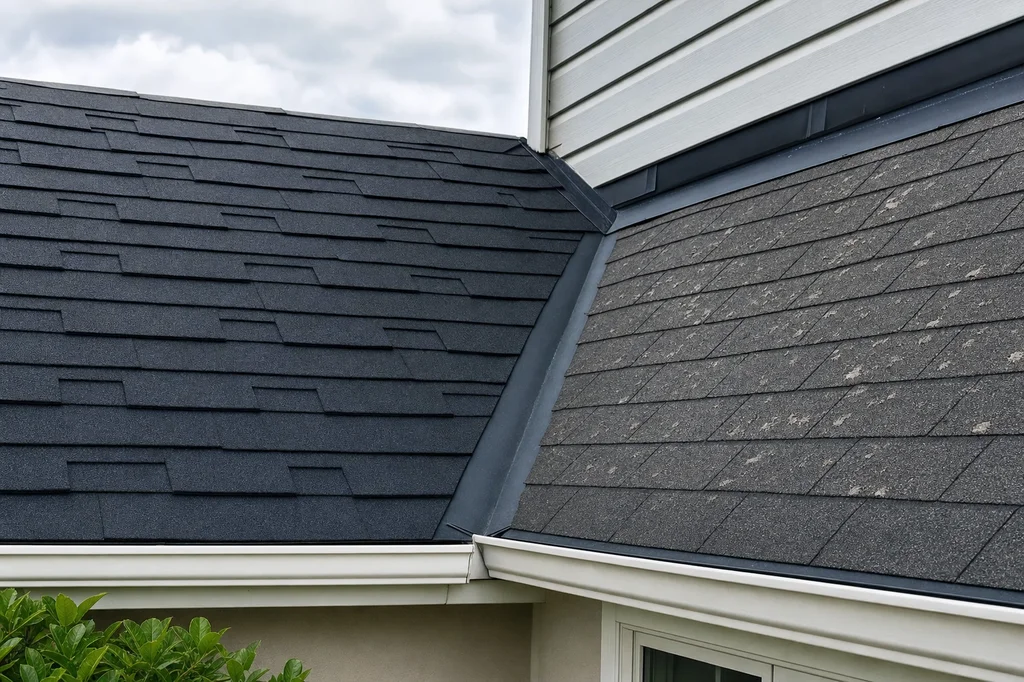
For hail-prone homes, a Euroshield rubber roof can be worth comparing when repeated storms have damaged asphalt or metal roofing. Euroshield makes rubber shingles primarily from recycled tires and carries a Class 4 impact rating, but the right choice depends on your local hail history, budget, roof design, and the installer’s product-specific plan.
What a Class 4 impact label does—and does not—tell you
A Class 4 rating is the highest impact classification referenced for this roofing product, but it is not a promise that every storm will leave a roof untouched. It gives you a useful starting point for comparing materials designed for hail exposure.
Euroshield states that its roofing is made primarily from recycled tires, with about 70 percent recycled-tire content. The manufacturer presents the material as able to handle difficult conditions including hail, wind, snow, ice, and sea salt. It also markets the roof as a long-term alternative to repeated tear-offs; Euroshield says an average roof uses about 300 tires.
For a homeowner, the label matters most when it is paired with local evidence and a clear scope. A high impact rating does not eliminate the need to inspect the roof after a severe event, and it does not decide insurance coverage. Some insurers may offer premium discounts for Class 4 roofing, but availability and the amount can depend on your insurer, policy, location, and documentation. Verify any discount directly with your insurance company before selecting a material around that savings.
How Euroshield compares with asphalt after recurring hail
Euroshield is aimed at homeowners who are tired of replacing conventional shingles after hail, rather than homeowners seeking the lowest initial material cost. In Rapid City, one local installer described nearby roofs being replaced repeatedly after storms, while a Euroshield installation from 2017 had reportedly gone through at least two damaging hail events with little visible scuffing.
That is a field report, not a manufacturer specification or a guarantee of future performance. Still, it highlights the decision Euroshield is built for: whether paying more for a specialty rubber roof is worthwhile in an area where asphalt has become a repeat-loss item.
A homeowner who had previously owned five roofs since 2001 reported liking the Euroshield roof’s appearance, quieter performance, winter warmth, summer comfort, and the fact that snow did not slide off it. Those are individual observations. They should not be treated as universal thermal or sound-performance claims, since attic ventilation, insulation, roof shape, and local weather also affect how a home feels.
- Choose conventional asphalt for a familiar, lower-upfront-cost option when repeat hail damage has not been your main roofing problem.
- Consider Euroshield when your property has a documented pattern of damaging hail and you want to evaluate a tougher, rubber-shingle alternative.
- Compare the full replacement cycle, not just the bid total. Frequent roofing replacements can mean repeated disruption, claim work, and scheduling after local storms.
Why metal is not automatically the hail-market answer
Metal can be a durable roofing choice, but the reported hail cases show why “metal” alone is not a complete hail-resistance strategy. A local contractor described replacing several metal roofs after hail, including a 24-gauge standing-seam roof that was reportedly damaged in a severe event.
Another reported example involved a home where stone-coated steel was installed after hail damaged prior shingles. The steel roof was then reportedly damaged within five years, with dents and lost granules described by the installer, and it was replaced with Euroshield. These examples do not prove that all metal roofs will fail in hail or that Euroshield will never show damage. They do show that a homeowner should compare the specific product, profile, finish, local hail exposure, and repair expectations—not simply choose between broad material categories.
Euroshield was described by one project manager as costing at least double asphalt while being priced on par with metal. Request written, like-for-like proposals that spell out the roof area, tear-off, underlayment, flashings, valleys, skylight work, ventilation work, and disposal. A vague comparison between a basic asphalt quote and a complete premium-roof quote will not tell you which option is actually better for your home.
What real hail-market reports can help you verify
Reported results from actual homes are most useful when you can confirm the roof’s age, storm history, and condition after the event. Euroshield has been installed on residences and a Pioneer Bank & Trust building in the Rapid City area; a representative for the building reported hail exposure without damage found during their check.
One homeowner also reported no visible damage after a storm said to have produced hail around two to two-and-a-half inches. Those accounts are encouraging, but they remain homeowner and local-contractor reports. Hail size, wind direction, roof pitch, roof details, and the inspection method can all affect what is found.
Before you make a material decision, ask for local references with roofs that have already been through storms. Ask the property owner or installer what was installed, when it was installed, what hail occurred afterward, whether an inspection was performed, and whether any repair or replacement followed. That gives you a more useful comparison than a showroom sample alone.
Installation details that deserve a written plan
Euroshield installs differently from asphalt in some details, even though a trained crew can use familiar tools and nail guns. The roof needs an installer who knows the product’s starter requirements, valley approach, panel layout, and cutting needs.
A local installer described the panels as thicker than asphalt shingles and said cuts can take more time, though they can be made with a standard box cutter. The same installer said W-valley treatment is typically used for valleys on this premium-style shingle. Skylights can also add time and complexity to a roof replacement.
The practical takeaway is not to manage the installation from the roof. It is to make sure your proposal identifies the roof’s vulnerable transitions before work begins. This is where a premium material can lose value if the written scope leaves out valley metal, starter materials, flashing work, skylight details, or the product-specific installation plan.
Questions to settle before selecting Euroshield
The best comparison is a material decision tied to your actual storm pattern and roof details. Use these questions to test whether the product and installer fit your house.
- Can you show local Euroshield roofs that have experienced hail, and explain what was found afterward?
- What Class 4 product information can I provide to my insurer for a discount review?
- How does your price compare with the asphalt and metal alternatives using the same tear-off, valley, flashing, and skylight scope?
- What starter, valley, and flashing details will be used on my roof?
- Who will confirm the roof layout, material quantities, and product-specific installation details before installation starts?
When a premium roof is being sold as a response to repeat storm damage, the installer’s familiarity with that exact system matters. Directorii lists verified contractors.
Euroshield stated that it had positioned material supply to provide contractors and homeowners with product in a two-to-three-week timeframe, but availability can change. Get the current lead time and all scope details in writing before scheduling work.
Source: Euroshield Case Studies: Hail Proofing Solution for Hail Markets
FAQ
How hail-resistant is a Euroshield roof?
Euroshield roofing carries a Class 4 impact rating and is made primarily from recycled tires, but no rating guarantees that every hailstorm will leave a roof undamaged. Local reports described Euroshield roofs remaining largely unscuffed after damaging storms. Review local references, storm history, and product information before deciding.
Should I choose Euroshield instead of asphalt shingles in a hail-prone area?
Euroshield may make sense if repeated hail damage has made asphalt replacement a recurring problem and you are prepared for a higher upfront cost. A local project manager described Euroshield as at least double the cost of asphalt. Compare complete written scopes, not material prices alone, before choosing.
Can a metal roof still be damaged by hail?
Yes, metal roofs can still be damaged by hail depending on the product and storm conditions. Local reports included hail damage to stone-coated steel and a 24-gauge standing-seam roof. Compare the specific metal system, its finish and profile, and local storm experience rather than assuming every metal roof performs the same.
Will my insurance company discount a Euroshield roof?
Your insurer may offer a premium discount for a Class 4 roof, but discounts depend on the company, policy, location, and required documentation. Euroshield falls within the Class 4 range referenced for such discounts. Contact your insurer before signing a contract and ask what proof it needs.
What should an installer include in a Euroshield roofing proposal?
The proposal should identify the tear-off, roof area, valleys, starter materials, flashing, skylight work, underlayment, disposal, and product-specific installation details. Euroshield panels are thicker than asphalt, and local installers described special attention to starter and W-valley details. Written specifics make competing bids easier to compare.