The Woodstone Group’s $33,000 homeowner-payment lawsuit shows that a contractor can sue a homeowner over unpaid renovation work. In this dispute, broad defect allegations did not overcome the court’s concerns about the homeowners’ evidence and testimony. For homeowners, the practical takeaway is to document changes, identify defects promptly, and connect any payment dispute to the written scope.
What happened in the Woodstone Group payment dispute
Woodstone Group renovated Paul and Sarah Tracy’s home. The work included additions, windows, doors, siding, roofing, kitchen upgrades, and bathroom upgrades. When the homeowners stopped paying, Woodstone sued for breach of contract and sought payment for completed work.
Woodstone claimed that the project was complete except for minor punch-list items. It also claimed that repeated change orders, late design and material decisions, missed progress payments, and homeowner unresponsiveness delayed completion. Woodstone further claimed it had not been notified of problems or given an opportunity to address them before another contractor was brought in.
The homeowners countered with allegations of incomplete and defective work, including water leaks attributed to flashing, plumbing and electrical code issues, warped flooring, improper grading, abandonment of the job, and delays that allegedly made the home uninhabitable. They also alleged misrepresentation and failures involving written change orders under the New Jersey Consumer Fraud Act.
The court ruled for Woodstone and awarded $33,323. The judge rejected the homeowners’ claims, found their testimony not credible, and described the alleged defects as cosmetic at best. The original ruling was upheld on appeal in 2020. A sheriff later seized more than $34,000 from the homeowners’ bank account to satisfy the judgment.
The result does not mean every contractor is right or every claimed defect is minor. It shows how a renovation dispute can turn on reliable documents, consistent testimony, and evidence tied to the contract.
Separate a punch list from work you believe is unfinished
Woodstone maintained that only minor punch-list items remained, while the homeowners alleged serious defects and incomplete work. That difference mattered. A punch list can be a record of remaining corrections after the main scope is substantially complete; it is not a substitute for clearly identifying a major incomplete item or a condition that needs technical evaluation.
The following are general documentation practices, not rules established by the Woodstone ruling. If you believe work remains unfinished or defective, make the record specific:
- List each item precisely. Record the room or exterior location, the condition, and the date you noticed it.
- Connect it to the scope. Identify whether the issue involves work promised in the contract, an approved change order, or a later request.
- Use photos and dated messages. Photos are more useful when they show the location and progression of a condition.
- State the requested remedy. Request repair, completion, replacement, or an explanation of why the condition is not covered.
- Separate urgent concerns. Suspected leaks, electrical concerns, plumbing problems, or structural concerns may warrant prompt evaluation by an appropriately licensed professional.
A vague statement that the work is bad does little to define the disagreement. A written record can show what remains, why it matters, and what resolution you are seeking.
Document change orders before choices delay the renovation
Late homeowner selections and repeated changes were central allegations in the Woodstone Group case. A renovation can stall when appliance choices, finishes, dimensions, or material selections remain unresolved, particularly when those decisions affect ordering or the next stage of work.
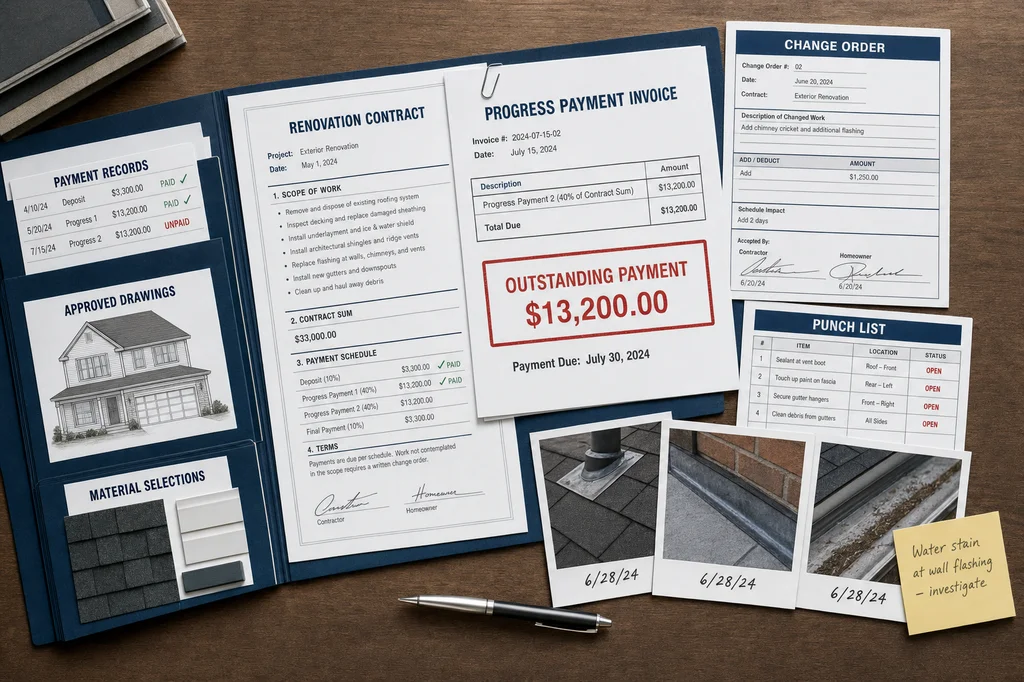
Before authorizing a change, get its consequences in writing. A useful change-order record identifies the revised work, price, effect on timing, and whether previously selected materials or labor are being replaced.
Keep one project file with the signed contract, approved drawings, selection list, invoices, payment confirmations, change orders, emails, texts, photos, and open-item list. That file can be more useful than trying to reconstruct decisions after the relationship has broken down.
If a contractor says a delayed choice is affecting the schedule, respond in writing with the decision, a realistic decision date, or the information needed to decide. Review any contract language about project delays or decision deadlines carefully before signing. If you dispute its meaning, consider legal advice.
How to respond before withholding a progress or final payment
Payment disputes are easier to address before the final invoice becomes a standoff. The following are general payment-response practices, not requirements created by the Woodstone ruling. Their purpose is to identify the disputed amount and give both sides a written record of the response.
- Read the payment milestone. Compare the invoice with the contract’s payment schedule, approved changes, and the work completed.
- Send written notice of disputed items. Include the punch list, photos, and the relevant contract or change-order reference.
- Request a written completion plan. Ask for proposed repair steps and dates instead of relying only on an informal promise.
- Follow the contract and documented agreement. Do not assume what amount may be withheld; the contract and state law can affect that question.
- Get qualified help for technical claims. If you believe there is a leak, code issue, unsafe condition, or major installation failure, seek an assessment from an appropriately licensed professional.
If another company is hired before the original contractor has responded, preserve the condition with detailed photos and records first. Replacing or covering disputed work can make it harder to establish what was present and whether repair was possible.
Records matter more than accusations in a renovation dispute
The homeowners alleged serious problems, while Woodstone maintained that the remaining items were minor and that homeowner decisions delayed the work. The court’s credibility findings show why documentation and consistent details matter when accounts conflict.
Do not assume that an invoice alone proves work was complete. Likewise, a strongly worded complaint does not by itself establish defective work. Keep communications factual: identify the item, date, applicable scope, requested correction, and response received.
Before signing a renovation contract, make sure it addresses the scope, payment stages, selection responsibilities, change-order approvals, completion process, and final punch list. If a dispute raises insurance, legal, lien, or consumer-protection questions, rights can depend on the policy, contract, facts, and state. Confirm those issues with a qualified attorney, your state insurance department where relevant, or another appropriate licensed professional.
Choosing a contractor with clear written processes can reduce avoidable misunderstandings. Directorii lists verified contractors.
Source: Woodstone Group homeowner-payment lawsuit summary
FAQ
Can a contractor sue me if I withhold the final payment?
A contractor may sue over alleged nonpayment if it believes you breached the contract. The outcome can depend on the agreement, completed work, notices, records, and applicable state law. The Woodstone Group dispute shows how withholding a substantial balance over claimed punch-list items can become a court case.
What did the Woodstone Group case say about punch-list defects?
Woodstone claimed that only minor punch-list items remained, while the homeowners alleged more serious defects. The judge described the alleged defects as cosmetic at best and rejected the homeowners’ claims. That outcome was based on this dispute’s evidence and credibility findings, not a universal rule about every punch list.
Should I pay the final invoice if there are still defects?
Compare the invoice with the contract payment terms, approved change orders, and documented remaining work. Send a written list of disputed items and request a completion plan. The amount that may be withheld can depend on the contract and state law, so consider legal advice for a substantial dispute.
How should I document a contractor change order?
Document a change order in writing before the changed work proceeds whenever possible. Identify the revised scope, price, timing effect, materials involved, and both parties’ approval. Keep it with the contract, invoices, selection records, messages, and photos.
What if my delayed material choices are holding up the renovation?
Respond in writing with your selection, the date you expect to decide, or the information needed to make the choice. Delayed appliance, finish, or material selections can affect ordering and later work. Review the contract for selection deadlines or delay provisions before agreeing to added charges.