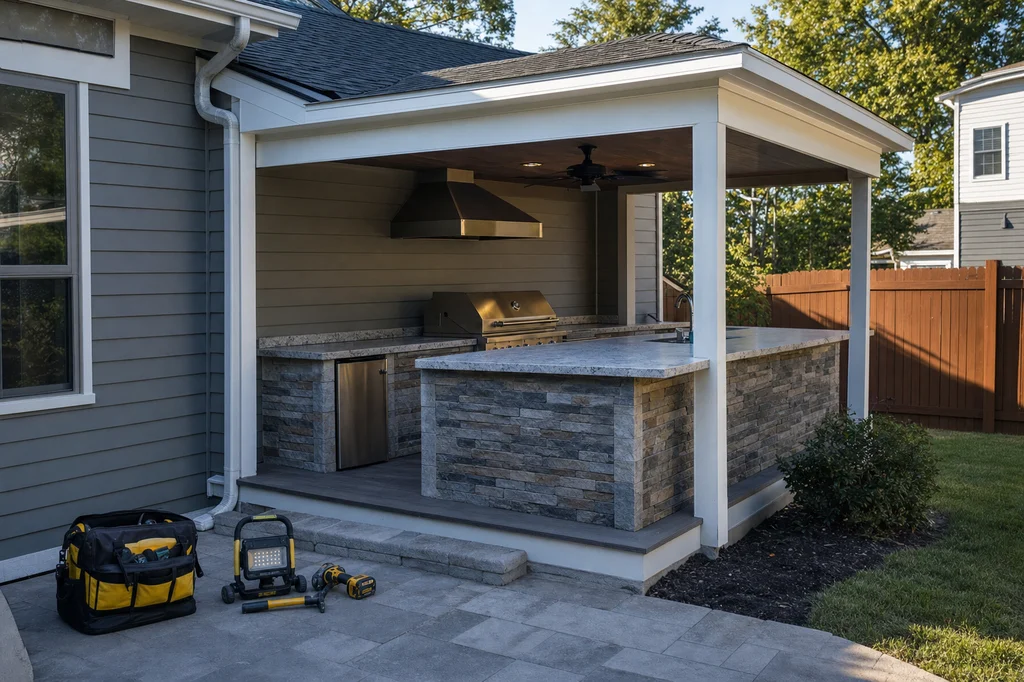
The Sony Construction $133,000 lien case shows why homeowners should examine charges on a contractor lien that appear fraudulent before treating a payment dispute as settled. A lien can be challenged and still leave an unpaid contract balance, interest, and legal costs to resolve under the contract and applicable state law.
Why the Sony Construction dispute did not end with the lien
Getting a lien removed does not automatically erase what you may owe for completed work. In the reported dispute, homeowner Scott Newman hired Sony Construction for an addition and outdoor kitchen, then faced a lien initially exceeding $133,000 that was later reduced to $99,000.
The court reportedly separated two questions: whether the lien was valid and what each side owed under the construction contract. It found that many claimed charges were not lienable and characterized the exaggeration as willful, resulting in the lien being struck down. But the court also found Newman owed $59,000 for breach of contract, which increased to $81,000 with interest.
That distinction matters. A problematic lien filing and a legitimate unpaid balance can exist in the same dispute. Do not assume that proving a charge is improper answers every question about the project, change orders, completed work, or missed payments.
Charges that can make an itemized lien worth close review
An itemized invoice is where a broad payment fight becomes a list of specific claims. The reported Sony Construction lien included charges the court did not treat as lienable, including pool-cleaning chemicals and services, hand tools that would not remain with the home, and rental equipment allegedly abandoned at the site.
The account also described $15,000 for supervision and $22,200 for profit, identified as a 20% profit margin. Those details do not establish that every supervision, equipment, or profit-related charge is improper in every project. What they show is that a contractor should be able to connect each disputed line item to the contract, project work, and the rules governing liens where your home is located.
- Separate installed work from contractor overhead. Materials or equipment left as part of your project are different from a contractor's reusable tools or internal operating costs.
- Match each item to the signed scope. Compare the lien and invoice with the original agreement, approved change orders, allowances, and payment schedule.
- Flag unrelated services. A charge that does not plainly relate to construction at your property needs an explanation and supporting records.
- Check whether the math changes. Compare the lien total with prior invoices, payments you can document, credits, and the remaining contract balance.
The practical goal is not to label every disputed line fraudulent. It is to identify exactly what is disputed, what evidence supports your position, and what amount—if any—may still be due.
Do not use a payment freeze as your only response
Withholding payment can escalate a project conflict quickly, especially if the contractor claims work is complete or a progress payment is overdue. The Sony Construction outcome is a reminder that a homeowner who challenges a lien may still face a contract claim for an unpaid balance.
Start by preserving the paper trail. Keep the signed contract, all change orders, invoices, proof of payments, photos, text messages, emails, and written notices in one place. Then send a calm written notice identifying the specific disputed charges and requesting an itemized correction or supporting documentation. Avoid relying on verbal promises about credits, revised totals, or a decision not to file a lien.
If work quality, scope, or payment is disputed, a licensed construction professional may help assess the work itself. A qualified attorney can advise on lien validity, notices, contract remedies, and the rules that apply in your state. Do not rely on a contractor's interpretation of lien law as the final answer.
What to say when you receive a contractor lien notice
A lien notice should trigger a documented response, not a rushed payment or an emotional standoff. Lien notice requirements, filing rules, and available remedies vary by state, contract, and the facts of the project.
Use a written request that stays focused on records:
- Request a complete itemization of the claimed balance, including labor, materials, equipment, supervision, profit, credits, and payments received.
- Ask the contractor to identify the contract provision, change order, or project record supporting each disputed charge.
- State the payments you believe have been made and attach proof where available.
- Ask whether the contractor will participate in a structured meeting or neutral third-party process to resolve the accounting dispute.
- Have a lawyer in your state review the notice and contract promptly if a lien has been filed or litigation is threatened.
This approach keeps the issue tied to evidence. It also reduces the chance that a disagreement over one invoice turns into a vague argument over the entire job.
Prevent the accounting dispute before signing
A clear contract will not prevent every dispute, but it makes unsupported charges easier to spot. Before work begins, make sure the written agreement identifies the scope, payment milestones, change-order process, allowances, and who approves added costs.
For a large project such as an addition or outdoor kitchen, do not accept a payment request that merely says “balance due.” Request enough detail to see what work is complete and how the requested amount relates to the agreed schedule. If the contractor proposes a change, get the price and scope in writing before the added work proceeds whenever possible.
Choosing a contractor with clear documentation habits can reduce expensive ambiguity later. Directorii lists verified contractors.
Litigation was costly for both sides in the Sony Construction matter. The court reportedly denied both sides' requests for full attorney fees, while awarding the contractor $10,000 for some costs. A negotiated accounting review or third-party resolution may be worth exploring before a dispute reaches that point.
Source: Homeowner Fights $133K Lien… Contractor STILL Gets Paid!
FAQ
What made the Sony Construction lien appear exaggerated?
The reported case included charges for pool-cleaning chemicals and services, hand tools not left with the home, and rental equipment allegedly abandoned at the site. The court reportedly found many charges were not lienable and treated the exaggeration as willful. Whether a charge is lienable in your case depends on your records and state law.
Can I still owe my contractor after a lien is removed?
Yes, a removed lien does not necessarily eliminate a separate contract balance. In the reported Sony Construction dispute, the lien was struck down, but the homeowner was still found to owe money for breach of contract. Review the contract, completed work, approved changes, payments, and any credits separately.
What should I check for fraudulent contractor lien charges?
Compare every claimed charge with your signed contract, approved change orders, invoices, proof of payment, and project records. Pay close attention to charges that appear unrelated to work at your property, reusable tools, unexplained equipment costs, or totals that do not match prior billing. Ask for written support for each disputed line.
Should I stop paying if I think an invoice is wrong?
Do not treat a payment freeze as your only tool for resolving a disputed invoice. Identify the specific disagreement in writing, preserve your records, and request an itemized accounting. Depending on the contract and state law, an unpaid balance can lead to a lien claim or a separate contract dispute even if some charges are challenged.
What should I do after receiving a contractor lien notice?
Gather your contract, change orders, invoices, payment records, and communications, then request a full itemization and basis for the claimed amount. Respond in writing rather than relying on phone calls alone. Because lien notices and filing requirements vary by state, have a qualified attorney in your state review the notice and your contract promptly.