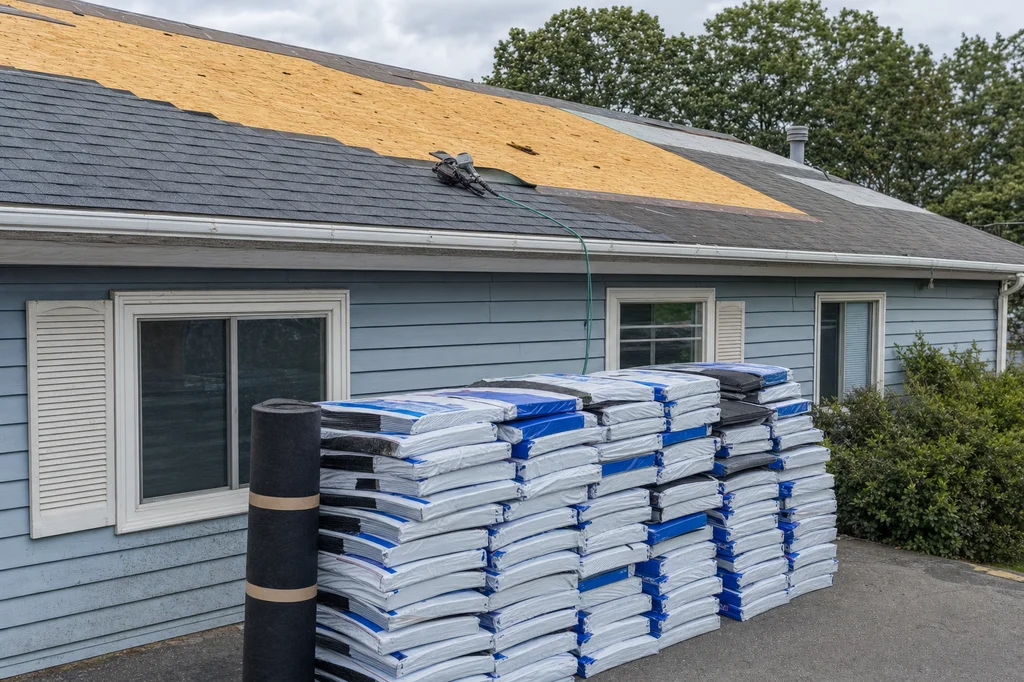
A contractor bankruptcy can turn a roof or solar deposit into money chasing an unfinished job. The practical protection is to avoid paying in full upfront and to control when funds are released: materials delivered and the roof installed are the two concrete release events to put at the center of the agreement.
Why familiar contractor names are not enough
Closures have affected large companies as well as smaller operations. S Power and Titan Solar left customers dealing with unfinished solar work, while MTS Construction and J. R. Ferguson Roofing also filed for bankruptcy. MTS Construction’s license was suspended before its bankruptcy filing, and the company was reported to owe customers, suppliers, and creditors.
These cases point to the same homeowner problem: a deposit paid directly to a contractor may be used before the materials for your project arrive or the agreed work is installed. A company can fail because of inexperience, poor money management, high interest rates, changing market conditions, labor costs, or fraud. You do not need to determine which problem is behind a contractor’s finances before protecting your payment.
The CMR example: payment controls matter most when trust is hardest
CMR faced accusations involving mismanagement, unfinished jobs, and wage theft while working through financial trouble. Its comeback effort included resolving complaints and taking payments through Paykeeper, described as a third-party escrow service.
That detail matters because a contractor’s promise to improve does not itself protect a homeowner’s money. For CMR, the condition for a recommendation was that payment go through Paykeeper rather than directly to the company. The same reasoning applies whenever a contractor has a troubled financial history: evaluate the payment path and release conditions, not just the company’s assurances.
Under the Paykeeper approach described here, the homeowner deposits funds into an escrow account. Funds are released only when stated milestones are met, including materials being delivered or the roof being installed. This does not ensure that a project will be completed, but it can keep the contractor from receiving money tied to work it has not yet delivered.
Deposit-protection checklist for a roofing contract
- Do not pay in full upfront. A 10% to 25% deposit was described as standard, while some states limit deposit percentages. It is not a universal amount; confirm the requirements that apply where you live.
- Get a written contract. The contract should state the deposit and the payment schedule rather than leaving payment timing to a verbal promise.
- Make delivery a release event. Identify the materials that must be delivered before the related funds leave escrow.
- Make installation a release event. State that the roof installation, not simply an order or a scheduling promise, triggers the relevant payment.
- Confirm who holds the money. An account called “escrow” is useful only if the written arrangement identifies the third party and the conditions for release.
Deciding whether to proceed with a financially troubled contractor
Start with the basic checks: find out whether a license is required in your state and verify the contractor’s state license or number; read reviews and testimonials; and insist on a contract. Then focus on the point that distinguishes a safer transaction from a direct deposit: will an outside escrow service hold the funds until materials are delivered and the roof is installed?
If the answer is no, you are being asked to take on more risk from a contractor already facing financial questions. If the answer is yes, read the release terms before signing and make sure they match the actual project events. Directorii lists verified contractors.
Source: Why Roofing & Solar Companies Go Bankrupt
FAQ
What payment events should release escrow funds for a roofing job?
Use specific events that can be checked: materials delivered and the roof installed. Put those release conditions in the written agreement instead of allowing payment based only on an order, a promise, or a scheduled start date.
Why was escrow important to the CMR example?
CMR had faced accusations involving mismanagement and unfinished jobs while addressing financial trouble. Payments through Paykeeper, a third-party escrow service, were presented as the condition for recommending the company because funds could be released at stated milestones rather than paid directly to CMR.
Is a 10% to 25% roofing deposit required everywhere?
No. That range was described as standard, and some states were said to limit deposit percentages. It is not a universal rule, so confirm the requirements that apply in your state before signing.
What should I check before giving a contractor a deposit?
Find out whether your state requires a license and verify the contractor’s state license or number. Read reviews and testimonials, get a written contract, and do not pay in full upfront.