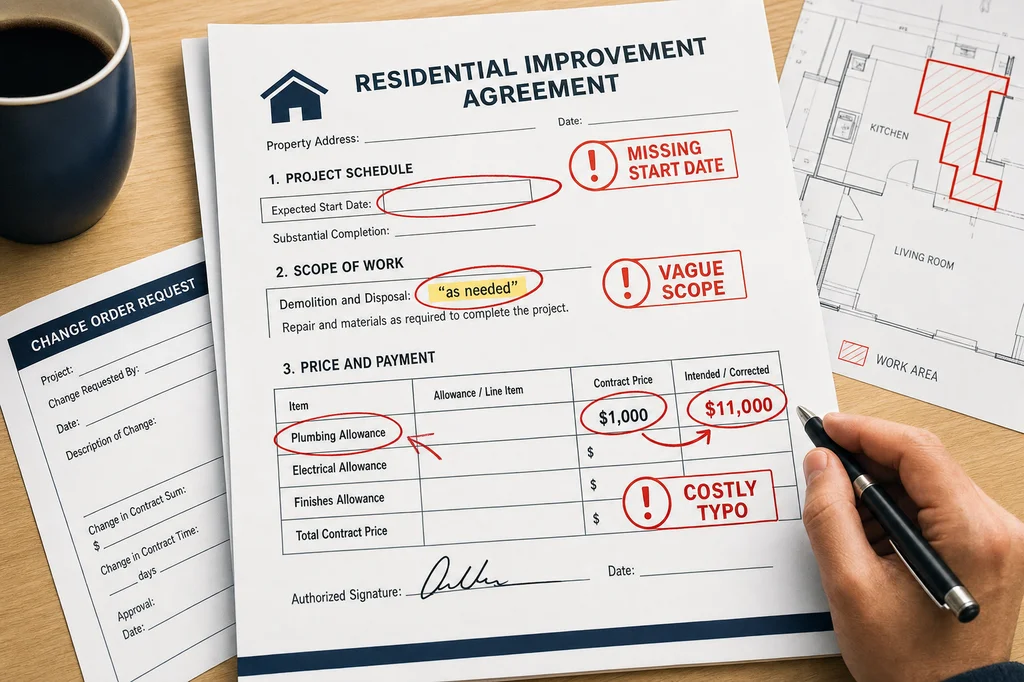
Contract mistakes can begin with details that seem small: a missing start date, an “as needed” demolition scope, or a plumbing line entered as $1,000 instead of $11,000. A clear written agreement helps you compare bids, manage surprises, and respond calmly if the work or price changes.
Make the project timeline part of the signed agreement
A contract should identify when work is expected to begin and how the project moves toward completion. A verbal plan to settle the start date later can leave both sides with different expectations.
One reported water-damage project illustrates the problem. The insurer’s initial offer was $4,000, then increased to $44,000 after a detailed estimate with code references. The homeowner approved the revised scope, but the signed contract reportedly omitted a start date. After the work was completed, a dispute arose over the remaining $20,000 and whether an inspection had been completed. The contractor reportedly had recordings, texts, and a witness, but believed those records did not provide enough support to pursue the balance.
The practical lesson is not that a date alone decides a payment dispute. Contract and insurance outcomes can depend on the agreement, policy, state, and facts of the project. It is that the written agreement should state the expected start date, expected completion path, payment milestones, and what inspection or sign-off is tied to final payment.
- Start date: Put an expected date or a clearly stated trigger for scheduling in the contract.
- Finish expectations: Define what “complete” means for your project, including agreed punch-list work if applicable.
- Inspection language: Distinguish between rough inspections and final inspections when either affects the next payment.
- Written updates: After a phone call changes a key detail, have the change summarized and acknowledged in writing.
Why “as needed” can turn a limited repair into a dispute
“As needed” may be useful when hidden conditions are possible, but it is too vague by itself for a demolition or repair boundary. You should be able to tell what areas are included, what conditions justify additional work, and when your approval is required.
In one garage-refinishing example, the signed quote called for drywall removal, insulation, and replacement drywall on walls and ceilings “as needed.” The crew reportedly removed more drywall than the homeowner expected. The contractor later said the work order had been misread and proposed either a change order to replace the drywall or no charge for the demolition already completed.
That wording created room for two competing interpretations: a homeowner who expected limited removal and a contractor who found older drywall too damaged to reuse after opening the area for electrical work. The contractor also cited insulation and code-related concerns. Whether additional work is necessary can depend on what is uncovered and applicable local requirements, so confirm those issues with a licensed professional.
For you, the key distinction is simple: unforeseen conditions are not the same as an undefined scope. Your agreement should map the known work before the crew arrives, then establish what happens if concealed damage or other conditions are found.
What to put beside a limited demolition item
- Identify the room, wall, ceiling, or other specific area to be opened.
- State whether the work is selective repair or full removal and replacement.
- Describe the condition that would trigger added work, such as damage found behind an opened surface.
- Require a written price and your approval before work expands, except for any emergency provision you knowingly accept.
- Use photos, marked plans, or a walkthrough record to show the intended work areas.
Review every allowance and line item before you sign
A low total price can hide a data-entry error, a missed item, or a scope that does not match competing proposals. Read the individual line items, especially for major systems such as plumbing, electrical work, drywall, and materials.
A reported addition contract was priced at $150,000 and included a bathroom. After work began, the contractor said plumbing had been entered as $1,000 rather than the intended $11,000 and requested another $10,000. The homeowner saw that the signed fixed-price contract did list $1,000, but chose to pay the additional amount to avoid stress and delays.
That homeowner’s choice was a practical decision, not a universal rule about what any homeowner must pay. A fixed-price contract, a genuine pricing mistake, and a requested change order can have different consequences depending on the contract and state. If a major error appears after signing, pause before authorizing more money and consider having a qualified attorney review the agreement.
Before signing, compare each proposal by scope instead of relying only on the final number. A bid that is much lower than the others may reflect a mistake or a meaningful omission. It may also be a different scope entirely.
Document the property condition before work changes it
Photos and a pre-work walkthrough can reduce arguments over existing damage. They are useful for interior renovations, roofing, flooring, painting, and any project involving demolition, materials, or moved belongings.
The examples included homeowners noticing cracks, damaged items, or other conditions after a project finished and connecting them to the recent work. Sometimes the concern may be valid; sometimes the condition may have existed before the job. Dated photos of the driveway, surrounding areas, finishes, and items near the work zone give both sides a shared baseline.
Use a simple record: take wide shots and close-ups, save them in one folder, and send the contractor any existing damage you want acknowledged before work begins. During the final walkthrough, list incomplete or damaged items in writing and attach photos. Do not treat a rushed finish as a reason to skip that walkthrough.
What to say when the scope or price changes mid-project
Do not approve a larger scope or added charge based only on a quick conversation. Ask for a written explanation that separates a contractor error from a newly discovered condition.
- Ask what changed. Request the specific condition, omitted line item, or work-order issue behind the request.
- Compare it with the signed scope. Check whether the item was included, excluded, or described vaguely.
- Request the cost effect. Get the added price, removed price, and any schedule impact in writing.
- Review the options. A contractor may be able to correct its own mistake, revise the work, or propose a mutually acceptable change order.
- Sign only the approved revision. Make sure the document identifies the exact added work and updated total before it proceeds.
The contractor’s response matters as much as the paperwork. A contractor who identifies a problem, explains it clearly, and documents the proposed fix gives you a basis for a decision. A contractor who expands work without clarity can leave you with a harder dispute.
For a substantial renovation, choose a contractor whose proposal is detailed enough to compare line by line. Directorii lists verified contractors.
Keep the contract, photos, and approvals in one project file
Your best protection is an organized record that follows the project from proposal through final walkthrough. Save the signed contract, specifications, photos, invoices, inspection records, change orders, and written communications in the same place.
This does not eliminate hidden conditions or honest mistakes. It does make it easier to identify what was agreed, what changed, and whether the proposed solution matches the work. If a payment, insurance, or contract dispute becomes serious, seek advice from a qualified attorney or your state insurance department rather than relying on assumptions about your rights or obligations.
Source: What Every Homeowner Needs To Know
FAQ
Should my home-improvement contract include a start date?
Yes, your agreement should state an expected start date or a clear scheduling trigger. It should also identify the expected completion path and any inspection or sign-off connected to payment. A missing date can create conflicting expectations, and texts or verbal conversations may not resolve a later dispute as clearly as a signed contract.
What does “as needed” mean in a renovation scope?
“As needed” can mean different things unless the contract defines the work area and the condition that triggers more work. For selective drywall or demolition work, identify which surfaces are included, whether full replacement is intended, and whether you must approve added work after concealed damage is found.
Can a contractor charge more after finding a pricing typo?
A contractor can request a price change, but whether you agree may depend on the signed contract, the nature of the error, and state law. Review the affected line item and request a written explanation. For a major amount, consider having a qualified attorney review the contract before approving a change order.
How can I spot a mistake in a contractor’s estimate before signing?
Compare the scope and major line items across proposals, not just the total price. Check large systems such as plumbing, electrical work, materials, and demolition for omissions or unusually small figures. If one bid is far lower than others, ask the contractor to walk through the written scope with you.
Should I take photos before a remodeling project starts?
Yes, take dated wide and close-up photos of work areas, nearby finishes, driveways, landscaping, and belongings that may be affected. Photos provide a shared record of existing conditions. They can help clarify whether a crack, damaged item, or other problem existed before work began or appeared during the project.