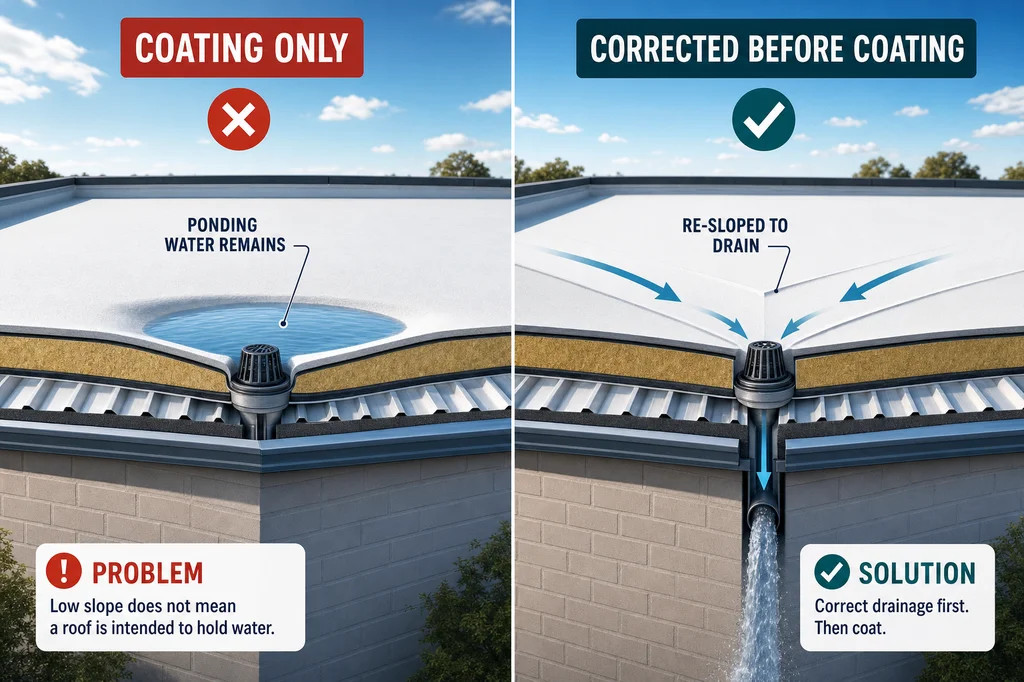
A Conklin coating proposal may be a practical option for a sound low-slope roof, but it should not blur the difference between low slope and persistent ponding water. Before signing, make the contractor identify where water stands, whether drainage correction is needed, and exactly what warranty applies.
Low-slope roofs and ponding water are different conditions
A roof described as “flat” is often a low-slope roof, not a roof intended to hold water. That distinction matters because a coating system can be considered for a low-slope roof while areas that repeatedly collect water may need a separate correction.
Warren Yutzy, owner of Seamless Roofs and a longtime Conklin installer, described this terminology problem directly: building owners may call a roof flat when it has a low pitch, while roofers use the term low slope. A proposal that merely calls your roof “flat” does not tell you whether the roof has a drainage problem.
What this means for you: Do not accept “low slope” as an answer to whether water remains on the roof. Require the proposal to identify the specific areas where water ponds and the recommended treatment for each one.
Why coating over ponding water can create a future dispute
Coating a known ponding area without addressing the condition can leave you with a weak repair strategy and an unclear warranty. Yutzy said he has seen coating contractors apply coatings in ponding areas and does not consider that a lasting solution.
The failure mechanism is straightforward: water keeps collecting in the same depression, so the roof is still managing standing water rather than shedding it. A coating may be proposed as a temporary measure, but it should not be sold as the same thing as correcting the slope.
Yutzy described an older practice of coating these areas while offering less warranty coverage. He does not favor that approach because it can lead to disagreement later if the area fails. For a large pond, he described a more substantial approach: tear-off work and adding slope. He also mentioned a newer self-leveling product for small ponds, while emphasizing that it is not intended to solve large areas of standing water.
- Small, isolated depression: The contractor may propose a limited corrective product or repair. The proposal should define the location and limits of that work.
- Large or recurring pond: Re-sloping may be the more durable recommendation. It can involve more work, but it addresses why water collects.
- Temporary coating-only approach: Treat it as temporary only if the contractor states that plainly and spells out any warranty limits.
What a Conklin coating proposal should say about drainage
A useful proposal gives you a drainage decision, not just a coating name. It should make clear whether the contractor believes the roof is suitable for coating as-is, needs localized correction, or needs re-sloping before a coating system is installed.
Have the contractor put these project-specific points in writing:
- The roof areas with visible ponding or drainage concerns.
- Whether the proposed work is intended to correct those areas or leave them in place.
- Whether the recommendation is a localized repair, a self-leveling treatment for a small depression, or re-sloping work.
- Any limits on the coating system where water is expected to stand.
- The preparation and application conditions required for the product.
Application quality is also part of the decision. Yutzy attributed many coating failures to application errors, such as inadequate training, failure to follow specifications, or applying material when rain or dew interferes. That is a contractor-performance concern, not proof that every coating system will fail on a low-slope roof.
What this means for you: A contractor should be able to explain both the roof condition and the installation plan. If the diagnosis is vague, obtain another assessment before authorizing a coating.
Compare the warranty choices before approving the work
Not every Conklin project receives the same warranty arrangement. Yutzy described in-house contractor warranties, joint arrangements covering workmanship and materials, and fuller manufacturer-backed warranties that involve an inspection.
For a full manufacturer warranty, Yutzy said an application is submitted for each project and the manufacturer inspects the roof. He described this as more common on projects such as schools, military bases, and other work with formal warranty requirements, rather than on every coating job.
Do not assume that using a named coating product automatically means the manufacturer covers the installation. The written warranty should identify who covers material performance, who covers workmanship, whether an inspection is part of the warranty process, and how ponding areas affect coverage. Warranty terms depend on the product, project conditions, and contract, so read the actual documents rather than relying on a sales summary.
How to screen the installer behind the coating proposal
The installer’s training and project controls matter as much as the product selected. Conklin uses classroom and some hands-on training, while experienced contractors may also train newer installers. That structure can work well, but it makes it especially reasonable to ask who will perform and supervise your project.
Use one focused conversation before you choose:
- Who will inspect the roof and document the ponding areas before work begins?
- Who will apply the coating, and what training do they have with this system?
- What weather and surface conditions would postpone application?
- Which warranty option is being offered, and is a manufacturer inspection included?
- If re-sloping is recommended but deferred, what is excluded from the scope or warranty?
A contractor who avoids the ponding-water question may be pricing a surface treatment rather than solving the roof condition. Directorii lists verified contractors.
If your building has structural concerns, significant standing water, or a re-sloping recommendation, confirm the plan with an appropriately licensed roofing professional and, where needed, a licensed design professional. Local requirements and project conditions can affect the appropriate repair.
When a coating can still be the right roof decision
A coating is not disqualified simply because your roof is low slope. Yutzy reported that Conklin coating systems have been installed for decades and that he has inspected older roofs in Wisconsin that had endured heavy snow and ice conditions.
That is a field report from a Conklin installer, not a universal product guarantee. For your property, the key question is narrower: Is the roof substrate suitable, is water draining as intended, and is the proposed system being installed under its applicable specifications? If those answers are documented, you can compare a coating against the cost and disruption of more extensive roof work without treating ponding water as an afterthought.
Source: Warren Yutzy Addresses Conklin Roofing Controversies
FAQ
Can a Conklin coating be applied to a low-slope roof?
A Conklin coating may be considered for a low-slope roof, but low slope is not the same as persistent ponding water. The contractor should identify whether the roof drains properly, document areas where water remains, and state whether any correction is needed before the coating is installed.
Should I coat over ponding water on my roof?
Coating over known ponding water should not be treated as the same as fixing the drainage problem. A small isolated depression may have a limited corrective option, while a large recurring pond may call for re-sloping. Get the intended repair and warranty limitations in writing.
What warranty should I expect with a Conklin roof coating?
The warranty may be provided by the contractor, shared between the contractor and manufacturer, or supported by a fuller manufacturer warranty that includes an inspection. Do not assume every project receives the same coverage. Review who covers workmanship, materials, and ponding-water conditions before approving the contract.
Can a self-leveling product fix standing water?
A self-leveling product may be proposed for a small ponding area, but it is not necessarily a solution for a large area that repeatedly holds water. Ask the contractor to define the size and location it is intended to address and whether re-sloping remains the recommended long-term repair.
How can I tell whether my coating contractor is prepared to install the system?
Ask who will apply and supervise the coating, what training they have with the system, and what site conditions would delay application. The installer should also explain how the roof will be prepared and how rain, dew, or other unsuitable conditions will be handled during the work.