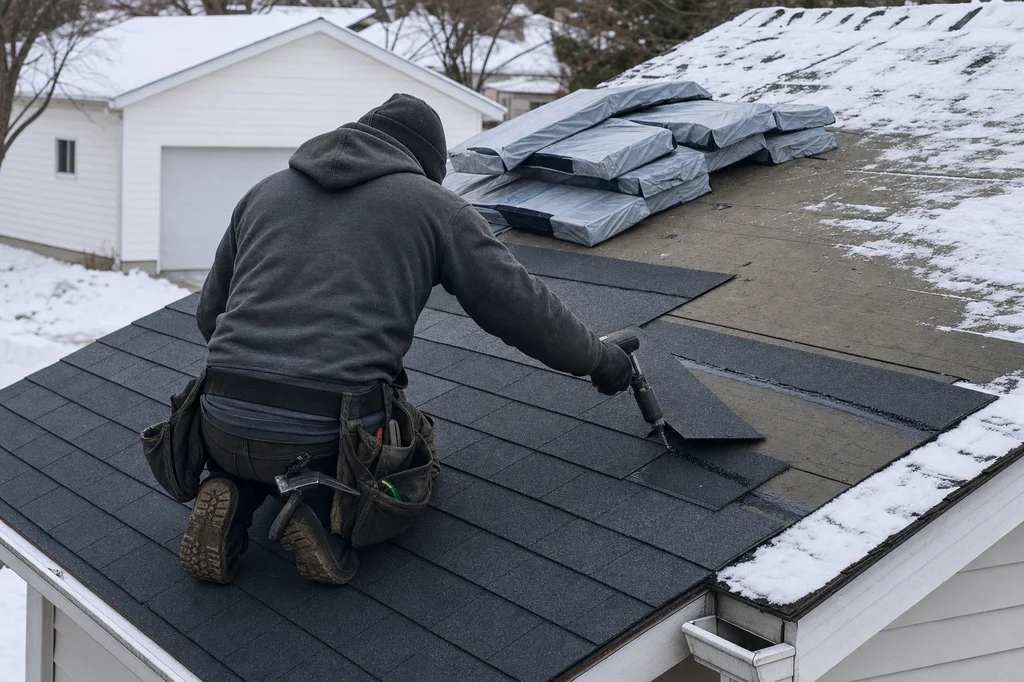
Cold weather changes the way an asphalt-shingle reroof should be planned. Some manufacturers require shingles to be installed in weather above 40 degrees or to be individually hand-sealed. An urgent winter replacement can be possible, but it is not the same decision as a routine warm-weather job.
The key question is whether the roof problem justifies a product-specific installation plan—and whether the project is small enough and protected enough for that plan to be realistic.
Start with the exact shingle instructions
Before approving winter work, review the installation instructions for the exact shingles in the proposal. Cold conditions can affect whether shingles seal as intended, even when the roof looks complete on installation day.
- Temperature: Do the instructions address installation in the expected temperatures?
- Hand-sealing: Do they require individual hand-sealing in cold conditions?
- Dry materials: How will the crew keep shingles dry before installation?
- Warm materials: Where will bundles be stored, and how will they be warmed before use?
If hand-sealing is part of the plan, have that work identified in the proposal. A general assurance that winter roofing is fine is not a substitute for the instructions that apply to the shingles being installed.
Warming bundles takes more than heating the top layer
Cold shingles can be harder to handle, while wet materials add another concern. On one winter reroof, bundles were kept in a heated garage, and the work area used a tent and a torpedo heater.
The important detail was the stacked bundles: warming the top shingles did not immediately warm the shingles in the middle. A winter plan should address where bundles will stay dry, how long they need to warm, and how the crew will avoid installing materials that have not warmed through.
An urgent replacement is different from a giant exposed project
A reroof may be difficult to postpone when an insurer sends a non-renewal notice tied to roof condition. One large home beside a cornfield had to be reroofed after such a notice. The roof was cleared of snow and ice, the shingles were warmed, and the crew used a tent and heater.
At a spring check, two shingles had blown off in one area and were replaced. The remaining shingles were checked and found sealed. That outcome does not establish how every winter reroof will perform, but it shows why sealing and follow-up deserve attention when winter work cannot wait.
A giant late-season project calls for more caution. A large apartment building in an open area may face wind, sand, and dust before shingles seal. Those conditions can make the consequences of a cold-weather installation much greater than on a smaller home.
Use this checklist before deciding
- Identify the exact shingle product and obtain its cold-weather installation instructions.
- Confirm whether hand-sealing is required in the expected conditions.
- Get a clear plan for storing, drying, and warming shingle bundles.
- Ask what conditions would stop the work.
- Consider the roof's size and exposure before proceeding with a late-season project.
If an insurer has sent a notice, confirm its requirements directly with the insurer. Policy terms and timing vary. If you are asked to sign a waiver concerning cold-weather sealing, consider having counsel review it before signing.
Directorii lists verified contractors.
Source: Biggest Winter ROOFING Mistake
FAQ
Can asphalt shingles be installed in cold weather?
It depends on the instructions for the exact shingle product and the expected conditions. Some manufacturers require installation above 40 degrees or individual hand-sealing.
Why might shingles need hand-sealing during winter?
Cold conditions can affect whether shingles seal as intended. The applicable product instructions may require individual hand-sealing for installation in cold weather.
How should shingle bundles be handled before winter installation?
The installation plan should keep bundles dry and allow them to warm before use. Stacked bundles may need time to warm beyond the top layer.
Why are large late-season reroofs riskier?
Large roofs in exposed areas can encounter wind, sand, and dust before shingles seal. That can make sealing concerns more consequential than they are on a smaller project.
What if an insurer wants my roof replaced during winter?
Confirm the insurer's requirements directly because policy terms and timing vary. If the work cannot wait, base the plan on the exact shingle instructions and the expected conditions.