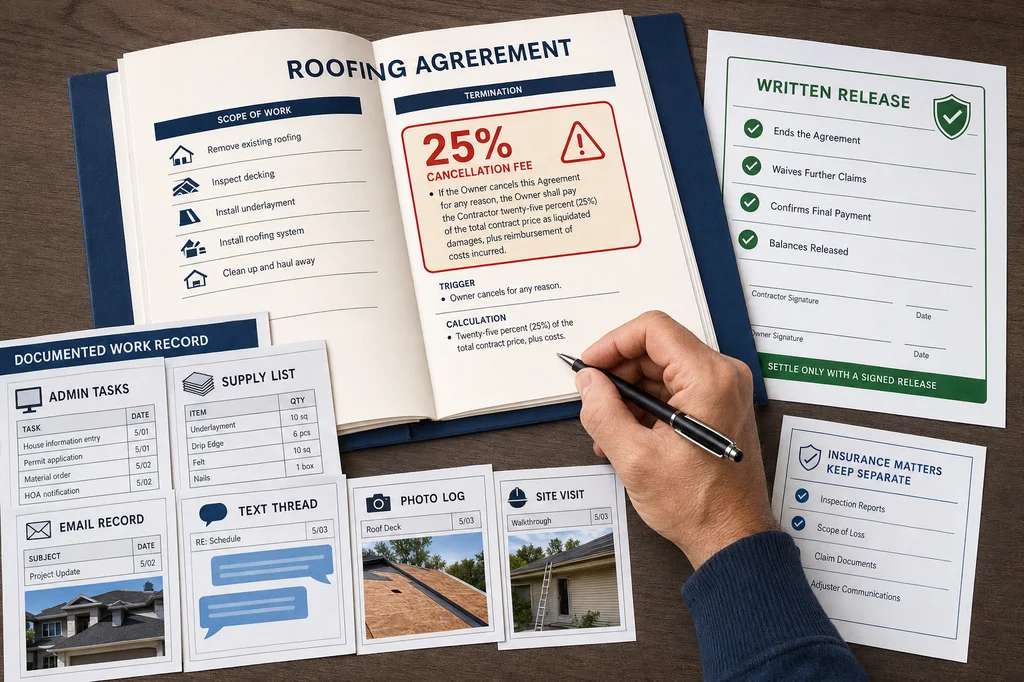
A CMR roofing contract cancellation dispute should start with the signed agreement, especially any generic 25% termination clause. Before offering money or directing insurance funds, identify what CMR has actually done, preserve your records, and get local legal advice on your options under the contract and state law.
Start with the exact termination language
A percentage written into a contract is not the same thing as a settled bill for work completed. The key issue is what the clause says, how it defines termination or damages, and whether it explains how the amount is calculated.
One homeowner who sought advice about leaving a CMR agreement said an attorney characterized the contract language as generic and questioned a termination amount set at 25% of an unknown future award. That is one legal opinion about one agreement, not a rule that applies to every CMR contract. Your signed version, amendments, insurance-related documents, and state law may differ.
Read the complete agreement rather than relying on a salesperson’s explanation or a demand sent later. Keep copies of every page, including the scope, authorization forms, cancellation language, payment terms, and documents tied to your insurance settlement.
- Find the trigger. Identify the event that the clause says permits termination charges or damages.
- Look for a calculation. A clause may state a percentage but provide little detail about actual costs, work performed, or what amount the percentage is based on.
- Separate the documents. Your roofing agreement and insurance-settlement documents can each affect the practical negotiation.
- Do not alter or discard records. A clean document file gives your lawyer or advisor something concrete to review.
Document CMR’s work before you discuss a release
Documenting work performed helps turn a broad cancellation demand into a specific discussion. You are trying to establish what services, if any, were completed and what evidence supports them.
The homeowner in this dispute believed CMR had done limited administrative work, such as entering house information and producing a supply list, and offered a small payment to end the agreement. CMR rejected that offer and said it wanted to proceed under the contract. That gap is why a written work record matters: each side may have a very different view of the value created before the roof is installed.
Create a dated file with emails, texts, voicemails, estimates, photographs, site visits, material delivery records, invoices, and notes from calls. Include the names and roles of company representatives. In the reported case, the homeowner dealt with several changing contacts over time. A simple contact log can prevent important details from getting lost during handoffs.
Do not claim that no work was done simply because no roofing installation occurred. Instead, ask for an itemized accounting of work CMR contends it performed, expenses it says it incurred, and the contract provision it relies on for a proposed termination amount. Keep your request factual and in writing.
How to negotiate a CMR contract release without guessing
A negotiated release can be more practical than an open-ended dispute, but only if the release clearly ends the agreement. Do not treat an informal phone conversation or a verbal promise as proof that the matter is resolved.
The homeowner described neighbors who reportedly reached separate arrangements to leave their CMR agreements, with different payment amounts. Those reports do not establish a standard fee or tell you what your own agreement requires. They do show why homeowners should avoid assuming that a demanded percentage is the only possible outcome.
- Set your objective. Decide whether you want a full release, a revised scope, or to continue only under payment controls you find acceptable.
- Make a documented proposal. If you offer a settlement, state that it is made to resolve the dispute and request a written release in return.
- Require clear final paperwork. The document should identify the property and agreement, state what is being released, and address any claimed payment rights or project obligations.
- Get local advice before signing. A local attorney can assess the language, the proposed release, and any insurance-payment issues under your state’s law.
A release is valuable only if it is complete enough to prevent the same disagreement from returning after you hire someone else. If the company sends new paperwork, have your lawyer review it before you sign or direct funds.
Keep insurance money separate from the roofing dispute
Do not assume an insurance settlement check automatically settles your contractor relationship. Who is named on a payment and what signatures or other steps are required can depend on the settlement documents and contract.
The homeowner in this matter had recently reached an insurance settlement but had not yet signed all related documents. He was concerned that CMR’s name might appear on a check or that payment handling could complicate the cancellation negotiation. That is a reason to slow down and review documents before directing money to any contractor.
The conversation also raised a payment-control model described as PayKeeper, where homeowner funds would be held and released for project-related payments after work is done. CMR was described as being onboarded to that program at the time. Treat any payment-control arrangement as a separate decision: obtain the written terms, understand who holds the money, how releases work, and what happens if the project stops. Do not rely on a verbal description of an escrow-like process.
When continuing with CMR may need more safeguards
If you decide not to cancel, your concern shifts from termination cost to project completion and payment control. The reported homeowner was worried about accounts of extended roof exposure in the neighborhood and claims that suppliers or crews had not been paid. Those are serious concerns to investigate, not established findings about your project.
Before authorizing work, request a written project plan that identifies the scope, materials, payment sequence, and the person responsible for your file. Confirm who will communicate with you if the original representative changes. A documented plan makes it easier to see whether promised work and payment arrangements match what is happening at your home.
Choosing a replacement roofer can also affect your cancellation decision. Obtain a separate, detailed estimate before assuming the remaining insurance funds will cover another contractor after a release payment. Directorii lists verified contractors.
Source: Can You Cancel a Roofing Contract? Here’s How to Avoid the 25% Fee!
FAQ
Can CMR charge a 25% fee if I cancel my roofing agreement?
It depends on the exact agreement, the work claimed, and applicable state law. A generic 25% clause may require careful legal review, especially if it does not clearly explain the trigger or calculation. Keep the full contract and ask a local attorney to assess the proposed charge before you agree to pay or sign a release.
What should I document before trying to cancel a CMR roofing contract?
Document the signed agreement, emails, texts, call notes, estimates, site visits, invoices, material records, and insurance-related paperwork. Create a dated contact log if representatives have changed. The goal is to show what services were actually performed and to compare that record with any termination demand or itemized costs CMR provides.
Should I offer CMR money to get out of the contract?
You may choose to propose a settlement, but do not make an offer without seeking a written release that clearly ends the agreement. Neighbor reports of different settlement amounts do not create a standard price for your situation. A local attorney can help you evaluate whether a proposed payment and release address the contract and insurance issues involved.
What if my insurance settlement check has CMR on it?
Do not assume that a contractor’s name on a payment resolves the contract dispute or tells you how funds must be handled. Payment handling can depend on the settlement documents and contract. Review those documents with a local attorney before endorsing, depositing, or directing funds.
Can I keep CMR for the roof but use controlled payments?
You can ask for written details about any payment-control arrangement before deciding to continue. The discussed PayKeeper model was described as holding homeowner funds and releasing money for project-related payments after work is done. Review who holds funds, release conditions, and what happens if work pauses before relying on any such arrangement.